
World Cup 2026 Worst Plays Reshape Betting Markets

World Cup 2026’s Worst Plays: How Blunders, Bad Calls and Bad Turf Warped the Tournament — and the Betting Markets Ask any bettor, pundit or fan what they remember from a World Cup, and you’ll get a mix of wonder and wincing. In 2026 the wincing had plenty of highlights: late‑game catastrophes, refereeing decisions that rewrote scorelines, whole teams that looked lost, and environmental quirks that made good football harder to find. As someone who watches the game with one eye on entertainment and the other on market movement, I want to walk you through the tournament’s most famous (and infamous) plays, explain why they mattered for outcomes and odds, and give practical takeaways for anyone wagering on big tournaments. The headline blunders: individual mistakes that cost more than pride High‑profile tournaments amplify errors. One poor decision in a knockout game can erase months of preparation and wreck betting lines in a heartbeat. Two plays in 2026 made that painfully clear. Matt Freese’s late chest down vs Belgium (USA, Round of 16) — In a pressure cooker knockout, U.S. keeper Matt Freese rushed far from his box to chest down a long ball, miscontrolled it, and gifted Belgium a goal that effectively ended the American comeback. USA Today framed it as a “critical mistake” in a high‑leverage moment, and bettors who’d backed the USA late felt that sting hard. The moment is a textbook example of how a single technical error changes not only a match but live market flows. USA Today: Five worst moments from the Round of 16. Lucas Digne’s clearance‑then‑foul vs Spain (Semifinal) — France’s sequence of error and panic that led to a penalty — a poor clearance followed by a foul on Lamine Yamal — underlines a cruel truth: technical mistakes soon compounded by bad decision‑making are among the most expensive “plays” in football. That sequence put France behind and flipped both momentum and market expectation in a high‑stake game. The incident is cataloged in the tournament controversies record. Wikipedia: 2026 World Cup controversies. Why this matters to bettors: late errors in knockouts massively increase variance in one‑off bets (outright, match winner, live moneyline). They also spike in‑play liability — bookmakers widen lines or suspend markets quickly. As a practical rule: cap exposure on single‑leg knockout wagers and use hedges or cashouts when high‑variance late events occur. Red cards, reckless defending and a tournament of attrition One statistical headline says a lot: red cards more than tripled in 2026 compared with the previous two World Cups, with 13 reds already noted in analysis mid‑tournament. That’s not a small uptick — it’s a structural change in how matches were decided. Northeastern’s NetSI Sport group documented the spike. Live betting markets hate everything a red card brings: sudden shifts in win probability, goals‑over/under volatility, and red‑card prop payouts. Two practical betting angles emerged: Markets reprice aggressively after a sending‑off; if you’re trading live, expect outsized swings in the next 10–20 minutes, particularly in totals and corners. Pre‑match odds for teams with disciplinary histories or aggressive tactical profiles tightened — bookies priced the increased red risk into lines for teams likely to be drawn into physical matches. From a bettor’s vantage, these red‑card dynamics increase the value of scaled stakes and nimble cash‑outs. They also raise the attractiveness of card props for sharp books that priced the spike early. Officiating and VAR: the calls that changed games Some “worst plays” weren’t player actions at all but decisions by referees and VAR panels — and those choices shaped outcomes in dramatic ways. Egypt’s disallowed goal vs Argentina (Quarterfinal) — Mostafa Ziko’s second goal was ruled out after VAR intervention for a foul in the buildup, a decision that Argentina’s comeback benefited from and which Egypt’s camp called an injustice. Controversial VAR rulings like this have outsized narrative and market impact because they erase scoring events and force bettors to reconsider margin assumptions. Tournament controversies record. Belgium’s 125th‑minute penalty vs Senegal — One of the most consequential officiating moments of the competition came deep in extra time. Analysts labeled the call a decisive and arguably incorrect intervention that decided a knockout match, and that kind of late officiating swing is deeply destabilizing for in‑play and ante‑post markets. A detailed breakdown of the incident was widely circulated online. Video analysis of the Belgium–Senegal penalty. Why these decisions matter to the punting community: referee and VAR decisions are low‑probability, high‑impact events that aren’t easily modeled by casual handicapping. They can wipe out value in futures markets and create asymmetric risk for bookmakers and players alike. A smart approach is to incorporate officiating tendencies into model inputs (referee strictness, VAR‑intervention frequency) and to use smaller stakes on markets prone to late subjective calls (e.g., late penalties, marginal offsides). Team collapses and tactical “non‑plays” — when entire lineups underperform There are errors that look like moments and errors that look like systems. Tunisia’s group‑stage run — conceding 12 goals in three matches against the Netherlands, Japan and Sweden — was labeled by analysts as “maybe one of the worst World Cup runs ever,” and video breakdowns showed repeated defensive breakdowns rather than isolated mistakes. Likewise, Sports Illustrated called another side “the worst team at the 2026 World Cup without question,” a blunt verdict that speaks to blanket tactical failure rather than bad luck. Sports Illustrated: Biggest disappointments. Brazil’s campaign provides another flavor of failure: not a collapse in talent but a strategic surrender. Analysts noted that Brazil “virtually abandoned any intention of controlling the game,” spending stretches pinned deep and reactive rather than proactive. The visual of Neymar scoring a late goal and celebrating as if it had turned the tie only amplified a perception of a lost identity. USA Today called that celebration a “dishonorable mention” for acting like the moment mattered more than it did. USA Today: Five worst moments. From a wagering standpoint, team‑wide underperformance shifts the value of group‑stage props and goal‑line markets. Heavy favorites that fundamentally change their
Best Sports to Bet On A Data-Driven Guide for Betting

What’s the Best Sport to Bet On? A Practical, Data-Backed Guide for Serious and Casual Bettors Short answer: there isn’t a single “best” sport. Long answer: there are sports that are better for different types of bettors, strategies, and bankroll goals. If you’re the type who wants to build a repeatable edge with models, you’ll make different choices than someone who wants the most fun markets or the biggest crowds. Below I walk through the data, what pros say, and — most importantly — how to pick the sport that actually fits your skills, time and tolerance for variance. What “best” actually means: four ways to define it When someone asks “what’s the best sport to bet on?”, they usually mean one of four things: Best for raw profit potential — the highest theoretical ROI if you consistently find edges. Best for soft lines / exploitable markets — sports where bookmakers get prices wrong more often. Best for beginners — simple markets, lots of publicly available information. Best for scalability and liquidity — can you stake big and get volume down without being limited? Different sports win depending on which of those you value. The research consensus is clear: “the most profitable sport is the one where you have an edge,” not the one with the most action. That’s a key mantra to keep in mind as we dig into data and practical advice. Data-driven view: which sports show the highest theoretical ROI? One of the most useful comparative pieces comes from SportsBettingDime, which modelled optimal ROI across major US sports for different bet types. The headline numbers are striking and worth quoting directly because they help separate perception from probability. For moneyline (winner-only) bets the optimal ROI score ranking was: 1. College Football — 159.23% 2. NFL — 78.70% 3. College Basketball — 29.22% 4. NBA — 13.92% 5. NHL — 10.07% 6. MLB — 7.34% Against the spread (ATS) and totals followed a similar pattern, with college football again leading and the NFL in second place for ATS. What does that tell you? In theory, college football offers the biggest inefficiencies — especially in smaller conferences — while big professional leagues like the NFL and NBA are much tighter because they attract sophisticated models and “sharp” action. You can read the full analysis at SportsBettingDime’s guide. Why many modelers love basketball: the score-fidelity argument If you build models, one concept you’ll hear over and over is score fidelity. The idea: sports with lots of scoring events (points in basketball, runs in baseball to a lesser extent) give you more signal per game, which improves model stability and repeatability. Leans.ai argues that sports with high score fidelity — notably basketball — are structurally easier to model and therefore better for systematic approaches. Why? Because a single possession in basketball is a small unit; thousands of possessions across a season reduce variance and let statistical edges emerge. Leans.ai’s write-up on comparative sport quality explains this in depth at Leans.ai — Which sports are best to bet on. Practical implications: Basketball (NBA and college) — many scoring events, large sample sizes, tons of derivative markets (quarters, halves, player props, live), and excellent data feeds — all great for model-driven edges. Hockey and soccer — fewer goals, higher variance; edges are harder to prove statistically. There are also real-world success stories: bettors who tested tens of thousands of bets found basketball often outperformed other sports on net profit — anecdotal, but consistent with the score-fidelity argument. (For a flavor, see this long-form bettor’s write-up and video test run at the YouTube channel linked below.) College sports and soft lines: where inefficiencies hide College football and college basketball repeatedly show up as the most “beatable” in aggregate ROI studies. Why? Two simple reasons: Market inefficiency — sportsbooks can’t price every small-conference game as precisely as an NFL or Premier League match, so mistakes stick. Information asymmetry — less consistent, widely distributed data and more roster turnover in college create hidden edges for researchers who dig into line-ups, injuries, and motivation. That’s not to say college sports are a walk in the park. The increased variance, travel, weather and motivation swings introduce noise; you still need a robust model, sample size discipline, and good line shopping. But if your aim is to extract raw ROI, the empirical work suggests targeting smaller college markets is a strong strategy — a point emphasised in the SportsBettingDime analysis linked earlier. Tennis and niche sports: structurally clean but volume-limited Tennis is often recommended for methodical bettors because it’s one of the most structurally logical sports to model: Head‑to‑head matchups remove team complexity. Surface, recent form, and scheduling are measurable inputs. Bookmakers sometimes underprice lower-tier matches or live swings. BetWithSteve puts tennis near the top for someone building a systematic long-term approach: the sport’s structure makes it possible to move from subjective “opinion betting” to objective “price betting.” You can read his perspective at BetWithSteve — Best sport to bet on. But: tennis and other niche markets (table tennis, certain motorsports, lower tennis tours) suffer from lower liquidity and tighter limits. They’re excellent for sharp bettors who want to win smaller markets consistently, but scaling those profits into a full-time income is harder than in the NBA or NFL. Popularity versus profitability: soccer and the big public markets If your priority is accessibility, entertainment value and sheer volume of markets, global soccer (football) wins hands down. It’s the most-bet sport worldwide, which means: Every bookmaker offers dozens of markets on the biggest matches. There’s a huge amount of public data, coverage, and opinion — great for casual or informed recreational bettors. Live and prop markets are abundant and fun to use. That said, top soccer leagues are fiercely efficient. If you’re chasing ROI, you’ll likely have better prospects in smaller leagues or by specialising in micro-markets where bookmakers dedicate fewer resources. If your goal is enjoyment and variety, soccer is easily the “best” for most casual players. For
France and England Most Likely World Cup Final Pairing
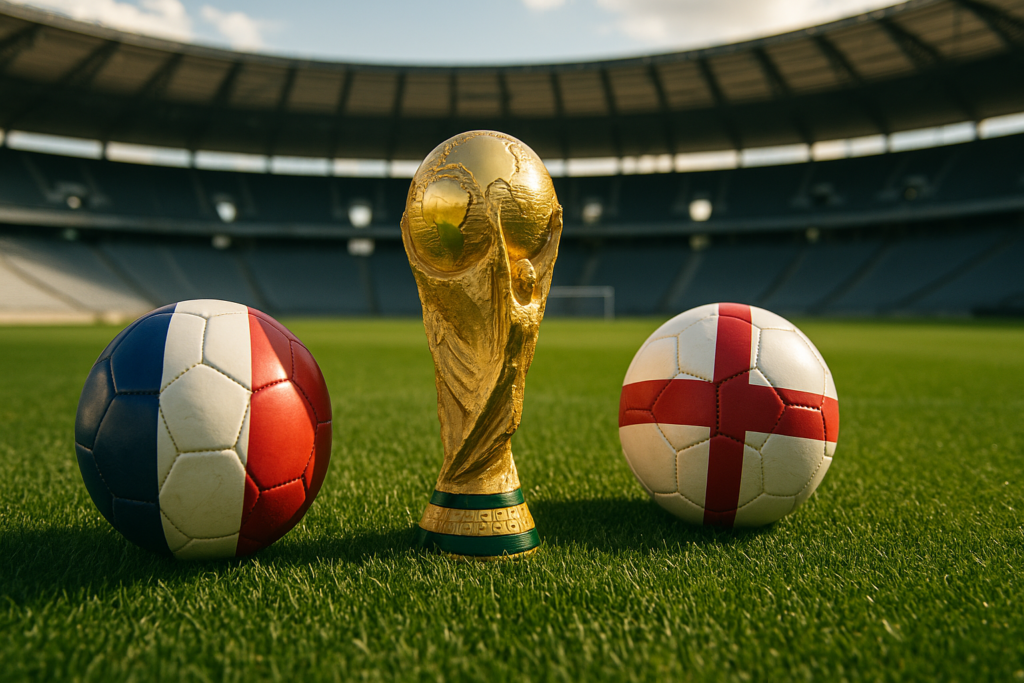
World Cup 2026 Final Prediction: Why France vs. England Is the Most Likely Matchup Alright, football fans and value-seeking bettors — let’s grab a pint and dig into the odds, models, and expert chatter to answer the question everyone’s whispering (and sometimes shouting) about: which two teams will play the 2026 World Cup final? After combing through supercomputer simulations, bookmaker markets, and media brackets, one matchup comes out as the modal outcome: France vs. England. But before you mark your ticket or hedge your futures, let’s walk through why that pairing tops the list, what the credible alternatives are, and how to think about wagering and risk along the way. Why France vs. England? The numbers, the bracket, and the consensus When multiple independent information streams point in the same direction, you pay attention. The loudest signals for 2026 come from three places: probability models (the so-called “supercomputers”), bookmaker markets (futures and exact-final books), and the structure of the knockout bracket itself. First, the simulation models. A widely cited supercomputer projection places France at the top of the list with an 18.66% probability to win the tournament, followed by Argentina at 16.26%, Spain 13.47%, and England 9.68%. Those probabilities were publicized alongside a full tournament simulation and provide a baseline that France is the single most likely champion. You can read the model breakdown at the Sports Illustrated write-up on the supercomputer’s predictions: Sports Illustrated — supercomputer predicts 2026 World Cup winner. Second, bookmaker markets. Exact-final markets are particularly useful because they map to the most likely pairings, not just winners. A Rotowire compilation of exact-final odds lists England vs. Spain as the single most probable exact final at an implied 6.7% (around +1400). That’s a crowded field, but it highlights that England and Spain are frequently matched in the top spots — and England features prominently in the short-list. See the Rotowire odds compendium here: Rotowire — 2026 World Cup final matchup odds. Third, the bracket: current semifinal pairings (as discussed widely in coverage) set up French and English paths that make them both favorites to reach the final. Reports and bracket-focused articles have had France vs. Spain and England vs. Argentina as the semifinal pairings that would most likely produce a France–England final — since France would be favored to beat Spain and England favored against Argentina in those matchups. CBS Sports’ bracket analysis, for example, picks France over England in the final in its full-tournament simulation: CBS Sports — full 2026 World Cup bracket prediction. Put it together: France is near the top of every win-probability list, England is consistently in the top tier to reach the final, and the knockout bracket is arranged such that both can reasonably be the last two standing. That convergence makes France vs. England the most defensible single prediction at this stage. From semis to final: how the bracket shapes the most probable pairing Why does bracket structure matter so much? Because probability multiplies along a path. If Team A has a 60% chance to beat Team B in one semifinal and Team C has a 60% chance to beat Team D in the other, the most likely final is A vs. C — with a 36% chance (0.6 x 0.6). Change one of those percentages and the most likely final shifts. Current coverage has sketched a semifinal slate of France vs. Spain and England vs. Argentina. In both of those hypothetical semis the bookmakers and models list France and England as favorites to advance. That’s why many probabilistic estimators — and many pundits filling out brackets — land on France–England: they’re both favored in their respective paths. Does an exact-final market say France–England is the single top market? Not necessarily — some books show Spain–England as the shortest exact-final pairing — but that’s a technical distinction. Because the brackets force France and Spain to play each other earlier, only one of them can reach the final. The best way to think of it is this: France is slightly more likely than Spain to get out of that half; England is slightly more likely than Argentina out of the other half; combine those and France–England becomes the modal pairing. For readers who like bracket logic, The Guardian’s prediction package and other expert brackets repeatedly include France in the final and often pair them with England or Argentina depending on the writer — that’s qualitative support pointing in the same direction as the numbers: The Guardian — writers’ predictions for the tournament. Close alternatives: Spain and Argentina aren’t far behind Now, the important caveat: this isn’t a runaway. Spain and Argentina are right behind, and in many models Spain is actually the shortest-priced outright winner in futures markets. The supercomputer still ranks Spain and Argentina near the top, and many betting markets list Spain, France, England, and Argentina as the quartet most likely to contest the final. What does “right behind” mean in practice? Using the SI simulation numbers as a guide, France’s win probability (18.66%) is only a few percentage points higher than Argentina (16.26%) and Spain (13.47%). England’s outright chance is lower (9.68%), but England’s placement in exact-final markets is buoyed by matchups and bracket routing. In plain terms: France and England are the most probable pairing, but Spain–England or France–Argentina are close-run alternatives — not distant long shots. That explains why different media outlets land on different finals. A bracket filled out by betting favorites might churn out Spain–England, while model-based simulations churn out France vs. Argentina or France vs. England depending on the random variance across thousands of tournament runs. Squawka’s predictions and mid-season odds pieces also show Spain occupying that top tier: Squawka — 2026 World Cup final predictions. Betting markets and how to read them (without getting fooled) If you’re wagering on a World Cup final, it helps to know what each market is actually telling you: Futures (to win): These show outright win probability and prize. They’re useful for long-term exposure but are influenced
France vs Spain World Cup 2026 semifinal betting guide

France vs Spain (World Cup 2026 semifinal): A gambler’s guide, prediction and smart bets France vs Spain – the sort of matchup you dream about as a bettor: two heavyweight nations, different styles, and a market that says one is a clear favorite — but not invincible. Bookmakers and most pundits peg France as the consensus favorite to reach the 2026 World Cup final (roughly a 55–60% chance), yet Spain is far from a token opponent. This preview pulls the market prices, expert takes and tactical notes together so you can make smarter, practical betting decisions — and understand why each angle matters to your stake. Where the market stands: odds, implied probability and what to read into them Let’s start with hard numbers, because nothing beats knowing what the market is actually telling you. Across major books and aggregated previews France to advance is roughly priced between 1.67 and 1.72, implying about a 58–60% chance they reach the final. One bookmaker example quoted by The New York Times shows a BetMGM line of France -145 and Spain +115 for qualification, putting France around 59–60% to go through in that market. See the NYT Athletic odds writeup for the direct market snapshot: NYT Athletic: France-Spain World Cup semifinal odds. For 90-minute regulation outcomes, the market clusters roughly as follows (again, numbers vary by book): France win ~40–45%, draw ~27–30%, Spain win ~28–33%. The best available single-book prices cited in previews were a France win at 2.48 and Spain at 3.23 for 90 minutes. Aggregated previews that combine multiple operators show the same shape — France favored, but the match is hardly a blowout. One useful aggregation you can read for the broader market context is available here: France vs Spain preview and odds (rg.org). Quick take: markets are saying France are the clear favorite to advance (around 55–60%), but Spain has a substantial ~40–45% path — exactly the sort of underdog you should respect as a bettor interested in value. Tactical matchup: why style, recent form and head‑to‑head matter to bettors The odds won’t exist in a vacuum — they’re pricing a tactical battle. Spain bring the possession, ball progression and a strong defensive system. They’ve won the past two head‑to‑head meetings against France, which explains why many analysts still see them as a credible underdog. Meanwhile, France threaten in transition: quick forward passing, explosive attackers who can punish any misplaced pass or open space. Market writers point to France’s ability to create high-value chances in short sequences as a driver of their edge. Experts echo that split. Fox Sports framed this as “the World Cup final that arrived early,” and emphasized that France — as reigning finalists — have the momentum and, in the view of that outlet, the upper hand right now. That piece also calls out a story element: France play this semifinal on Bastille Day, a narrative flourish that bettors may love but which is a non-quantitative edge (read the Fox Sports feature here: Fox Sports: France vs Spain — final arrived early). On the flip side, pundits on ESPN FC reminded viewers how Spain can “leave it late,” with late goals and resilient defense getting them through tight knockout tests. That’s the classic profile of an underdog that’s dangerous: possession advantage plus low error rate. For the recording of that ESPN discussion see: ESPN FC panel — Spain reaction and analysis. Goals, totals and BTTS: the market disagreement you should exploit Now to a market that often offers the best value: totals and both‑teams‑to‑score (BTTS). The numbers say the book‑makers expect a fairly tight game. FanDuel’s line showed Under 2.5 goals at -122 and Over 2.5 at +100 (even money), signalling an expectation that the match likely finishes with 0–2 goals rather than a goal fest. That line is quoted in the NYT Athletic market roundup: NYT Athletic totals detail. BTTS, however, is where operators disagree — and disagreement equals opportunity for bettors who shop lines. Several Canadian-facing books priced “Yes, both teams score” shorter (for example around 1.68), implying bettors should expect both sides to score. Conversely, Hard Rock Bet favoured “No” at 1.74, pulling a different story in: France’s recent clean-sheet sequence and defensive strength suggest at least one team might keep a clean sheet. That split is noted in the aggregated preview: market BTTS split (rg.org). Practical takeaway: if you want to back match goals, do your line shopping. If you think France’s defense stays tight, take BTTS No where it’s priced better than ~1.70. If you think Spain’s possession will force breakdowns and create shots, BTTS Yes at ~1.68 is defensible. The difference between 1.68 and 1.74 is small, but over time those margins compound. Smart betting angles: value plays, contrarian stances and how to size your exposure With the market and the tactics in hand, here are practical angles to consider — with the usual caveat: nothing is a lock, and bankroll control matters. Market‑aligned core bet: Small stake on France to advance (1.67–1.72). This mirrors the market and captures the favorite’s edge while keeping risk limited because the probability matches the price range reported by major aggregators. 90‑minute regulation value: If you want contrarian value, backing Spain to win in 90 minutes at ~3.23 can be a high‑variance, modest‑stake play. Markets give Spain a ~30% chance of winning in regulation; if you buy that at 3.2+ you are getting nice upside for a small bet. Totals/Both Teams to Score: If you like low‑scoring football, Under 2.5 is the market lean (-122) and is logical given France’s clean-sheet run. If you think both sides’ attackers will break through, BTTS Yes at ~1.68 is a reasonable, slightly contrarian option where some books are shorter. Cashout/hedge-aware play: Because the draw is priced around 3.30, book a small position on France to win in 90 and a separate position on France to qualify — you can manage a partial hedge if the moneyline swings during the match. Important: be clear whether you’re
Unibet Free Spins 150 Spins Myth vs 300 Spin Welcome

How to Claim 150 Free Spins on Unibet (and smarter ways to get the same or more) Short answer: you can’t reliably sign up right now and grab a standard “150 free spins” on Unibet UK. But don’t pack away your party hat — there are official, verifiable routes that deliver the equivalent (and often a lot more). In this guide I’ll walk you through the realistic options: the official 300‑spin welcome, an OLBG exclusive 250 no‑wager deal, how referral and bonus-credit mechanics can convert into hundreds or thousands of spins, plus the pitfalls, play‑through rules and timing that matter. Why the “150 free spins” question keeps coming up Players see numbers and want to compare: “150 spins” sounds like a lot and looks eye-catching. But spins aren’t a universal unit — their real value depends on spin size, game RTP and the fine print (wagering, game locks, expiry). Historically Unibet and other operators have run mid‑count free‑spin promos (including 100–150 spin styles), so search results and forum chatter keep the idea alive. That said, as of the latest live offers for Great Britain, Unibet is running alternatives that beat 150 in total spins or value. So the real question to ask is: what is your goal — sheer number of spins, no‑wager cash, or the highest possible effective value? Different routes suit different aims. The straightforward official route: 300 free spins (UK slots welcome) If you want a single, official welcome deal that exceeds 150 spins, the clear shot is Unibet’s current UK slots welcome: 300 free spins on Big Bass Splash. This is a genuine, live promotional route aimed at new Great Britain customers. Key facts you need to know before signing up: Who’s eligible: New GB customers, 18+. (Check location checks during registration.) How to claim: Opt in to the slots welcome during registration or in the promotions area, deposit and stake £30 on slots using a debit card or instant bank transfer (e‑wallets typically excluded). Spin mechanics: 300 spins credited on Big Bass Splash, each spin worth £0.10 (so the spins represent £30 of stake value). Wagering & expiry: Winnings from these spins carry a 10x wagering requirement and spins usually expire within 48 hours of being credited. If you want the full terms, check Unibet’s official promotions information (they keep the latest T&Cs on their site): Unibet casino welcome offer. Independent tracker pages also list the 300‑spin route and the deposit/stake requirements — for context see the Oddschecker summary of Unibet’s casino bonus options: Oddschecker – Unibet casino bonus. Why this matters: 300 spins at £0.10 is a straightforward numeric win vs searching for 150 spins. But that 10x wagering on winnings (and the 48‑hour expiry) means you need to plan how to deploy the spins — don’t let them burn unused. Better value if you care about cash: OLBG’s 250 no‑wager spins If you hate play‑through stress and want spins that drop winnings straight into your cash balance, the OLBG‑tracked exclusive is the standout. OLBG offered a verified Unibet welcome via their partner link that gives 250 free spins with no wagering. That’s 50 spins per day over five days — and no wagering on the winnings. Claim mechanics: Register via the OLBG link, opt into the offer within seven days, deposit £10+ using a debit card, and stake £10 on slots within seven days of opting in. Distribution: 50 spins per day for five days, each £0.10 in value. Different days credit different named slot titles (Big Bass Splash, Hyper Joker Gold, 12 Masks of Fire Drums, Gold Blitz Ultimate and Fishin’ Frenzy Big Catch). Expiry & availability: The daily spins are typically live between 09:00 and 23:59 UK time and expire 24 hours after crediting; crucially, OLBG’s promotion states winnings are paid to cash with no wagering. This is an appealing route for players who prefer smaller deposits, staggered play and no‑wager cash wins. OLBG’s write‑up explains the structure and requirements in detail: OLBG: Unibet 250 free spins no wagering. Why this matters: 250 no‑wager spins is objectively better than a 150‑spin offer if your primary aim is withdrawable cash without play‑through headaches. The trade is the smaller deposit requirement and the need to claim via an affiliate link — not all affiliate exclusives run forever, so timing matters. Turning bonus credit and referrals into “virtual spins” (often far more than 150) If the headline spin count is your thing, don’t forget Unibet’s non‑spin offers can be converted into a huge number of small‑stake spins — effectively yielding 150+ spins with minimal risk. Unibet’s refer‑a‑friend and bonus‑credit programs have been documented to pay up to around £150 in bonus funds for referring multiple friends. Betting.co.uk and other reviewers outline how that referral structure typically distributes bonus credit across several friend sign‑ups. The logic: Bonus cash can be used on slots. If a game accepts £0.10 or £0.01 minimum bets, £150 in bonus becomes 1,500 spins (at £0.10) or 15,000 spins (at £0.01) in pure count terms. That’s why many players think in “equivalent spins”. Operational notes: Friends must register via your referral link, make a qualifying deposit (sometimes place a bet), and bonus funds can take up to 72 hours to arrive once conditions are met. Wagering and restrictions: Bonus funds usually carry wagering requirements and game weightings. Always read the bonus T&Cs before converting to tiny bets so you don’t inadvertently break the rules. For an example of the maths and how operators structure non‑spin bonuses, see the review summaries on Betting.co.uk and the conversion examples on Insider Gaming: Betting.co.uk – Unibet Free Spins review and Insider‑Gaming: Unibet no deposit/bonus analysis. Why this matters: converting bonus money into lots of low‑stake spins is a legitimate strategy for players who chase volume and are willing to meet any wagering requirements. It’s not “free” — terms apply — but it achieves the 150+ spin outcome in a different form. Daily tournaments, loyalty and ad‑hoc promos — the slow and steady path to
World Cup 2026 Quarterfinal Betting France Morocco Outlook

World Cup 2026 Quarterfinal Prediction: France vs Morocco — Why France Is the Favorite, and Why Morocco Still Matters Alright, let’s break this down like two teammates huddled behind a beer cart: France enter the 2026 World Cup quarterfinal against Morocco as the clear betting favorite, but in knockout football anything can happen. Models, pundits and the markets largely agree on one thing — France to advance — yet the ways to back that outcome (and ways to get paid more for taking risks) are where the fun — and the danger — lies. What the numbers and experts say If you want the cold, hard consensus: France win. Multiple previews and predictive models are stacked in France’s favor, with common scorelines ranging from 1-0 to 3-1 and a heavy lean toward a tidy 2-0. ESPN’s World Cup preview panel mostly picked France, with projected scorelines from 1-0 to 3-1, and outlets like USA Today note the repeated 2-0 projection among analysts. Model forecasts back this up. Opta’s supercomputer gave France about a 60.9% chance to win in 90 minutes, while other reputable models cluster around the 60% mark as well — a clear favorite but not a guarantee. You can read one of the deeper model previews at The Analyst. Market indicators mirror the models: France were the strong favorite on the 90-minute money line and to advance, with Morocco significantly priced as the underdog. Betting previews and lines from outlets like CBS Sports and other data-driven services showed bettors where the juice and value were sitting ahead of kickoff. Why models prefer France — tactical and personnel reasons Models don’t evaluate jerseys and national pride; they digest recent form, goal expectancy, player availability, head-to-head traits and underlying numbers. France have ticked a lot of the boxes that push probabilities upward: consistent goal production in the tournament up to this point, depth across attacking positions, and a defensive structure that — in theory — can limit transition chances. That’s why the most common expert scoreline is France 2–0 Morocco. It’s a middle-ground call: enough superiority to produce goals, but not such a blowout that France have to run up the score. If you want the model-heavy take, see ESPN’s panel breakdown at ESPN for the pundit range. Why Morocco can’t be dismissed — the underdog case Being the underdog doesn’t mean automatic exit. Morocco’s path to the quarterfinals tells you they can be organized, resilient and tactically disciplined. Underdogs in single-elimination games frequently reduce variance by cutting off a favorite’s strengths (pressing lanes, forcing crosses, minimizing space behind the defense). If Morocco execute a low-risk, counter-punching plan and frustrate France early, they can force an error, a set-piece, or even a penalty shootout scenario. The gambling reality: the market prices Morocco with a lower probability, which can create value on particular bets — long-shot scorelines, double-chance markets, or alternative props — if you believe in matchups or a specific game plan. For match previews that dig into Morocco’s tactical shape and threats, see the game preview archive at Squawka. Betting angles: how bettors are approaching this one There’s a practical split among bettors and analysts on two big market plays: outright to advance (moneyline) and total goals (over/under). Here’s the synthesis that many handicappers are using in their note pads. Primary prediction — France to win: Simple, clean, widely recommended by experts. This is the consensus pick: France to advance in regulation. Likely scorelines — 2-0 or 2-1: Many pundits and algorithmic models land at these results. If you’re shopping markets for higher returns, consider French win + correct score markets. Totals — mixed opinions: Some analysts lean over 2.5 goals because France have been scoring heavily in the tournament. Others expect a tighter, tactical clash and prefer under 2.5. If you prefer safer plays, looking at under 3.5 or team totals may be less swingy than a straight over/under split. Props to shop: Look at shots on target for France, both teams to score (BTTS) markets, and first-goal scorer lines. Props can move a lot and sometimes offer better value than the moneyline. For a line-and-odds perspective from a typical odds-provider point of view, previews like the one at CBS Sports and the SportsLine breakdowns you can find online outline how bookmakers were positioning the lines. Live betting and hedging — when the market gets interesting One advantage to watching half an hour of the game before putting money down: live lines often provide better value if the favorite is slow to press or the underdog is dangerous on counters. If France start flat and Morocco grab an early lead, live markets compress and you can hedge or snag an inflated line for France to come back. Conversely, if France score early, live moneylines for Morocco climb — an ideal hedge for pre-match backers who want to lock profit. Remember: live betting is fast-moving and liquidity can dry up on some prop markets. If you plan to use in-play markets, prepare mentally for quick decisions and smaller bet sizes. Risk management: bankroll, value, and why the favorite isn’t a lock Let’s keep this grounded. A 60% win probability means France are more likely to win — but they also lose or draw in 40% of scenarios. Over time, that’s a lot of variance. Smart gamblers treat favorites like any other bet: calculate edge, shop lines and size your stake to protect the bankroll. Bankroll sizing: Consider the Kelly criterion or flat-percentage staking (1–3% of bankroll) depending on confidence. Emotional bets after a bad run often blow accounts more than bad picks. Line shopping: Small differences in moneyline price change long-term expectancy. Use multiple reputable sportsbooks to find the best number. Avoid chasing: If the market moves against you late, don’t upsize to “recover losses.” Stick to your plan. Injuries and late info: how they can flip the script In tournaments, a single injury or tactical tweak can shift probabilities. Even model outputs get updated when key players
Switzerland vs Colombia Data-Driven World Cup 2026 Betting
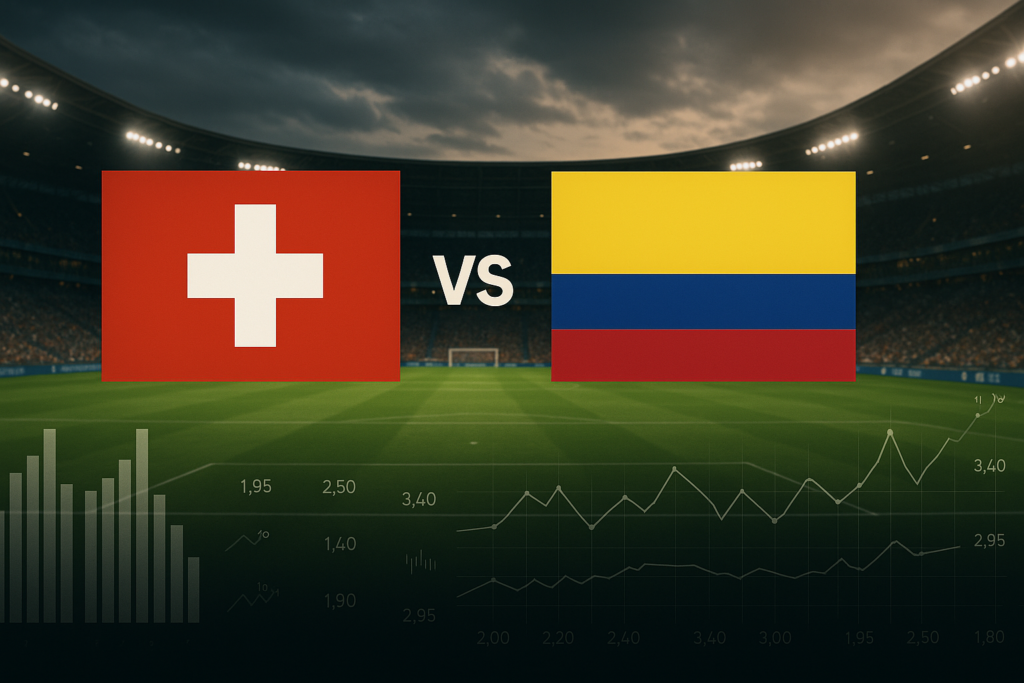
Switzerland vs Colombia — World Cup 2026 Round of 16: A Data‑Driven Prediction and Betting Guide Round‑of‑16 nights are the spicy meat of the World Cup: small margins, bigger heart rates, and a dozen micro‑decisions that decide whether a nation keeps dreaming. Switzerland vs Colombia looks like one of those deliciously tight fixtures. Most models and the betting market tilt toward Colombia, but it’s a squeaker — a match where a single moment (a counter, a set‑piece, a substitution) flips everything. I’ll walk you through what the numbers say, why they matter, the tactical matchups, and how to think about wagers if you’re tempted to put real money on it. What the models and markets are saying Consensus? Colombia are the narrow favorite. The Opta/Analyst supercomputer gives Colombia roughly a 42–43% chance to win in 90 minutes, Switzerland about 29–30%, and a draw around 28% — a distribution that screams “close game” rather than blowout. See the detailed model preview at The Analyst. Bookmakers are on the same page. Aggregated odds put Colombia in the low‑mid 40s percent implied probability to win in regulation, with Switzerland down in the high 20s and the draw similarly priced. Typical mainstream previews and betting commentaries center on scorelines like 2–1 to Colombia or a 1–1 stalemate that goes to extra time. For an example of the market picture and tactical take, see the Sportsbook Wire preview at USA Today Sportsbook Wire. Translation for bettors: Colombia are “correct” favorites — they have the edge, but it’s modest. There’s meaningful upset risk and a healthy chance the game goes into extra time. If you want a simple shorthand: Colombia ≈ 42–45% to win in 90′; Switzerland ≈ 27–30%; Draw ≈ 27–28%. Tactical matchup — why this will be tight On paper the styles set up perfectly for a close, competitive match. Colombia bring the higher‑variance attacking profile. With players like Luis Díaz and creative forwards around him, they can produce moments of magic and sustained pressure. Their match vs Ghana showed under‑realized finishing — Colombia outperformed the scoreboard in expected goals (xG), roughly a 1.77 xG advantage over Ghana, which suggests they created more chances than the 1–0 result suggested. That kind of attacking ceiling makes them dangerous: when they click, they can decide a knockout game. Switzerland offer tournament reliability: structure, discipline, and defensive organization. They arrived unbeaten in 10 competitive internationals (W7 D3) and have shown more attacking teeth in this tournament (eight goals in their last three matches). Switzerland aren’t flashy, but they are hard to break down and excellent at minimizing variance — the exact profile that frustrates higher‑flair teams. The net effect: Colombia are more likely to “win big” on their day, while Switzerland are more likely to drag the match into a coin‑flip extra time or penalties. That’s exactly why markets price this as a narrow favorite rather than a clear favorite. For a tactical read that outlines both teams’ tournament arcs, see the AZ Central preview at AZ Central. Goals market: low‑scoring default vs contrarian “over” case Bookmakers are leaning toward a low‑scoring, cagey knockout affair. Under 2.5 goals is generally favored — knockout football, caution, and the tactical matchups push markets that way. But contrarian handicappers have a believable counterargument: both teams have shown attacking form this tournament. Switzerland scored eight goals in three games and have stretched opponents more than people expect; Colombia’s xG numbers suggest their attacking threat is out of step with some low scorelines they’ve had. Rotowire and several tipsters argue the “both teams to score / over 2.5” angle has value. Read a grounded betting take on attacking numbers at Rotowire. How to think about it: If you believe matchups and knockout nerves will dominate, favor under 2.5 or markets like “under/clean sheet.” If you think Colombia’s creative output will finally translate and Switzerland will keep pushing forward (they’ve been scoring more), a small contrarian stake on BTTS (both teams to score) or over 2.5 could pay off. Key players and micro‑matchups to watch Who changes this game? Who tilts the odds? Luis Díaz (Colombia) — top X factor. If he gets space on transitions or wins 1v1s, Colombia’s probability to score jumps. Tight defensive attention will be paid to him because his individual actions often create high‑value chances. Colombian creative midfielders — if they can link play and draw Swiss defenders out of shape, Colombia’s higher xG profile turns into real goals. Swiss defenders and fullbacks — their ability to maintain shape against quick counters and restrict wide penetration matters. Switzerland’s structure aims to limit high‑quality chances; if they succeed, the match becomes a low‑event chess game. Set pieces — in tight knockout ties, corners and free‑kicks are leveling tools. Both teams must avoid cheap fouls and concentration lapses. When you watch the match, focus on transition moments and set‑pieces: those are the microstates that produce macro outcomes here. Split in expert picks — where the disagreement is coming from Experts aren’t unanimous. Three camps have emerged: Colombia in regulation (majority): The Opta model, multiple betting channels, and several national outlets lean to Colombia winning 2–1 or similar. The reasoning: better attacking talent and an xG edge. See predictions converging on Colombia at The Analyst and the USA Today Sportsbook Wire piece linked earlier. Switzerland upset (minority): Some contrarian analysts and value bettors favor the Swiss moneyline at longer odds, pointing to their unbeaten run and tournament reliability. Covers offers an example favoring Switzerland as an upset play at value odds: Covers. Draw / extra time narrative: A significant group frames this as a game highly likely to go long — a 1–1 or low‑scoring stalemate that becomes a coin flip in extra minutes. If you believe in Switzerland’s structure and knockout caution, this is a plausible outcome highlighted by a number of tactical previews. The disagreement is not about who is better overall — it’s about variance. Do you trust Colombia’s high ceiling, or Switzerland’s tournament consistency? Both arguments
France vs Paraguay World Cup 2026 Betting Odds and Outlook

France vs Paraguay — Who Will Win the World Cup 2026 Round of 16 Clash? Short answer: the markets, models and most experts say France. Long answer: yes — France are heavy favorites, but Paraguay has already shown they’re capable of stirring trouble. If you like numbers, the probability gap is huge; if you love drama, knockout football has surprise written all over it. I’ll walk you through the odds, the reasoning, plausible scorelines, how bettors think about value here, and how to approach this one without getting swept up in emotion. What the betting markets say (and why that matters) Bookmakers have made their view crystal-clear: France are priced as a prohibitive favorite. Public previews and market lines show France around -500 to -575 on the 90‑minute moneyline, while Paraguay sits in the long‑shot neighborhood of +1400 to +1800. Those lines imply something like an 83–85% chance for a France win in regulation and only a 5–7% chance for a Paraguay victory — before you even account for the sportsbook’s juice. You can see that framing and the market snapshot in this AzCentral preview of France vs Paraguay odds. Why does that matter? Because odds aggregate information: recent form, injuries, lineups, public money, and expert views. When a single outcome (France winning) carries that much implied probability, markets are telling you this is not a 50/50 knockout—it’s skewed. That affects which markets offer “value” and which are simply expensive chances to back the favorite. Models and win probabilities: the raw math Quantitative forecasts back the betting markets. One model referenced in previews gives France a roughly 79% chance to win, Paraguay about 6.1%, and roughly 15% for a draw after 90 minutes (which would push the game to extra time and possibly penalties). Those numbers line up with the heavy favorite narrative — France aren’t just a touch better, they’re the clear superior side on paper. The probability breakdown and model context are discussed in the same AzCentral article that summarized market odds. Remember: models are only as good as their inputs. They assume the usual things — standard lineups, no late red cards, normal referee decisions. In knockout football, a single VAR call, an injury, or an early red card can flip outcomes fast. That’s why an upset remains plausible despite long odds. Form and context: why France are heavy favorites France’s route into the Round of 16 has looked dominant. Analysts describe them as “the most impressive outfit at the 2026 World Cup,” pointing to a destructive attack and depth all over the pitch. Practically speaking, France have scored at least three goals in every match so far at this tournament, including a tidy 3–0 win over Sweden in the previous round — a fact highlighted by expert previews and lineups coverage (see the Sports Illustrated France lineup preview and the SportsLine analysis). Why does that matter for a knockout match? Depth and attacking firepower let France rotate without losing threat; they can press, punish counterattacks, and still turn defenses inside out late in games when opponents tire. Previews point out that France have the personnel to produce multi-goal wins and to shut opponents out — which explains odds and the frequent “win to nil” expectations from pundits. So can Paraguay actually pull off an upset? Don’t write Paraguay off. Their tournament has included gritty results and at least one headline moment — they eliminated Germany on penalties — and that kind of resilience is exactly how underdogs make life difficult in knockouts. Previews note the surprise quality of Paraguay’s run and stress that a major shock is required to beat France (see VSiN’s pregame notes and betting angles in their VSiN Paraguay vs France write-up). What would an upset look like? Usually it involves a compact defensive plan, clinical set-piece execution, and staying alive late to force extra time/penalties where variance increases. Statistically, upsets are low-probability but high-payoff events; that’s why markets label Paraguay at +1400 to +1800. If you believe the bookmakers overstate France’s edge — maybe because you expect tactical adjustments or key starters rested — then backing Paraguay is the value play. Just know you’re betting against an 80%ish consensus. Common predictions and probable scorelines Across previews and handicapping videos, the common call is a France win by two goals or so — think 2–0 or 3–1 — and some experts specifically predict a “win to nil” outcome for France. Sports pundits and handicapper commentary have floated comfortable multi-goal wins as the likeliest scenarios, with parlay-minded outlets even pushing “France both halves” as a high-confidence leg in same-game parlays (see analysis pieces and handicapping videos, e.g., handicapper breakdown and the Yahoo Sports preview). Those predictions hinge on France maintaining attacking intensity and Paraguay being unable to prevent opportunities. If Paraguay can force a more conservative game and win a set-piece or penalty shootout, the upset path opens up — but most models and markets still favor a France victory in regulation. How bettors should think about value and risk If you’re wagering, here are practical ways to approach the mismatch without getting emotionally burned: Understand implied probability: American odds of -500 translate roughly to an 83.3% implied chance; -575 is about 85.2%. Conversely, +1400 is about a 6.7% implied chance and +1800 about 5.3%. Those figures help you compare what you think should happen versus what the market prices. Shop the lines: Different books will have slightly different odds. Small increases on favorite odds don’t change implied probability much, but they do affect payout if you’re parlaying. Look for markets that fit your forecast: If you think France will dominate early, “France to win both halves” might offer better value than a straight moneyline. If you suspect a tight, tense match decided late, consider props like “draw after 90 / France win in ET/penalties.” VSiN’s pregame pieces discuss those same-game and halves angles. Size your stakes to the edge: When the market is overwhelmingly aligned, edge is small. Conservative stake-sizing preserves bankroll
Spain favored as Austria eyes upset in World Cup betting
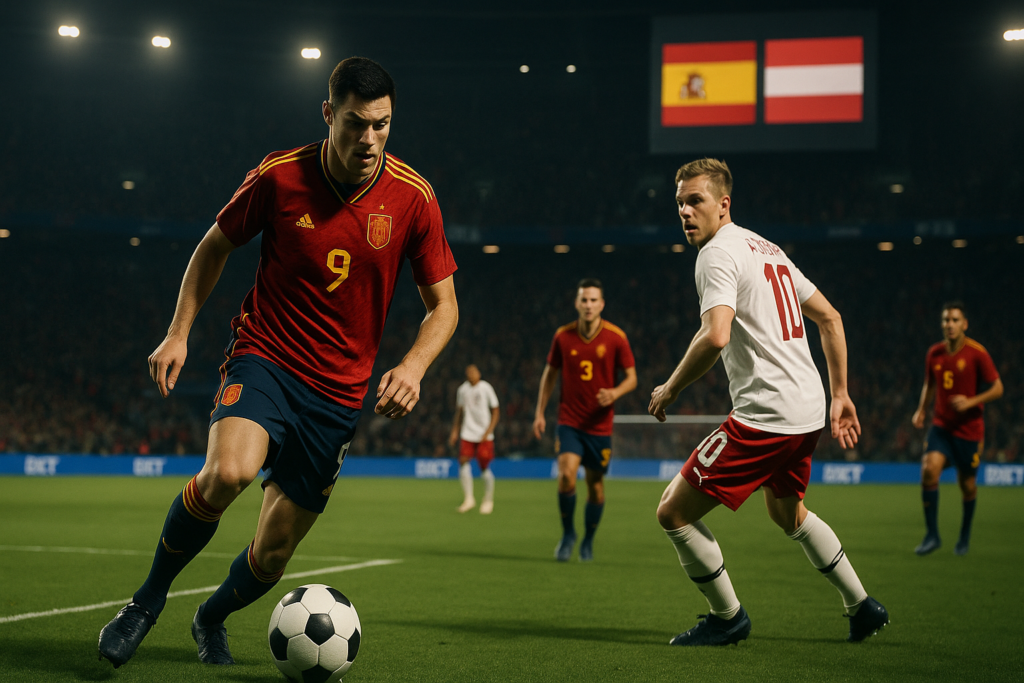
Spain vs Austria, World Cup 2026 Round of 32 — Who Will Win? Short answer: everything in the market and the models screams Spain. Long answer: Spain are the heavy favorites for good reason, but football is famously messy and Austria have a couple of realistic paths to make this a closer game than the betting boards expect. If you like numbers, the consensus scoreline across previews is Spain 2–0; if you like odds, Spain’s moneyline and qualification prices imply a clear gap. Let’s walk through what matters, why it matters, and how to think about this match whether you’re a neutral, a punter, or a coach in your backyard. What the market and models are telling us Bookmakers and most analysts are overwhelmingly on Team Spain. The 90‑minute moneyline is priced roughly in the -300 to -320 territory for Spain, while Austria sits around +900 to +1000. The draw is floating around +420. Those numbers translate to an implied probability comfortably north of 70% that Spain win in regulation, and model/market consensus pushes Spain’s chance to advance to the next round into the 90%+ band depending on bookstore vig. That’s not just one site saying it — independent previews line up. Sports Illustrated’s match piece predicts Spain 2–0 Austria, and model outlets like WhoScored list a “home win” as the primary prediction. Betting analysts on SportsLine and a number of YouTube tipsters are similarly leaning toward Spain by a multi‑goal margin and flagging lines like Spain -1.5 as attractive. See the Sports Illustrated preview for context: Sports Illustrated preview: Spain vs Austria, the CBS Sports betting write‑up: CBS Sports odds and prediction, and the SportsLine picks: SportsLine — Spain vs Austria picks. Why Spain are heavy favorites (the data) The reasons the markets are tilted toward Spain are straightforward and measurable: Ranking and pedigree: Spain sit inside the top three of the FIFA rankings; they went through Group H as group winners and carry the aura of a reigning European champion. That status matters both psychologically and in objective models built around recent results. (See the CBS/SportsLine coverage for the ranking and context.) Defensive record in the tournament: Spain outscored their group opponents 5–0 and registered three clean sheets across three matches. Clean sheets at this stage of the tournament tell you the defensive structure is working and that they’re not conceding cheap chances. Model agreement: WhoScored’s statistical preview lists a home win at 1.30, with common scoreline pricing (a 2–0 is a frequently promoted market option). The convergence of bookmakers, predictive models, and expert picks is a classic signal that the probability of a Spain win is high. Put bluntly: Spain have the form, the defense, and the ranking. When models, experts, and bookmakers all line up, they’re usually not wildly wrong — but they’re not infallible either. Where Austria can reasonably cause problems Don’t write Austria off like a powerless underdog. They have vulnerabilities, but they also have real strengths and specific scenarios that increase their chance of causing an upset. Set pieces and transition moments: Austria scored freely in moments during the group stage (they posted a 3–1 win and were involved in a 3–3), which suggests they can be dangerous in transition and offensive aerial situations. Against a possession‑dominant Spain, quick counters and set pieces are Austria’s clearest path to goals. Mental reset after Argentina result: Austria’s group included a 0–2 loss to Argentina, but they followed up with results that demonstrated offensive capability (3–3 vs Algeria). Teams that survive a tough group and still display attacking output can threaten a favorite on any given day. The knockout wildcard: Knockout matches compress variance — one red card, one clinical counter, a penalty call — and that increases upset probability relative to a purely modelled expectation. Upsets happen; markets price them small but not zero. In short: Austria’s most realistic routes to success are quick strikes off turnovers, set pieces, and disrupting Spain’s rhythm early. If Austria can score first and drag the match into chaos, the value of conservative lines for Spain evaporates fast. Scoreline forecasts and totals — what to expect The pundit and model consensus favors a low‑to‑moderate scoring Spain win. Typical predictions are: Most common scoreline call: Spain 2–0 Austria — this is explicitly predicted by Sports Illustrated and multiple betting analysts. Totals lean: The Over/Under 2.5 market is a focal point. A number of analysts and picks (including Doc’s Sports and SportsLine/CBS) are leaning toward Under 2.5 goals, reasoning that Spain’s control and defensive solidity will limit Austria’s opportunities. Prop pricing support: WhoScored prices a specific 2–0 at around 6.50 and Under 2.5 near 2.10 — those market prices reflect the combined model and bookmaker thinking. Why does Under 2.5 make sense here? When a possession‑heavy, defensively reliable team meets an underdog that will almost certainly be organized to frustrate and counter, the most likely match template is one or two Spain goals and few openings for a high‑scoring flurry. Markets agree; multiple independent forecasters do too. Betting angles: sensible ways to play this match If you’re considering a wager, think in terms of probability, value, and variance. A few pragmatic angles that match market thinking: Back Spain 90‑minute moneyline for a conservative play: This is the textbook option for bettors who want exposure to the favorite without overstretching. Expect short returns but also a high implied win probability given lines between -300 and -320 (see CBS Sports for the listed prices). Spain -1.5 handicap for higher payout (bigger risk, higher reward): Many analysts flag Spain -1.5 as a correct or attractive play — it requires Spain to win by at least two goals, which aligns with the common 2–0/3–0 forecasts. This is a directional bet: you accept more variance for better odds. Under 2.5 total goals if you believe in Spain control: Experts at SportsLine and other outlets recommend Under 2.5 in line with a defensive Spain performance. This is a sensible side bet for lower volatility, but make
England vs DR Congo Betting Preview and 2-0 Prediction
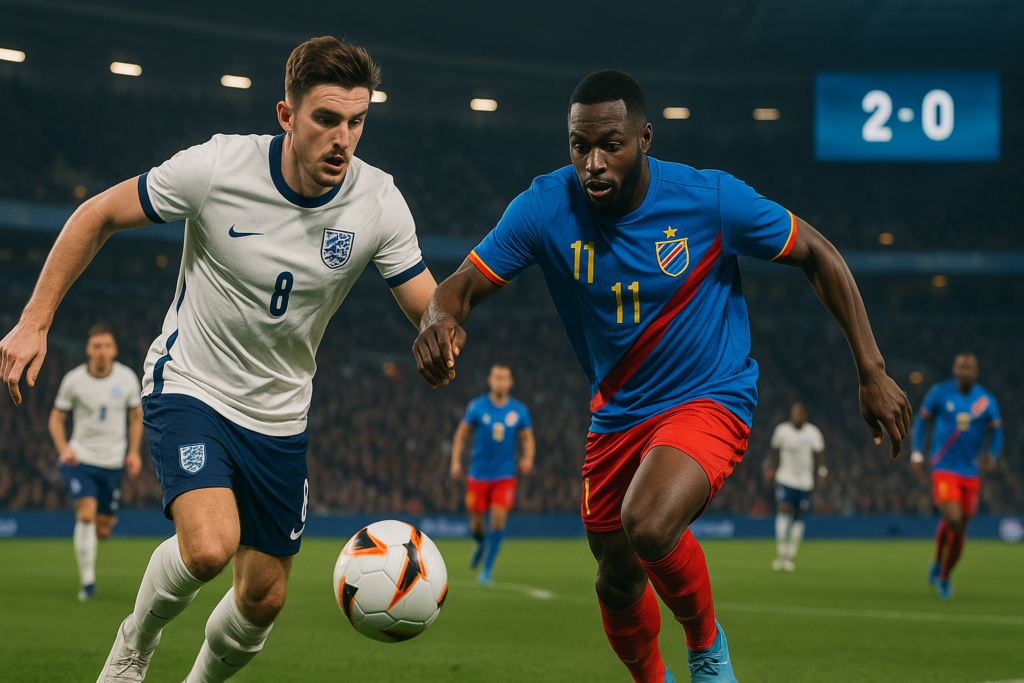
England vs DR Congo (World Cup 2026, Round of 32): A Betting-Savvy Preview and 2-0 Prediction Alright, let’s set the scene like two friends at the sportsbook: England are heavy favourites, DR Congo are the plucky underdogs, and the smart money — and the smart models — are pointing to a tidy, low-scoring England win. The clearest single-line from the preview cluster is this: England 2–0 DR Congo. That’s what most tipsters, statistical models and market reads are converging on. But as any seasoned gambler knows, the fun is in the nuance — why that specific scoreline, where the value sits, and what can derail the chalk. I’ll walk you through the probabilities, tactics, betting markets and sensible staking ideas so you can approach this Round-of-32 clash with a cool head and a plan. What the models and market say (numbers you can trust) Let’s start with the hard read. Opta’s supercomputer — one of the most widely cited objective models in football analytics — gives England a 73.9% chance to win in regulation, DR Congo an 11.3% chance, and a 14.8% chance the match goes to extra time or penalties. That’s a heavy tilt toward England in 90 minutes and the sort of number that shapes pre-match prices across the right-bookmaker ecosystem. You can see that statistical framing in the Al Jazeera match preview, which cites the Opta output and lays out the same core expectation of England control and a DR Congo compact defensive plan (Al Jazeera match preview). Independent previews and tipsters cluster around a low-scoring England win — most commonly 2–0 — which also matches the xG and tactical readouts you’ll find on sites like WhoScored (WhoScored preview) and in detailed bookmaker markets. SportsMole’s prediction piece similarly lands on England to avoid an upset and to win with a modest scoreline (SportsMole preview). Why 2–0 is the most sensible single-score projection “But why 2–0?” you’ll ask. There are three, connected reasons: Quality gap up front: England possess the kind of attacking firepower and chance creation that usually produces at least one or two goals against compact sides. Even in a tight tactical contest, favourites tend to break through. DR Congo’s defensive solidity: DR Congo aren’t expected to sit back and invite complete annihilation, they’ll be organised, minimizing big chances and slowing the game — which suppresses total goals. Game script probability: When one side dominates possession but the opponent defends collectively, the most likely result is a comfortable, low-scoring win for the better team — exactly the recipe for a 2–0 outcome. That profile — dominance without a goal-fest — is exactly what tipsters and previews are flagging as the highest-probability script for this match. It’s also why many bettors gravitate toward the “England to win and under 3.5 goals” or “Correct score: 2–0” market rather than backing a high-scoring or upset scenario. Tactical breakdown: How England should win, and where danger lies Tactically, this looks like a classic mismatch in depth and control. England will likely dominate possession, probe down channels, and try to create overloads in the final third. Expect creative combinations around the box and set-piece threat. DR Congo’s sensible response will be to collapse the middle, force England wide and look for counter-attacking moments from transitions. Why that matters for bettors: Possession doesn’t always equal goals: England can control the ball and still face a stubborn, low-scoring match if DR Congo defend well inside the box. Watch the first 20 minutes: An early DR Congo goal or a red card (rare, but decisive) flips math quickly. If England score early, the market will shift toward large totals and possible second-half cash-outs; if DR Congo score first, live markets will explode in value for England-backed bettors. Set-piece pricing: Tight games often come down to dead-ball moments. If you find value in corners or set-piece-related scorers, those markets can offer better edges than the straight match result. Where the value is (and where it isn’t) Bookmakers generally reflect those heavy England probabilities in pricing, which means the simple “England to win” market often offers poor value relative to the implied probabilities unless you find boosted odds or a generous promotion. That’s where targeted plays come in: Value play: Correct score 2–0 — It’s the consensus prediction and typically pays decent odds compared to a straight-out England moneyline. If you believe the compact-defence script, 2–0 is attractive because it reflects both the favourite’s edge and the low-goal expectation. Conservative play: England win & under 3.0 goals — A lower-risk parlay-ish market that mirrors the expectation of control without fireworks. Speculative hedge: DR Congo or draw in 90 minutes — Small stakes here pay for the nightmare scenario: a compact underdog catching England on breaks or via an early set piece. Because the upset probability isn’t zero, a tiny outlay can protect a larger England bet if you want insurance. Live markets: Back England after the first 15–25 minutes if the game is goalless — Live odds often lengthen if England haven’t scored early, giving you better implied value while the game script remains in England’s favour. Important note: not every bookmaker price reflects fair value due to vig, promotions, and limit behaviour. Comparing lines across books and using the implied probability from Opta (73.9% for an England 90-minute win) as a sanity check can highlight overpriced or underpriced markets — but remember the bookmakers’ vig makes raw odds look worse than pure probability suggests. Practical staking and risk control for this one You don’t need to be a Kelly wizard to be smart with your money. Here are practical, cautious approaches favored by long-term bettors: Flat stakes for “heavy favourites”: On markets where the model edge is small (e.g., England moneyline), use a small fixed fraction of your bankroll — 1% or less — because variance is still real. Scaled stakes for higher-edge correct-score plays: If you identify genuine value (e.g., a 2–0 at better-than-expected odds), you might increase to 2–3% of bankroll for