
England vs DR Congo Betting Preview and 2-0 Prediction
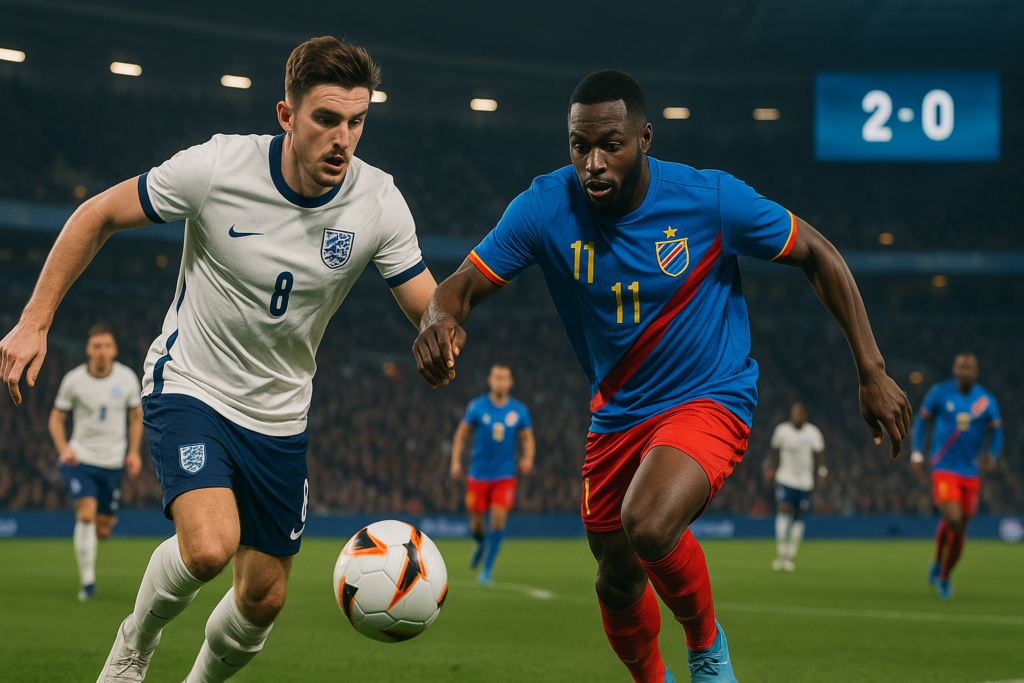
England vs DR Congo (World Cup 2026, Round of 32): A Betting-Savvy Preview and 2-0 Prediction Alright, let’s set the scene like two friends at the sportsbook: England are heavy favourites, DR Congo are the plucky underdogs, and the smart money — and the smart models — are pointing to a tidy, low-scoring England win. The clearest single-line from the preview cluster is this: England 2–0 DR Congo. That’s what most tipsters, statistical models and market reads are converging on. But as any seasoned gambler knows, the fun is in the nuance — why that specific scoreline, where the value sits, and what can derail the chalk. I’ll walk you through the probabilities, tactics, betting markets and sensible staking ideas so you can approach this Round-of-32 clash with a cool head and a plan. What the models and market say (numbers you can trust) Let’s start with the hard read. Opta’s supercomputer — one of the most widely cited objective models in football analytics — gives England a 73.9% chance to win in regulation, DR Congo an 11.3% chance, and a 14.8% chance the match goes to extra time or penalties. That’s a heavy tilt toward England in 90 minutes and the sort of number that shapes pre-match prices across the right-bookmaker ecosystem. You can see that statistical framing in the Al Jazeera match preview, which cites the Opta output and lays out the same core expectation of England control and a DR Congo compact defensive plan (Al Jazeera match preview). Independent previews and tipsters cluster around a low-scoring England win — most commonly 2–0 — which also matches the xG and tactical readouts you’ll find on sites like WhoScored (WhoScored preview) and in detailed bookmaker markets. SportsMole’s prediction piece similarly lands on England to avoid an upset and to win with a modest scoreline (SportsMole preview). Why 2–0 is the most sensible single-score projection “But why 2–0?” you’ll ask. There are three, connected reasons: Quality gap up front: England possess the kind of attacking firepower and chance creation that usually produces at least one or two goals against compact sides. Even in a tight tactical contest, favourites tend to break through. DR Congo’s defensive solidity: DR Congo aren’t expected to sit back and invite complete annihilation, they’ll be organised, minimizing big chances and slowing the game — which suppresses total goals. Game script probability: When one side dominates possession but the opponent defends collectively, the most likely result is a comfortable, low-scoring win for the better team — exactly the recipe for a 2–0 outcome. That profile — dominance without a goal-fest — is exactly what tipsters and previews are flagging as the highest-probability script for this match. It’s also why many bettors gravitate toward the “England to win and under 3.5 goals” or “Correct score: 2–0” market rather than backing a high-scoring or upset scenario. Tactical breakdown: How England should win, and where danger lies Tactically, this looks like a classic mismatch in depth and control. England will likely dominate possession, probe down channels, and try to create overloads in the final third. Expect creative combinations around the box and set-piece threat. DR Congo’s sensible response will be to collapse the middle, force England wide and look for counter-attacking moments from transitions. Why that matters for bettors: Possession doesn’t always equal goals: England can control the ball and still face a stubborn, low-scoring match if DR Congo defend well inside the box. Watch the first 20 minutes: An early DR Congo goal or a red card (rare, but decisive) flips math quickly. If England score early, the market will shift toward large totals and possible second-half cash-outs; if DR Congo score first, live markets will explode in value for England-backed bettors. Set-piece pricing: Tight games often come down to dead-ball moments. If you find value in corners or set-piece-related scorers, those markets can offer better edges than the straight match result. Where the value is (and where it isn’t) Bookmakers generally reflect those heavy England probabilities in pricing, which means the simple “England to win” market often offers poor value relative to the implied probabilities unless you find boosted odds or a generous promotion. That’s where targeted plays come in: Value play: Correct score 2–0 — It’s the consensus prediction and typically pays decent odds compared to a straight-out England moneyline. If you believe the compact-defence script, 2–0 is attractive because it reflects both the favourite’s edge and the low-goal expectation. Conservative play: England win & under 3.0 goals — A lower-risk parlay-ish market that mirrors the expectation of control without fireworks. Speculative hedge: DR Congo or draw in 90 minutes — Small stakes here pay for the nightmare scenario: a compact underdog catching England on breaks or via an early set piece. Because the upset probability isn’t zero, a tiny outlay can protect a larger England bet if you want insurance. Live markets: Back England after the first 15–25 minutes if the game is goalless — Live odds often lengthen if England haven’t scored early, giving you better implied value while the game script remains in England’s favour. Important note: not every bookmaker price reflects fair value due to vig, promotions, and limit behaviour. Comparing lines across books and using the implied probability from Opta (73.9% for an England 90-minute win) as a sanity check can highlight overpriced or underpriced markets — but remember the bookmakers’ vig makes raw odds look worse than pure probability suggests. Practical staking and risk control for this one You don’t need to be a Kelly wizard to be smart with your money. Here are practical, cautious approaches favored by long-term bettors: Flat stakes for “heavy favourites”: On markets where the model edge is small (e.g., England moneyline), use a small fixed fraction of your bankroll — 1% or less — because variance is still real. Scaled stakes for higher-edge correct-score plays: If you identify genuine value (e.g., a 2–0 at better-than-expected odds), you might increase to 2–3% of bankroll for
France vs Sweden World Cup 2026 Betting Outlook and Bets
France vs Sweden — World Cup 2026 Round of 32 predictions and betting guide Pick your seat, fold up your scarf and warm up the calculator — this is the kind of knockout tie that has markets, models and TV pundits all talking in the same voice: France should win comfortably. But in single‑elimination football nothing is guaranteed, so let’s walk through the numbers, the tactics, the realistic scorelines, and where the value (and danger) lies if you want to back a result. What the market is saying: odds, probabilities and implied outcomes If you like watching a pile of data point the same direction, you’ll enjoy this match. Bookmakers have priced France as a heavy favorite in the 90‑minute result market: moneyline quotes sit roughly in the -370 to -400 range, which implies about a 75–80% chance of a regulation win. Sweden are priced as long shots — commonly +950 to +1300 — while the draw floats around +500 to +525. Those figures line up with the consistent narrative across previews and betting voices. For a readable market snapshot see the Covers preview. Model outputs mirror the books. One widely referenced statistical model gives France a 77.3% chance to win in 90 minutes, Sweden 8.4% and a draw 14.3%. If you expand the horizon to see who reaches the next round (extra time and penalties included), market prices put France at roughly -1000 — about a 90–92% implied probability — and Sweden around +550. Those are emphatic numbers, but remember: they’re probabilities, not guarantees. For the model breakdown cited above, see AZ Central’s match preview. Quick take: the market and models overwhelmingly expect France to progress. That expectation is the starting point for every practical bet or prediction you’ll read about this game. Consensus scorelines and the betting angles experts are repeating When many smart people look at the same game, common scorelines emerge. For France vs Sweden the most frequent predictions are in the 3–0 and 3–1 range — SportsMole and several TV pundits anchor on France 3–1, while some betting voices have gone as far as “lambs to the slaughter” and a clean 3–0. Those scorelines flow into three core wagering narratives that keep reappearing: Result bet: France to win (high probability but short price). Handicap: France -1.5 is a popular pick — Covers notes that France cashed -1.5 in all three group games, and many bettors expect them to clear that again. Totals: Over 2.5 goals is widely supported; some traders are comfortable with Over 3.5 at plus money, banking on France’s attack and Sweden’s defensive cracks. SportyTrader’s model, for example, puts France’s 90‑minute win probability around 72.8% and recommends totals-based plays (Over 2.5). The multiple voices arriving at similar plays is useful context — it shows where consensus value might have already moved prices and where contrarian edges could (or couldn’t) remain. Form guide — how both teams have actually been playing France: firing on all cylinders Form is a big reason France are so short. They “strolled” through the group stage, per previews, with an eye-catching offensive return: a 3–1 win over Senegal, 3–0 against Iraq and 4–1 versus Norway. That’s 10 goals scored and only 2 conceded in three games — tidy. Across a slightly broader window, France had won 4 of their last 5 matches heading into the knockout phase, their lone stumble being a pre‑tournament friendly defeat to Ivory Coast. Practical implication: France arrive confident, rhythmically sharp, and with multiple scorers. When a team hits the knockout rounds with attacking form like that, it both raises their ceiling and pressures opponents into mistakes. Sweden: patchy, fragile and surviving Sweden’s route is the opposite. They qualified as one of the best third‑place teams — “squeaking in” rather than swaggering — and their recent results are a mixed bag. Over the last five matches they’ve scored 10 and conceded 10, highlighting both attacking moments and defensive instability. The 5–1 loss to the Netherlands in group play is a particular red flag that analysts point to as evidence Sweden can be exposed by elite attacks. There’s also personnel trouble: defender Isak Hien is listed out for the tie, which weakens an already vulnerable backline. That combination — shaky defense, injuries and a second‑string knockout pedigree — is why markets are so skeptical. Tactical match‑up: why the edge sits with France (and where Sweden might sneak one) On paper this is straightforward. France usually line up in a 4‑2‑3‑1 that morphs fluidly into attacking overloads. That system produces pace, creative midfield runners and a quartet capable of finishing from range and in the box. Previews repeatedly call France “the most dynamic attack in the tournament.” The tactical plan against Sweden is obvious: dominate possession, pin the wing backs and turn Sweden’s 3‑4‑3 into a conservative 5‑4‑1 while forcing turnovers to create front‑line chances. Sweden’s base 3‑4‑3 aims to get numbers in midfield and launch quick counters. The problem is when sustained pressure forces the wide midfielders back; the shape becomes defensive, reducing Sweden’s threat in transition. Add to that a missing center back and you have a recipe for conceding under pressure — exactly what the market fears. Covers’ match notes spell out this collapse-from-3-4-3-to-back-five scenario as central to France’s expected win. That said, soccer is nuanced. Sweden under Graham Potter do have pacey transition outlets (Anthony Elanga is often singled out as a player who can punish overcommitted defenders). If Sweden can hold shape for the first half and then spring a counterattack at a tired French flank, the tie opens up. But that is a low‑probability path — the models give Sweden roughly an 8–9% chance to win — and it requires near‑perfect execution. Value, risk and a practical betting playbook If you’re after actionable plays, this is where you separate short‑term excitement from smart bankroll management. Because France are favorites, pure result bets (France to win) are low reward. The question is whether the market has correctly priced the certainty —
Brazil vs Japan World Cup 2026 betting preview and odds

Brazil vs Japan — World Cup 2026 Round of 32: Predictions, Bets and How to Think Like a Sharp Let’s cut to the chase: on paper Brazil are the favourites, but this tie smells like chaos in the best way — high tempo, attacking intent, and a genuine chance Japan cause an upset or at least send the game beyond 90 minutes. If you’re building a betting ticket or just want to understand the likely scripts, this preview walks through the market, the tactics, the smartest value angles, and practical props you can use without getting cute. Market view: odds, implied probabilities and what they actually mean Across mainstream previews the match‑odds are remarkably consistent. Brazil are trading around 4/6 (≈1.67) to win in 90 minutes, Japan closer to 17/4 (+400), and the draw in the region of 14/5 (+285–300). That multiplicity of sources and prices pushes an implied probability of about 58–60% for Brazil, roughly 25–26% for a draw and 20–22% for Japan. Those numbers are a clear market consensus — see a tactical take at Total Football Analysis and a comprehensive betting breakdown at Racing Post. What those percentages hide is nuance. Several serious previews argue Japan’s chance to avoid defeat (win or draw) is underpriced by the market; the implied “Japan avoids defeat” sits at about 41% according to some analysts, whereas Japan’s recent form and specific tactical matchup suggest a higher live probability. In short: the market respects Brazil’s pedigree, but not every model bets pedigree will win the day. Sources: tactical odds and match preview from Total Football Analysis and market commentary from Racing Post. Tactical matchup: why this won’t be a walkover Brazil — attack firepower, questions versus compact rivals Brazil’s strengths are obvious: wide quality, quick transitions and lethal finishing. They scored six goals in two routine wins (3–0 vs Scotland, 3–0 vs Haiti) and had Vinícius Júnior firing — he’s already on four tournament goals, which makes him the headline anytime‑scorer pick. But those opponents don’t mirror the intensity Japan bring, and Brazil’s 1–1 draw with Morocco during the group stage is a reminder a disciplined, compact side can make life uncomfortable. A useful Brazil tactical primer and predicted XI is available at Sports Illustrated. Why it matters: Brazil can overwhelm lesser teams, but against a pressing, organized opponent they may be forced into mistakes or longer spells without the ball. If Japan can cut off supply to the wingers, Brazil become more reliant on moments of individual brilliance — which is less deterministic than their headline odds suggest. Japan — high press, efficient attack and the 3–2 confidence boost Japan arrive with an energetic pressing system and an attacking output that isn’t a fluke — seven goals across three group matches (four against Tunisia) and a recent 3–2 friendly win over Brazil (October 2025) are cited by multiple previews as evidence Japan can hurt Brazil in 90 minutes. That 3–2 friendly result is a real psychological data point for Japan and a practical reminder that Brazil are not invulnerable to fast, collective pressing and quick counters. Why it matters: Japan’s style creates high‑variance moments. If they score early or disrupt Brazil’s buildup, they can force Brazil into turnovers and chaos — exactly the script that produces goals and an outcome no bookmaker should treat as a foregone conclusion. Racing Post’s match preview highlights Japan’s intensity and potential to force Brazil into uncomfortable positions on the ball: Racing Post analysis. Goals markets and the shared expectation: Over and BTTS If you strip away the biases, there’s one clear consensus across serious previews: this is a goals game. Brazil and Japan played six group games combined that produced 18 goals — an average of three per game — and the tactical scripts point toward open periods if one side falls behind. Over 2.5 goals is a widely recommended market (prices around 11/10). The reasoning: Brazil’s attacking width and Japan’s tendency to press and then attack leave space, especially late in the match if Japan chase. Both teams to score (BTTS) is another favourite among tipsters and video analysts — Japan’s scoring form and Brazil’s sometimes porous moments make BTTS a logical angle. Corners and shot‑volume props also present edges: Brazil’s wing‑heavy approach produced 17 corners across the group stage, making “Brazil over 5.5 corners” a sensible add to a builder if lines reflect that sample. Watching a couple of video previews quickly firms up this view — both a tactical breakdown and a scoreline prediction video tip toward BTTS and an open, high‑scoring encounter (one analyst actually picks 3–2 to Brazil). See a quick video take here: YouTube: match tips and BTTS argument, and an alternative preview here: YouTube: odds and result breakdown. How the market splits: chalk vs value plays If you’re the “chalk” bettor, the straightforward pick is Brazil to win in 90 minutes at about 4/6. It’s the simplest, lowest variance play and roughly what the market expects. But for value chasers there are several rational deviations supported by data and tactics. Value options to consider Japan or draw (double chance) — quoted around 6/5 in some outlets. This is a logical hedge if you believe Japan’s pressing and recent friendly win make a draw likelier than the market assumes. Draw in 90 minutes — some analysts actually prefer the draw (around +291–300) as the best value single, arguing this match sits closer to parity than the headline odds. Brazil in extra time — a small‑stake speculative play (prices have been shown as long as 9/1 in previews): this is a contrarian approach that monetizes Japan tiring from a frantic press late on. Goals combination — Brazil to win + Over 2.5 goals is the “most probable script” combination, pairing the market favourite with the consensus goals view. Practical note: value is subjective and depends on your book(s). If a bookshifts the Brazil price shorter than the market, the expected value of the chalk evaporates — that’s when the
Unibet World Cup 2026 Offer Free Bets and Boosts Explained
Unibet World Cup 2026 Offer: Free Bets, Bonus Code and Enhanced Odds Explained The 2026 FIFA World Cup is shaping up to be a betting festival — and Unibet is already advertising a welcome package aimed squarely at new customers who want to get involved. If you’ve seen headlines talking about “Bet £10, get £30 in free bets” and wondered how that actually works (and whether it’s worth signing up), this walk‑through is for you. I’ll explain the offer, why Unibet’s data tools and Uniboosts matter, the fine print you need to check, how the deal compares with rivals, and practical ways to use the free bets without falling into common traps. What’s the headline Unibet World Cup 2026 deal? In UK‑focused comparison pieces Unibet’s World Cup welcome is being described as a “Bet £10, get £30 in free bets” deal for new customers — the classic 3x bonus‑to‑stake format you’ll see across the market. That’s the package being cited by outlets that track World Cup betting offers, and it’s positioned as a specific incentive you can use on tournament markets such as outrights, match odds and props. See the Independent’s round‑up for the same headline and FootballWhispers’ list of top World Cup offers for context. Important caveat: the exact mechanics — whether the £30 arrives as one token or three £10 tokens, the minimum odds on the qualifying bet, expiry windows and whether you need to enter a bonus code — are all country‑site dependent and change frequently. The global Unibet home page explicitly instructs users to check the offer available on their local Unibet site rather than rely on a single global headline, so treat the “Bet £10, get £30” line as a useful signpost rather than a universal contract. You can read the Independent’s coverage here: Independent: 2026 World Cup odds and offers, and FootballWhispers’ round‑up here: FootballWhispers: Best 2026 World Cup betting offers. How these “Bet X, Get Y” structures typically work (what to expect) There’s a fairly predictable pattern across World Cup sign‑up offers, and Unibet tends to follow the same playbook. Here’s the useful checklist of how these promotions normally behave so you know what to look for before you commit. Qualifying stake: Expect to place a minimum qualifying bet — typically in the UK this is £10 or more on sports. Minimum odds: Many offers require the qualifying bet to be at or above a set price (commonly 2.0/evens in UK offers). Always check the live T&Cs because a 1.5 minimum or no minimum can change the offer’s value significantly. Free‑bet token structure: Free bets can arrive as one lump sum or as several smaller tokens (for example, 3×£10). The split affects your strategy: multiple tokens allow more flexibility across matches while a single large token pushes you to place bigger single wagers. Stake not returned: Most sports welcome freebies are “stake not returned” — if you back a selection with a free bet and it wins, you keep the winnings but not the free‑bet stake itself. Expiry windows: Promotional credits are often time‑limited. Common windows are 24 hours, 7 days, or tied to the tournament’s initial phase. Odds comparison pages note many tournament promos expire within a week unless otherwise stated. Payment‑method exclusions: Offers sometimes exclude deposits from e‑wallets (Skrill/Neteller) or require card deposits. That matters if you use multiple funding methods. Oddschecker’s historical listings show Unibet running similar structures (for instance a 2025 entry that split sports and casino bonuses), which is useful background but not a substitute for checking the live World Cup terms when you sign up. Uniboosts, stats and in‑play: why Unibet isn’t just another signup bonus If you’re comparing offers purely on headline free‑bet amounts, Unibet’s £30 sits in the middle of the pack. Where it aims to stand out is in its platform features — specifically data tools and price boosts. FootballWhispers describes Unibet as the “best statistical betting site for the World Cup” because of its integrated stats and boost functionality. Here are the key value adds you should care about: Uniboosts / price enhancements: Uniboost tokens let Unibet shorten the price on selected bets, which is equivalent to getting enhanced odds. On matches with tight margins, a one‑off boost can turn an otherwise marginal value bet into a positive expected value play if used wisely. Data and in‑platform stats: Unibet surfaces team and player metrics inside the market view so you don’t have to tab‑hop to separate sites for form, head‑to‑head or advanced stats when making an in‑play snap decision. Live betting depth: Unibet markets include corners, cards, shots on target and other micro markets that are ideal for in‑game strategies — especially helpful during the World Cup’s high‑variance matches. Regional Unibet pages emphasise these capabilities. For example, Unibet’s Netherlands and Belgium World Cup sections promote live odds and mobile app free‑bet features, highlighting the operator’s focus on in‑play and event coverage: Unibet World Cup 2026 Bonus Geography matters: UK, EU and global differences One of the most important takeaways: you will not see a single global Unibet World Cup offer. The promotion you see depends on local licensing and marketing rules, and Unibet is careful to localise its welcome packs. How that plays out in practice: UK: Comparison sites list a UK‑oriented package as “Bet £10, get £30 in free bets.” That’s the signpost headline you’ll encounter in UK affiliate round‑ups and review pages. EU (Belgium, Netherlands, France): Local sites focus on live odds, regionally denominated free bets and tournament guides. Exact euro amounts and the structure (sports vs casino split, wagering requirements) will be set by the country‑specific terms. Global: The Unibet global homepage asks you to select your country and highlights that welcome bonuses are unique to that jurisdiction — so the safest route is to open the country page for your residence before you register. Put simply: the “Bet £10, get £30” headline is a good starting point if you live in the UK, but if you’re in Amsterdam,
World Cup 2026 Betting Boom in North America and Beyond

Why the 2026 World Cup Is Poised to Be the Biggest Betting Event in History Hear the drumroll: industry chatter, news clips and social posts are already calling the 2026 FIFA World Cup “the largest betting event ever.” That’s not hype pulled from nowhere — the combination of a 48‑team format, a tournament hosted across North America, and the mature U.S. online betting market creates a perfect storm for historic wagering volume. Early industry projections floating around an influential Instagram post peg global wagers at roughly $50 billion, or about $500 million per match. Those are headline numbers, and they deserve unpacking. Let’s walk through why smart people are talking big figures, what they mean for bettors and operators, and the caveats you should know before treating $50 billion as a sure thing. Big Picture: Where the $50 billion figure comes from (and why it matters) Several media clips and industry posts have stoked this narrative. A circulated Instagram post specifically connects the tournament expansion and market growth to an estimated $50 billion handle. A CNBC feature (shared on Facebook) frames the 2026 World Cup as the first major stress test for the U.S. sports‑wagering ecosystem now that many states have mature mobile markets. Short explainer clips also summarize the consensus idea: the World Cup is already the single biggest sports‑betting property on the calendar, and 2026 will be on another level. Why does the dollar‑figure matter beyond headline shock value? Because it signals a shift in scale for global sports betting. At $50 billion, the World Cup would eclipse typical tournament totals and highlight how far mobile, in‑play wagering, cross‑border product offerings and promotional budgets have advanced since the last World Cup. But remember: that $50 billion is an indicative industry projection widely shared on social and business media — directionally meaningful, not a single peer‑reviewed consensus estimate. For the original social and media snippets, see the Instagram post estimating the handle, the CNBC video discussing the market test, and a short explainer that calls the World Cup the top betting event: Industry projection estimating $50 billion in wagers (Instagram post) CNBC video on the World Cup as a betting stress test (Facebook) Short explainer: World Cup as the biggest sports betting event (YouTube) Why 2026 could shatter previous records Three structural forces combine to push betting volume higher than in past tournaments: Tournament expansion: The World Cup expands from 32 to 48 teams. More teams mean more matches, more betting markets, more futures and more micro‑events throughout the tournament lifecycle. One common talking point is “48 teams and 104 games” — that’s a lot more inventory than prior editions. U.S. market maturation: The 2026 event is being held in the U.S., Canada and Mexico. For the United States, this is the first World Cup staged in the post‑PASPA era where state‑by‑state legal mobile betting is widespread. CNBC explicitly calls 2026 a “test” of the U.S. market’s capacity — meaning American operators will bring heavy promotional firepower and a massive audience. Digital wagering tech: Mobile, in‑play and micro‑betting have moved from novelty to dominant channels. In‑play markets, live cashouts and fractional micro‑bets turn every moment of a match into a potential bet, multiplying handle compared with older, pre‑mobile eras. Put together, more matches plus more ways to bet plus more bettors equals a material lift in total handle. That’s the logical engine behind the big estimates floating around social and news media. The U.S. factor: why North American hosting turbocharges wagering Hosting the World Cup across the U.S., Canada and Mexico is more than symbolic. It places hundreds of matches in time zones convenient for massive live viewing in North America, and that timing translates into real betting behavior: live viewing means more in‑play bets, more impulse wagers and more social conversation that drives traffic to operator apps. Consider how operators treated other mega‑events once mobile became mainstream: the Super Bowl and March Madness generate huge marketing budgets, sign‑up offers and second‑screen play. Expect similar, but larger, campaigns for a month‑plus global event that captivates casual and hardcore fans worldwide. CNBC’s coverage highlights that 2026 will be a first full‑market test for U.S. operators handling a global soccer spectacle — an environment that encourages both aggressive user acquisition and heavy promotional stakes. For a look at the media framing of that U.S. “test,” see the CNBC piece linked above. Match inventory: how 48 teams create betting product galore More teams equals more matches and exponentially more betting product. Where a 32‑team World Cup produced fewer group games and knockout ties, the 48‑team format spreads play across more groups and more fixtures. That matters in three practical ways: More markets per tournament: Futures markets (winner, top scorer, group outcomes) multiply with additional teams. More long‑odds stories emerge, and casual bettors often flock to these narratives. More live-betting windows: Each match offers dozens of in‑play betting moments — goal scorers, next‑corner, next‑sub, momentum swings — which are lucrative for operators and addictive for players. Extended promotional calendar: The tournament’s longer duration means operators can drip promotions, reload offers and engagement tactics across weeks instead of a few high‑visibility days. Operators prize “inventory” — the raw number of events they can price and trade. The 48‑team format is simply richer inventory, and where there’s inventory, there’s handle. Regional dynamics: who moves the needle? While a precise regional split of any $50 billion total isn’t in the social clips, we can read the signals from how the betting industry behaves: Europe and the UK: Deeply mature football markets with massive per‑capita engagement. These regions will remain major contributors, though growth rates may be steadier because market penetration is already high. North America: Fastest growth. The U.S. market has been transforming since PASPA’s repeal, and the 2026 World Cup hosted in North America creates both the local audience and promotional intensity to generate outsized incremental handle. CNBC’s coverage underscores this point. Asia and Africa: Huge aggregate audiences and heavy mobile usage. A lot
France Leads World Cup 2026 Odds, Spain and England Close
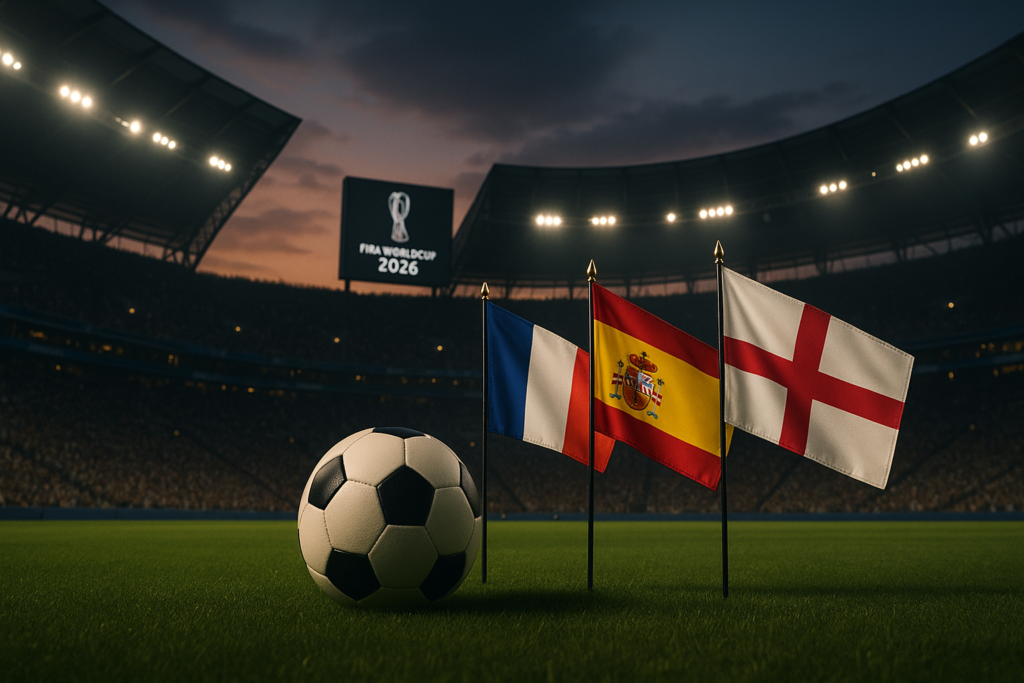
Who Has the Best Shot at Winning the 2026 World Cup? A Betting-Book View (and What It Really Means) Short answer: the market says France. But the story behind that one-line headline is richer than a single price. If you’ve been glancing at futures boards and muttering about “value,” this article breaks down why France sits at the top, which nations lurk right behind them, how those odds translate into real-world chances, and the practical ways bettors and fans should read the market as the tournament approaches. Market snapshot: the favorites and their prices Across major regulated sportsbooks the picture is remarkably consistent. Look at three of the mainstream odds sources and you’ll see the same handful of contenders at or near the top: France — FanDuel lists France at +420 while other books such as BetMGM (as published on VegasInsider) and the Fox Sports oddsboard have them as the shortest price (BetMGM showed around +375, Fox Sports around +370 at the time of reporting). Spain — Generally slotted in the +500 to +550 area on major books, making them the clear second tier threat. FanDuel shows +500 for Spain. England — Commonly priced in the +500–+600 range depending on the book (FanDuel lists +600 while BetMGM has at times shown +500). Argentina, Portugal, Brazil — The next tier, typically around +800 for Argentina and Portugal (Portugal can drift toward +1000 depending on the board), and Brazil roughly +900–+1200. Those three-cut tiers — France on top, Spain/England chasing, and the Argentina/Portugal/Brazil pack behind — are visible on both the FanDuel futures board and other aggregated lists like the one at VegasInsider. The consensus is the clearest signal you’re likely to get from betting markets: France currently has the highest implied probability of triumph. Why do sportsbooks rate France highest? Books don’t just pick countries because of brand recognition. Traders price futures using a cocktail of factors: recent results, squad depth, the presence of world-class players, managerial stability, and — critically — how the public is likely to bet. For France specifically, the market case boils down to three practical reasons: Elite talent plus depth: France’s pool of forwards, midfielders, and defenders is widely regarded as among the deepest in world football. When injuries or rotation happens across a six-week tournament, that depth matters. Early tournament form and momentum: As observed on the odds pages, ups and downs in group or qualifying matches move prices. Reporting from VegasInsider noted France climbed to a sole favorite after Spain’s disappointing draw and strong French results. Market consensus and money flow: Bettors and pros place tickets, and sportsbooks adjust. On BetMGM (as tracked by VegasInsider) Spain and France lead both ticket count and money, but France’s combination of short prices and backing pushed them slightly ahead on the board. Put simply: the books believe France’s combination of on-paper talent and recent form gives them the best chance, and bettors are making similar assessments with their wallets. Translating odds into chance: how ” +420″ actually reads Seeing a price like +420 or +375 is second nature when you scan markets, but what do those numbers mean as probability? Converting American-style odds to implied probability is straightforward and helps put the market’s view into plain English. +420 implies about a 19.2% chance (100 / (420 + 100)). That’s the FanDuel number for France. +375 implies roughly a 21.1% chance — this was BetMGM’s shortest-price depiction of France reported on VegasInsider. +500 (Spain on FanDuel) implies 16.7%, while +600 (England at some books) implies 14.3%. Tiers like +800 (Argentina/Portugal at times) imply about 11.1%, and longer prices like +1200 imply roughly 7.7%. Those percentages don’t sum to 100% because sportsbooks build in a margin (the “overround”). So when you see France at ~19–21% implied and Spain/England at ~15–17%, you’re looking at the market’s best guess, adjusted to ensure the book maintains a long-term edge. Beyond the numbers: football realities that shift the market Odds are a starting point, not a destiny. Several football-specific variables can move the market — and often do — between now and kickoff: Injury timelines: A key player getting hurt in the months before the tournament can turn a +400 price into +700 or longer overnight. Conversely, a star returning early from injury can shorten lines. Manager and tactics: Tactical continuity — or a disruptive late coaching change — affects how resilient a team is in knockout football. Market-makers price managerial stability and historical tournament performance into lines, but last-minute changes still matter. Group draw and pathway: A friendly bracket can make a price look attractive; a brutal knockout path (e.g., facing multiple top-10 sides en route to the final) will lengthen prices. Books will tweak odds to reflect the realistic route to the final. Form and chemistry: A national side that clicks in friendlies or continental tournaments sees its price shorten. Spain’s draw that VegasInsider flagged, for example, dented their early market momentum and allowed France’s price to separate. Home advantage effects: With the 2026 World Cup co-hosted by the U.S., Canada and Mexico, regional influences and travel logistics can sway certain teams’ prospects — and savvy books price those logistics in. So while the market currently favors France, this is a living market that responds to facts on the ground — and that’s good news for bettors who like to hunt for value. Where the betting value might be — and where it probably isn’t “Value” is the word traders throw around when a price seems misaligned with real chances. Here’s how to think about value in the current landscape. Short-term movers: If you think France’s price is justified by their depth and form, a futures bet now locks in ~19–21% implied probability. That might be a fair price; it’s not an overwhelming bargain. Betting on France is a defensive, “I want exposure to the favorite” play. Chasing the undercut: Spain and England are close behind. If you expect Spain’s youth and technical profile to peak in 2026 (or believe
Claim Your Unibet Sign-Up Cash Bonus Effectively

How to Claim Unibet Sign-Up Cash Bonus: Maximize Your Online Casino Experience Estimated reading time: 7 minutes Understand unibet’s cash bonus: A strategic tool to boost your gaming experience. Follow the simple steps: From registration to claiming your bonus effectively. Maximize your bonus: Employ strategies like selecting games wisely and managing time. Leverage AI: How technology enhances your online gambling experience. Practical insights: Important for gamblers and business professionals. Table of Contents Understanding the Unibet Sign-Up Cash Bonus How to Claim Your Unibet Sign-Up Bonus Maximizing the Benefits of Your Unibet Bonus The Role of AI and Workflow Automation in Enhancing the Gambling Experience Practical Takeaways for Gamblers and Business Professionals Call to Action: Elevate Your Gaming with Unibet’s Lucrative Offers FAQ Understanding the Unibet Sign-Up Cash Bonus Unibet’s sign-up cash bonus is one of the many incentives that attract new players to their platform. It is designed to give users an added advantage as they start exploring Unibet’s extensive offerings, including sports betting, casino games, and poker. This bonus serves as a welcome gift, encouraging gamblers to try out the platform’s varied games without risking too much of their own money. According to a study by Gambling Insider, bonuses like these are not just marketing gimmicks but rather strategic tools that provide value to players. They allow users to familiarize themselves with the platform’s interface, understand the rules of different games, and ultimately increase their comfort level, which can lead to more prolonged and profitable engagement. How to Claim Your Unibet Sign-Up Bonus Step 1: Registration To become eligible for the Unibet sign-up cash bonus, you must first create an account. Visit the official Unibet website and follow the on-screen prompts to complete your registration. This process usually involves providing basic information such as your name, email address, date of birth, and contact details. When filling out your registration information, it is crucial to ensure all details are accurate and truthful. Inconsistencies can lead to issues later on, particularly when you are trying to withdraw your winnings. Step 2: Exploring Bonus Options Upon completing the registration process, you will be presented with Unibet’s promotional offers. The sign-up cash bonus is typically included among these options. It’s important to read through the terms carefully. For instance, a resource from Online Casino Reports emphasizes that every bonus comes with specific wagering requirements that must be fulfilled before cashing out potential winnings. These requirements often include a minimum deposit amount — usually around $10 — and a playthrough demand, which means you must wager a certain amount (often 25x the bonus) before you can withdraw the bonus as cash. Step 3: Depositing Funds and Using Your Bonus After claiming your bonus, the next step is to make your initial deposit. Choose a payment method that is convenient for you; Unibet supports various options such as credit cards, e-wallets, and bank transfers. Once your deposit is processed, your bonus will be credited to your account. You can then utilize this bonus across Unibet’s diverse gaming categories. Whether you’re interested in trying out slot games or engaging in live betting during a sports event, the sign-up cash bonus provides an excellent foundation to enhance your experience. Maximizing the Benefits of Your Unibet Bonus To make the most of the Unibet sign-up cash bonus, consider the following strategies: Understanding Games: Familiarize yourself with the games that offer the best return on investment. Sites like Casino.org recommend starting with games that have a lower house edge, such as blackjack or video poker, to make the bonus last longer. Keeping Track of Time: Many bonuses are time-sensitive. Ensure you fulfill the wagering requirements within the stipulated timeframe to avoid losing your bonus. Leveraging Free Spins and Bets: Bonuses often come with additional perks like free spins or bets. These can further bolster your gaming balance without additional outlay. The Role of AI and Workflow Automation in Enhancing the Gambling Experience Unibet, like many modern online casinos, leverages cutting-edge technologies such as AI and workflow automation to elevate the player experience. From tailoring promotions to individual user preferences to utilizing machine learning algorithms for fair play assurance, AI plays a pivotal role. According to a report by Techopedia, AI’s application in online casinos helps in detecting fraudulent activities and improving customer support functionalities, thus creating a safer and more responsive user environment. Moreover, AI-fueled analytics provide insights into user behavior, allowing platforms to refine their offerings and maintain compliance with global gambling regulations. Practical Takeaways for Gamblers and Business Professionals For gamblers, understanding the intricacies of bonuses and employing strategic gameplay can significantly increase your winning potential. It’s crucial to stay informed about the terms of each promotion and make smart decisions regarding game selection. For business executives and HR professionals interested in the burgeoning field of online gaming, understanding these technological advancements can inform investment opportunities or partnerships. The continuously evolving AI landscape in casinos offers expansive potential for innovation-driven growth in both gaming and related sectors. Call to Action: Elevate Your Gaming with Unibet’s Lucrative Offers As you delve into the world of online casinos, Unibet stands out as a formidable platform offering excellent incentives to enhance your gaming journey. Don’t miss out on the chance to claim your Unibet sign-up cash bonus today. Register through Unibet’s official site and explore the exciting mix of games and betting opportunities. Take advantage of this opportunity and place yourself in the best position to enjoy the multitude of rewards on offer. By integrating insightful strategies and understanding the cutting-edge technologies driving the industry, you can transform your online gaming experience from casual entertainment into a profitable and engaging venture. FAQ What is the Unibet sign-up cash bonus? The Unibet sign-up cash bonus is a promotional offer that gives new players additional funds to use on the platform’s games, enhancing their gaming experience without risking too much of their own money. How can I claim my Unibet bonus? To claim your Unibet bonus, first register an account, then