
Unibet bonus UK £30 for £10 qualifying bet or £40 ACCA

Unibet bonus UK: claim £30 free bets with a £10 bet — or £40 after a £20 ACCA (exact terms & quick claim checklist) Estimated reading time: 6 minutes Key takeaways Unibet UK typically shows either £30 in free bets after a £10 qualifying bet or £40 in free bets after a £20 accumulator; check your cashier for the live offer. Free-bet stakes are usually not returned with winnings, and qualifying bets commonly need minimum odds of 2.00 and to settle within seven days. Avoid excluded markets (boosted prices, cashed-out legs, often racing on ACCAs) and opt in where required to preserve bonus eligibility. What the two main Unibet signup deals actually are Across third‑party listings and the operator’s own promotional pages, two main UK sportsbook welcome structures are being reported right now. Both can appear to new customers, but which one you get depends on the account, timing, and what Unibet shows in your cashier or promotions tab. £30 free bets after a £10 qualifying bet — Reported listings show a minimum £10 deposit and a qualifying sports bet of £10 or more at minimum odds of 2.00 (evens). The qualifying bet generally needs to settle within seven days of registration or opt-in. See the Betting.co.uk summary for one listing of this offer and details. Betting.co.uk Unibet offers £40 free bets after a £20 accumulator — Other listings describe a £20+ accumulator qualifying bet (minimum stake and minimum combined odds apply), again typically with qualifying odds of 2.00 per bet or 2.00 aggregate depending on terms. These accumulator offers commonly exclude racing, cashed‑out bets, void selections, and boosted or enhanced-odds markets. The Legalbet pages track this variant. Legalbet Unibet bonus and Legalbet bookmaker page Bottom line: verify the exact offer in your Unibet account — the cashier and the promotion banner are the authoritative versions for your sign-up. How Unibet treats the qualifying stake and free-bet payouts There’s one simple rule to lock into your head: free-bet stakes are generally not returned with winnings on Unibet. If you get a free bet and use it on an outcome at 3.00, you usually receive winnings of 2.00× stake (profit) and you do not get the original free-bet stake back. Example: you use a £10 free bet at 3.00. Your payout will be £20 (the winnings), not £30 (winnings + stake). That matters when you’re calculating value. A “£30 free bets” offer could be three £10 frees or one £30 free, but either way the stake-not-returned rule affects what each free-bet pound actually delivers. Exact restrictions you must watch — the common disqualifiers Unibet’s promotional mechanics and third‑party trackers consistently flag identical exclusions and requirements. Treat these as the things that will void your qualifying action or free-bet payout if you ignore them. Minimum odds: qualifying bets are commonly required at minimum odds of 2.00 (evens). Place bets below that and the stake won’t count. Betting.co.uk Unibet offers Settlement window: qualifying bets normally must be placed and settled within seven days of registration or opt-in for the specific promotion. If your bet hasn’t settled in seven days, it may not qualify. Legalbet Unibet bonus Excluded markets for accumulator offers: racing, voided legs, cashed-out bets, enhanced-odds and boosted-odds selections are commonly excluded from accumulator‑based offers. Check your promotion wording. Legalbet bookmaker page New customer eligibility: promotions are generally restricted to new customers aged 18+, who have to register and often opt in to the welcome offer. Unibet’s own promotional terms are the final arbiter. Unibet promotional terms Free-bet stake treatment: as above, free-bet stakes are usually not returned when a free bet wins — you receive the winnings only. Legalbet Unibet bonus Step-by-step claim checklist for the Unibet bonus UK Here’s the exact checklist I use when I sign up for a bookie: follow this in order and you minimise the chance Unibet will deny your bonus. 1) Verify the offer in the cashier/promotions tab. The offer you see there is what you’ll get — not what someone else saw last week. Check the exact wording and the expiry date immediately. Betting.co.uk Unibet offers 2) Opt in if required. Many Unibet welcomes require an explicit opt-in. Don’t skip that checkbox during registration. 3) Make the minimum deposit. For the £30 route deposit at least £10; for the £40 ACCA route deposit at least £20. Use the payment method allowed for promotions (some payment types can be excluded). 4) Place the qualifying bet within 7 days. For both offers, you commonly have seven days to place and have the qualifying bet settle. If it’s unsettled after seven days, it might not count. Legalbet Unibet bonus 5) Hit the minimum odds. Don’t place bets below 2.00. If you’re doing the accumulator route, make sure each leg complies with any per-leg or combined odds requirement. 6) Avoid excluded markets and actions. Don’t use boosted/ enhanced markets, don’t cash out, and don’t include horse racing in an ACCA if the offer excludes it — those are frequent voiders. Legalbet bookmaker page 7) Wait for free bets to appear and check expiry. Free bets are credited after qualifying criteria are met; note how long you have to use them and whether they come as multiple smaller free bets or one lump sum. 8) Know the payout mechanic. Winnings from free bets normally pay out excluding stake. Plan your cashout or staking around that rule. Which offer is the better play: £30 for £10 or £40 for £20 ACCA? Short answer: it depends on your appetite for simplicity versus upside and on the size of your bankroll. The £30 for a £10 qualifying bet is straightforward: smaller deposit and single bet requirement. You can place that £10 on a single market at odds of 2.00 and, if it settles in your favour, get free bets credited. That’s lower variance and lower work to qualify. The £40 ACCA for £20 typically requires more structure — multiple legs, each complying with the odds rules, and exclusions that knock out
Buckshot Roulette review — 8-shell odds and item tactics

Buckshot Roulette review — survival odds, item tactics and how to beat the 8-shell Russian‑roulette simulator Estimated reading time: 7 minutes Key takeaways Buckshot Roulette is a single‑player indie simulation that pits you against an AI in an eight‑shell shotgun duel; it’s not a regulated casino product. Two probabilistic models matter: independent draws (re‑spin) and without‑replacement (fixed arrangement). Items like magnifiers, handcuffs and cigarettes change expected survival differently under each model. Play the info game: use magnifiers early, force turn order when lives are sparse, and save redundancy (cigarettes) for late rounds. Buckshot Roulette review: what you’re actually playing Buckshot Roulette is a single‑player indie horror/action title by Mike Klubnika published on Steam. The core loop pits you against an AI called The Dealer in a lethal shotgun duel: an eight‑shell shotgun loaded with a random mix of live and blank shells, and three escalating rounds where items and turn order matter. That premise comes straight from the Steam page and press coverage, and it’s deliberately framed as a fictional match structure, not a wagering product. Key official facts: The core premise is 12‑gauge Russian roulette against The Dealer, per the Steam store. The title debuted on itch.io in December 2023 and reached Steam in April 2024, according to coverage and the store listing. Items reported in previews include a magnifying glass (check a shell), handcuffs (manipulate turn order) and cigarettes (restore a charge), which change decision choices mid‑match. That’s it for official claims: no RTP, no cash prizes, and no regulated gambling framework. Cover it as a probability‑driven simulator, not as a casino title — that’s how it’s been positioned by the developer and by outlets that reviewed the concept (DLCompare preview). How the 8‑shell math works (simple, honest models) The shotgun in Buckshot Roulette holds eight shells. What that means probabilistically depends on how the game handles shell randomness. The two simple models you’ll see in analysis are: Independent draws (with replacement or re‑spin): each trigger pull has the same probability p of being live, where p = L/8 and L is the number of live shells that round. Without replacement (classic chambered cylinder): the round is a fixed arrangement of L live shells among 8, and pulls remove shells from the set — probabilities change as blanks or lives are revealed. We don’t have an official, published rule that the game uses one or the other, so a pragmatic review looks at both. Below are concrete numbers for common loads (1, 2, 3 live shells) so you can see how survival collapses as L rises. Single self‑shot survival chance (independent model): – L = 1: p(live) = 1/8 → survive = 7/8 = 87.5% – L = 2: p(live) = 2/8 → survive = 6/8 = 75% – L = 3: p(live) = 3/8 → survive = 5/8 = 62.5% Now the math for three independent self‑shots (assuming you must take three shots and each has identical probability): L = 1: survival = (7/8)^3 ≈ 67.2% L = 2: survival = (6/8)^3 = (3/4)^3 = 42.2% L = 3: survival = (5/8)^3 ≈ 24.4% Switch to the without‑replacement model and the numbers depend on order and what shells have already been fired. Example: one live shell among eight, drawing without replacement and taking three pulls, the survival probability is C(7,3)/C(8,3) = 35/56 ≈ 62.5% — a modest drop compared with independent draws because without replacement you can’t “re‑spin” to reintroduce blanks. Why this matters: if the game uses replacement (or re‑spins the cylinder between shots), your long‑run survival is significantly higher when L is low. If it’s without replacement, your informational choices (checking a shell, forcing turn order) have more bite because they change the remaining composition of shells. Buckshot Roulette Steam build and item rules: what we know Steam lists the game as an Action/Indie/Simulation, and press coverage has documented the reported consumables and later multiplayer additions. The items you’ll encounter are the tactical levers: magnifying glass, handcuffs, cigarettes — each one is small but mechanically meaningful. The magnifying glass checks a shell (reveals live or blank). Handcuffs affect turn order (force the Dealer or yourself to fire first). Cigarettes restore a charge (reported as replenishing a resource charged in a round). Previews emphasize how these items aren’t just fluff; they let you convert hidden variance into information or force the opponent into risky positions (DLCompare coverage). That’s the thing that makes Buckshot Roulette gameplay feel like a small, elegant puzzle: you get a noisy random engine plus a tiny toolkit to manage the noise. Buckshot Roulette strategy — item math and survival EV Let’s turn those item descriptions into simple expected‑value adjustments so you can judge whether to spend a magnifier or cuff the Dealer. For transparency: the calculations below are model‑based using the two shell models above, because the game doesn’t publish exact shell sequencing rules. I’ll state assumptions with each example, then show how the consumable changes survival EV. Magnifying glass: the value of one piece of information Assumption: you’re facing a round with L live shells among 8, draws without replacement. You can inspect one shell at random and then decide whether to shoot it yourself or force the Dealer to take it. Basic math: if you check one shell and it’s blank, the remaining live probability becomes L/(8−1). If it’s live, you avoid taking that shell but you know a live exists among the remaining 7. So the expected probability that the next shot you take (after checking) is live equals the unconditional probability of a live among the remaining 7: L/8 (same as before) — but the value is in conditional decisions. You can choose to force the Dealer on a revealed live shell or take an identified blank. Concrete numbers (L = 2): Before checking: your single‑shot risk = 2/8 = 25% live, 75% survive. Check one shell at random: Probability checked shell is blank = 6/8 = 75% → conditional live fraction becomes 2/7 ≈ 28.6% for
Buckshot Roulette review 25% to 62.5% thresholds in 8-shell
Buckshot Roulette review — A probability-first strategy guide: when to shoot yourself and how to use every item Estimated reading time: 6 minutes Key takeaways Treat each reload as an information problem: compute L / (L + B) and use 25%/50%/62.5% thresholds for 8-shell rounds. Items like the magnifying glass, inverter, and pocket knife shift expected value dramatically—time them early/mid/late as described below. Prefer preserving initiative (self-shoot) at low live fractions; favor attacking the Dealer at high live fractions, with mid-range cases decided by items and HP. In multiplayer, turn control and denial (handcuffs, stealing) rise in value—four-way play rewards initiative preservation more than duels. Buckshot Roulette review — the rulebook you actually need The core is simple and brutally elegant: the gun is loaded with a known count of live and blank shells but the chamber order is hidden. The game displays how many live shells and blanks are in the tube after each reload; it does not show which chamber is next. Firing rules matter. If you point the gun at yourself and pull the trigger, a blank lets you take another turn; a live costs you health charges. If you shoot at the Dealer, your turn ends immediately regardless of whether the shell was live or blank. That turn mechanic is the fulcrum of every decision you make. Those mechanics and their wording are described in multiple reviews, which note that the shell counts are revealed but their order is secret and that firing at the Dealer always ends your turn. See the HeyPoorPlayer write-up for a clear run-through of those rules. Buckshot Roulette review — the probability fundamentals This is an information game. Once the reload shows L live shells and B blanks, the chance the next chamber is live is simply L / (L + B). That ratio is the single most useful number in play. Examples with the game’s maximum of eight shells make this concrete: 2 live and 6 blanks gives a 25% live chance (2/8 = 25%). 4 live and 4 blanks is a 50% chance. 6 live and 2 blanks is 75%. Those percentages are the starting point. Convert them into two numbers you care about: expected damage to the Dealer if you shoot them, and expected continuation value if you shoot yourself and get a blank. When to shoot yourself — simple thresholds you can use Shooting yourself trades immediate risk for initiative. A blank preserves your turn; a live hurts you. Use the live-percentage thresholds below as repeatable rules of thumb for 8-shell rounds (the game’s reported maximum): 0–2 live shells (≤25%): almost always shoot yourself to preserve initiative and information. 3 live shells (37.5%): usually still shoot yourself unless the Dealer is one health away from death or you hold a damage boost. 4 live shells (50%): a coin-flip. Default to self-shoot if the Dealer’s health is high; attack if you have a multiplier or the Dealer is low. 5–8 live shells (≥62.5%): favor shooting the Dealer — the odds of landing a live outweigh the value of keeping the turn. Those cut-offs reflect the game’s single most consistent trade-off: the value of an extra turn is nonlinear. Early in a run with both players near full health, preserving multiple future turns is often worth more than a risky single-shot damage attempt. How those thresholds scale — an optional 12-chamber thought experiment The gun in the fiction is a 12-gauge, but Buckshot Roulette’s rounds top out at eight shells in current coverage. Still, if you or a modder ever try a 12-chamber variant, the math scales straight up: probability = L / 12. A 3/12 split is 25%, 6/12 is 50%, etc. So the same logic applies: when the live fraction is below roughly one-third, preserve initiative; when it’s above roughly two-thirds, go for the Dealer. Mid-range values need context — items, opponent HP and turn order. Buckshot Roulette review — when to shoot the Dealer (and when that’s a trap) Shooting the Dealer is tempting because the payoff is immediate damage, but remember: shooting them ends the turn even on a blank. That means a blank is doubly costly — you lose initiative and do no damage. Consider a concrete scenario: an eight-shell tube with 5 live and 3 blanks (62.5% live). If a live shot normally removes one health charge, you’d expect 0.625 health removed per attack on average. Compare that to shooting yourself and, on a blank, getting another guaranteed attempt to attack later — averaging those future chances is where the calculus gets interesting. Use these practical rules: If you hold a damage multiplier (like the pocket knife), push to attack at lower live percentages — a doubled hit converts a 50% live chance into match-clinching potential. If you have the inverter, a targeted attack combined with an inverter can flip outcomes and dramatically increase expected damage; that item increases the attractiveness of aggressive play. When the Dealer is at one health charge and the live probability is over 35% in an 8-shell round, consider attacking — the gamble often wins matches outright. Those numbers are actionable because items and turn-ending rules are the levers that change expected value quickly. Buckshot Roulette review — item-by-item guide and timing priorities Items are the other axis of decision-making. Below is a practical priority list based on how much each item shifts expected value when used properly, with short notes on timing. Magnifying glass — High priority. Reveals the current shell. Use it to turn a 50/50 guess into a free or forced attack. If the magnifier shows a blank, you can safely self-shoot and keep your turn. Inverter — Very high priority. Swapping a live to a blank (or vice versa) can swing a turn. Best used when the live probability is on the fence (e.g., 3–4 live in an 8-shell round). Pocket knife / saw — High priority when the Dealer is low. Doubling damage turns a single live into match-winning damage; use it
Casino bonus ohne einzahlung 2026 GGL-Casinos 50 Freispiele

Casino-Bonus ohne Einzahlung 2026: Welche GGL-Casinos wirklich No-Deposit-Freispiele (50 Freispiele — so viel sind sie wert) Estimated reading time: 6 minutes Key takeaways Die Headline „50 Freispiele“ sagt wenig über den tatsächlichen Wert — Auszahlungslimit, Umsatzbedingungen und Slotbindung entscheiden. GGL-Lizenz, Verifizierungsregeln und klare Bonus-AGB sind für deutsche Spieler zentral. No-Deposit-Spins eignen sich vor allem zum risikofreien Testen eines Casinos oder neuer Slots, nicht als ernsthafte Gewinnstrategie. Prüfen Sie stets Auszahlungslimit, Umsatzfaktor und Gültigkeitsdauer, bevor Sie ein Konto eröffnen. Kurzüberblick casino bonus ohne einzahlung: Was aktuell angeboten wird Im Markt tauchen zurzeit mehrere No-Deposit-Angebote auf, die Vergleichsseiten und Übersichten führen. Beispiele, die aktuell genannt werden, sind SlotMagie, JackpotPiraten und BingBong mit jeweils beworbenen „50 Freispielen“, sowie StarGames und AdmiralBet mit kleineren Gratispaketen. Vergleichsportale listen diese Aktionen, weisen aber konsequent darauf hin, dass eine vollständige Konto-Verifizierung oft Voraussetzung ist — ohne ID-Check kein Spin. Siehe dazu die Wettbasis Bonus-Übersicht. Wie viel sind 50 Freispiele beim casino bonus ohne einzahlung wirklich wert? Die Zahl „50 Freispiele“ ist ein Marketinganker — die Frage ist: mit welchem Einsatz pro Spin, auf welchem Slot, und wie hoch ist das Auszahlungs-Maximum? Oft sind Spins für einen bestimmten Slot bestimmt; ein Spin mit Einsatz 0,10 € ist nicht dasselbe wie einer mit 0,20 €. Es gibt häufig ein Auszahlungslimit: manche Aktionen begrenzen echte Auszahlungen aus gratis Spins auf etwa 100 € oder einen ähnlichen Betrag. Umsatzbedingungen können Ihre Auszahlung weiter schrumpfen: Beispiele im Markt reichen von sehr moderaten 3x bis hin zu 35x Umsatzanforderung auf Bonusgewinne. Rechnerisch: 50 Spins à 0,10 € sind theoretisch 5 € Einsatz. Realistisch umsetzbarer Wert hängt komplett vom Winrate- und Volatilitätsprofil des zugewiesenen Slots ab — und davon, ob die Gewinne an ein Auszahlungslimit gekoppelt sind. Für eine schnelle Übersicht, wie Anbieter solche „50 Freispiele“ einordnen, empfehlen seriöse Guides wie den RTL 50 Freispiele-Übersicht. Worauf es wirklich ankommt: Die acht Punkte, die den No-Deposit-Wert bestimmen Wenn Sie ein No-Deposit-Angebot prüfen, lesen Sie nicht nur die große Zahl — checken Sie diese acht Details. Maximale Auszahlung: Oft limitiert (Beispiel in einigen Angeboten: 100 €). Umsatzfaktor: 3x ist machbar; 35x ist praxisfern für kleine Gratisgewinne. Gültigkeitsdauer: Manche Freispiele verfallen binnen 24–72 Stunden. Verifizierungsregeln: Viele GGL-Casinos verlangen vollständigen ID-Check bevor Spins gutgeschrieben werden. Zugelassener Slot: Spiele mit hoher Varianz reduzieren Ihre Chancen auf Auszahlung. Mindestalter & Lizenz: Deutsche GGL-Lizenz ist wichtig für Rechtssicherheit. Transparenz der Bonusbedingungen: Gibt es klare AGB oder nur Marketingtext? Einzahlungsfallen: Manche Aktionen sind „kostenlos“ nur nach erstem Echtgeld-Einsatz — dann ist es kein No-Deposit. Die Gambling.com No-Deposit-Guide fasst die typischen Konditionen zusammen und empfiehlt, immer die offizielle Bonusseite des Casinos zu prüfen. Anbieter-Checks: SlotMagie, JackpotPiraten, BingBong, StarGames, AdmiralBet, Jokerstar Die konkreten Bedingungen unterscheiden sich; hier die redaktionelle Bewertung mit dem, was in den Übersichten steht. SlotMagie — 50 Freispiele (Stand: Oktober 2026, laut Vergleichsseiten) Was beworben wird: 50 Freispiele nach Registrierung und Verifizierung. Das ist aktuell in diversen Übersichten zu finden. Wichtig: Es gibt keine pauschale Aussage zur Auszahlungshöhe oder zum Umsatzfaktor in den Vergleichslisten — prüfen Sie die SlotMagie-Bonusseite vor Kontoeröffnung. Die Erwähnung bei Wettbasis ist ein guter Indikator für Sichtbarkeit, aber nicht für Nettowert. JackpotPiraten — 50 Freispiele Auch hier gilt: Freispiele werden nach Verifizierung gutgeschrieben, heißt: ID-Check abgeschlossen, dann Spin-Gutschrift. Listings zeigen die Aktion, konkrete Umsatzbedingungen und Auszahlungsobergrenze sollten auf der Anbieterseite stehen. BingBong — 50 Freispiele BingBong taucht in Bonusübersichten als No-Deposit auf. Gleiches Spiel wie bei den anderen: die Zahl beeindruckt, die Details entscheiden. StarGames — 10 Freispiele StarGames listet kleinere Gratis-Pakete (10 Spins) mit Pflicht zur Registrierung und Verifizierung. 10 Spins sind übersichtlich rechenbar; wichtig bleibt, auf welchem Slot sie laufen und wie lange sie gültig sind. AdmiralBet — 10 Freispiele AdmiralBet erscheint ebenfalls mit 10 Gratis-Spins in Übersichten. Ein kleineres, schneller nutzbares Paket — oft mit kürzerer Frist, aber auch geringeren Umsatzanforderungen. Jokerstar — 20 Freispiele gegen 1 € (kein echtes No-Deposit) Wichtiges Unterscheidungsmerkmal: Jokerstar wirbt mit 20 Freispielen, verlangt dafür aber 1 € Einzahlung — das ist dann kein Bonus ohne Einzahlung, sondern ein kleines Deposit-Angebot. Kurzfassung: Ob 50 oder 10 Spins — ohne Blick auf Umsatzfaktor, Auszahlungsdeckel und Slotbindung bleibt die Werbezahl wenig aussagekräftig. Typische Umsatz- und Verifizierungsregel-Beispiele — so lesen Sie die AGB richtig Die Praxis zeigt folgende Standardbausteine, die Sie in AGB erwarten sollten: Verifizierung: ID-Check per Personalausweis und Adressnachweis; oft Pflicht vor Auszahlung. Umsatzanforderung: Beispiele liegen zwischen 3x und 35x — 35x ist für No-Deposit praktisch unspielbar. Zeitlimit: Spins innerhalb von 24–72 Stunden nutzen, Gewinne dann noch binnen Frist umsetzen. Gewinnobergrenze: Manche Aktionen benennen explizit ein Auszahlungslimit (z. B. 100 €). Spielbindung: Freispiele gelten nur für einen konkreten Slot oder eine Slotgruppe. Das ist keine Theorie: diese Konditionen finden sich in zahlreichen Bonus-Überblicken, etwa im Gambling.com-Guide und bei RTL Bonus-Informationen. Praktische Tipps: So holst du das Maximum aus einem No-Deposit-Angebot Ein paar klare Handgriffe, bevor Sie blind auf „Registrieren“ klicken. Lesen Sie die Bonus-AGB komplett: Umsatzfaktor, Slot, Ablaufdatum, Auszahlungslimit. Verifizieren Sie Ihr Konto frühzeitig — oft ist das der langsamste Schritt. Wenn die Spins für einen hohen-Varianz-Slot gelten, planen Sie niedrige Einsatzstufen — so halten Sie mehr Spins. Mit moderatem Einsatz (z. B. 0,05–0,10 € pro Spin) dehnen Sie 50 Freispiele besser aus. Rechnen Sie vor: Bei 50 Spins à 0,10 € ist das theoretische Einsatzvolumen 5 € — multiplizieren Sie mögliche Treffer mit dem Umsatzfaktor, um eine realistische Auszahlungschance zu sehen. Und noch ein Tipp: wenn der Umsatzfaktor 30x oder mehr ist, zählt das Angebot eher als Marketinggag denn als Geldchance. Rechtliche Einordnung: Warum die GGL-Lizenz wichtig ist Ein No-Deposit-Angebot ist aus deutscher Sicht nur dann wirklich empfehlenswert, wenn der Anbieter eine gültige GGL-Lizenz hat. Die Lizenz sorgt für Verbraucherschutz, transparente AGB und klare Verifizierungsstandards. Vergleichsportale listen GGL-lizenzierte Anbieter getrennt — aber prüfen Sie die Anbieterseite, nicht nur Drittübersichten. Seriöse Zusammenstellungen wie die Wettbasis Bonus-Übersicht zeigen, welche Anbieter in Deutschland relevant sind. Wichtig: Tischspiele sind rechtlich anders reguliert als Slots; No-Deposit-Freispiele betreffen in der Regel ausschließlich Automaten. Für welche Spieler lohnen sich No-Deposit-Freispiele? No-Deposit-Spins sind kein Weg zu schnellem Reichtum, aber sie haben klare Einsatzfälle: Neue Spieler, die
Basic Strategy Chart for 6-deck S17, 6-deck H17 and European
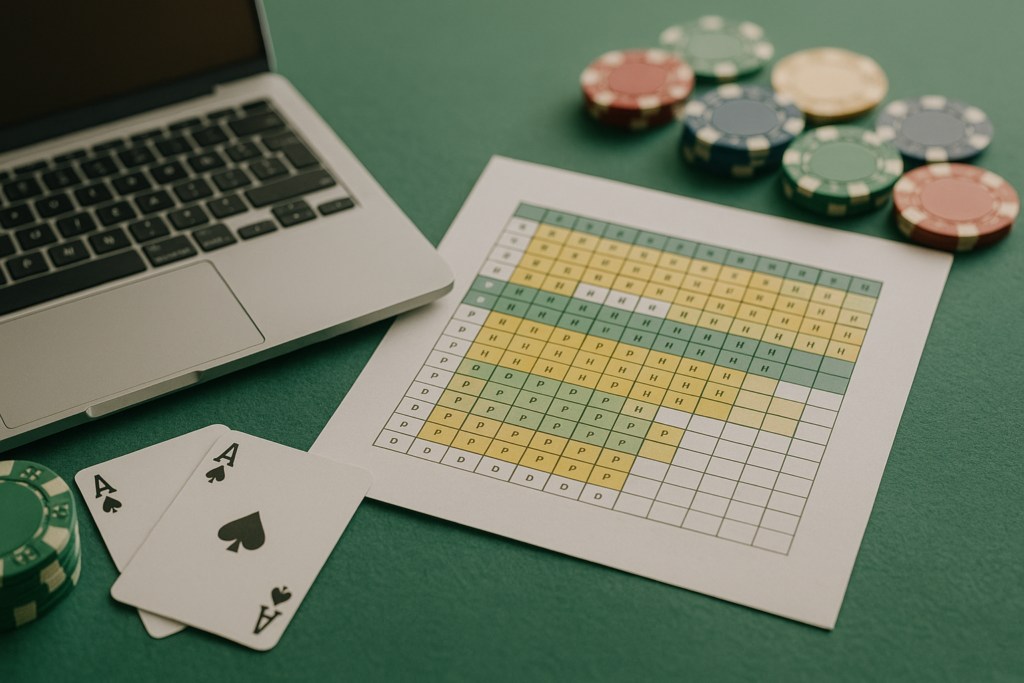
Basic Strategy Chart: 3 Blackjack Charts for Common Rule Sets (6‑deck S17, 6‑deck H17, European) plus a Table‑Rules Checklist Estimated reading time: 6 minutes Key takeaways Match your basic strategy chart to the table rules (deck count, S17/H17, hole card/no hole card) before betting. S17 and H17 differ mainly on soft‑hand doubles; European (no‑hole‑card) requires extra caution on doubles and splits. Prefer 3:2 payout tables, DAS, late surrender, and resplit aces — these rule perks reduce the house edge. Use the Wizard of Odds strategy calculator and rule‑effects pages to generate exact charts for specific rule combinations. How to read a basic strategy chart — a few quick rules Start by naming your hand type: hard total, soft total (an ace counting as 11), or a pair. Then find the dealer upcard across the top and read the instruction at the intersection. H = Hit S = Stand D = Double if allowed; otherwise hit Ds = Double if allowed; otherwise stand P = Split Rh / Rs = Surrender if allowed; otherwise hit/stand Basic pattern reminders that save time at the table: hard 17+ stands; hard 12 stands only vs dealer 4–6; always split aces and eights; never split tens; never take insurance. For a deeper read on the fundamentals, the blackjack basics page is a good refresher. Six‑deck basic strategy chart — Dealer stands on soft 17 (S17) Use this chart when the table is six decks and the dealer stands on soft 17. Under many casinos’ common six‑deck S17 rules the house edge with correct basic strategy is about 0.41%. Hard totals (6‑deck S17) Hard 5–8: Hit Hard 9: Double vs dealer 3–6, otherwise Hit Hard 10: Double vs dealer 2–9, otherwise Hit Hard 11: Double vs dealer 2–10, otherwise Hit vs Ace Hard 12: Stand vs dealer 4–6, otherwise Hit Hard 13–16: Stand vs dealer 2–6, otherwise Hit Hard 17+: Stand Soft totals (6‑deck S17) A,2–A,3 (soft 13–14): Hit; Double vs dealer 5–6 if permitted A,4–A,5 (soft 15–16): Hit; Double vs dealer 4–6 if permitted A,6 (soft 17): Double vs dealer 3–6; otherwise Hit A,7 (soft 18): Stand vs dealer 2,7,8; Double vs 3–6; Hit vs 9–A A,8 (soft 19): Stand; Double vs dealer 6 in some games A,9 (soft 20): Stand Pairs (6‑deck S17) AA: Split TT: Stand (do not split) 99: Split vs dealer 2–6 and 8–9; Stand vs 7,10,A 88: Split 77: Split vs dealer 2–7; otherwise Hit 66: Split vs dealer 2–6; otherwise Hit 55: Treat as 10 — Double vs dealer 2–9, otherwise Hit 44: Split vs dealer 5–6; otherwise Hit 33,22: Split vs dealer 2–7; otherwise Hit This is the classic, table‑friendly chart most experienced players use for six decks when the dealer stands on soft 17. For the exact EV math behind these moves use the strategy calculator. Six‑deck basic strategy chart — Dealer hits on soft 17 (H17) If the dealer hits soft 17 your chart needs small but important changes. H17 generally adds about +0.22 percentage points to the house edge compared with S17, so play matters more. Hard totals (6‑deck H17) Hard 5–8: Hit Hard 9: Double vs dealer 3–6, otherwise Hit Hard 10: Double vs dealer 2–9, otherwise Hit Hard 11: Double vs dealer 2–10, otherwise Hit vs Ace Hard 12: Stand vs dealer 4–6, otherwise Hit Hard 13–16: Stand vs dealer 2–6, otherwise Hit Hard 17+: Stand Soft totals (6‑deck H17) A,2–A,3: Hit; Double vs dealer 5–6 in some rules — fewer doubles are profitable than in S17 A,4–A,5: Hit; Double vs dealer 4–6 in some rules A,6: Hit more often — doubles vs 3–6 are less favorable than S17 A,7: Stand vs 7–8; Hit vs 9–A; doubles vs 3–6 become rarer A,8–A,9: Stand Pairs (6‑deck H17) Splitting rules are the same; the subtle change comes from soft-hand doubles. Adjust splits involving aces/8s as you would on S17. Bottom line: H17 flips a handful of soft‑hand doubles from “Ds” to “H” (or from “Ds” to “Ds only in very specific spots”) — the chart above reflects the safer, H17‑appropriate approach. Because the difference is modest, many of the hard‑total lines are identical to S17. For a rule‑by‑rule house edge comparison see the Wizard’s discussion of rule impacts in the rule effects section. European no‑hole‑card basic strategy chart (six‑deck, no dealer hole card) European (no‑hole‑card) blackjack is the one that trips most experienced players up. The dealer doesn’t take a hole card until all player hands are finished, which means you can lose doubles and splits if the dealer later reveals blackjack. That extra risk pushes the house edge higher — in a typical six‑deck European example the edge is about 0.62% with correct basic strategy. Hard totals (European, 6‑deck) Hard 5–8: Hit Hard 9: Double vs dealer 3–6, otherwise Hit Hard 10: Double vs dealer 2–9, otherwise Hit Hard 11: Double vs dealer 2–10, otherwise Hit vs Ace Hard 12: Stand vs dealer 4–6, otherwise Hit Hard 13–16: Stand vs dealer 2–6, otherwise Hit Hard 17+: Stand Soft totals (European) A,2–A,3: Hit; more conservative doubling because of no‑hole‑card risk (double vs 5–6 is marginal) A,4–A,5: Hit; double vs 4–6 is conditional A,6: Double vs 3–6 in many tables but sometimes changed to Hit to reduce risk A,7: Stand vs 2,7,8; double vs 3–6 is marginal; otherwise Hit A,8–A,9: Stand Pairs (European) AA and 88: Split TT: Stand 99: Split vs 2–6 and 8–9; Stand vs 7,10,A Other splits follow the S17 pattern but be slightly more conservative on split+double combinations because of the no‑hole‑card exposure. European strategy is mostly the same shape as S17 strategy, but you should be aware doubles after split and losses to a later dealer blackjack are real downsides. For the precise European chart and full explanation, see the European strategy write‑up. Which rule changes flip specific plays — and how much they move the house edge Not all rule changes are equal. Some shift the house edge by tenths of a percent; others are small. Here are the
Can You Win Mini Casino Games? 96% RTP Reality

Can You Win Mini Casino Games? The 96% RTP Reality and How Fast Play Turns Short‑Run Wins Into Long‑Run Losses Estimated reading time: 6 minutes Key takeaways You can win in short sessions, but RTP is a long‑run average that usually favours the house. Mini games accelerate exposure to the house edge via rapid rounds and operator RTP variations. Bonuses often carry wagering requirements that can increase expected losses. Can you win mini casino games? The 96% RTP reality RTP — Return to Player — is the headline number that tells you the long‑term expectation of a game. It’s a theoretical percentage of stakes returned to players across millions of rounds, not a promise about your next 10 spins. The UK Gambling Commission explains this in plain terms in its Return to Player guidance. Put it into numbers: a game with 96% RTP has a 4% house edge. That means, on average, the operator retains £4 for every £100 staked. Stake £10,000 in total across many players or many rounds → the expected return to players is about £9,600; the operator keeps about £400. That £400 figure is purely the long‑run expectation. Any single player session could end in a win or a wipeout. So when someone tells you “this game pays 96% so you’ll get most of your money back,” remember they’re talking averages over huge sample sizes, not your five‑minute session. The payout analyses on consumer sites repeatedly show wildly different short‑term outcomes even on high‑RTP titles. Can you win mini casino games over the long run? Why the math beats you Winning in a single session is common enough. Players hit bonuses, catch a hot series, or land a jackpot. Those short runs feed the headlines: “Won £10k on a 50p spin!” But the long run is where RTP rules. Two core truths: RTP is cumulative. The more rounds you play, the closer the aggregate results will drift toward that RTP. If RTP < 100%, the expected value of continuous play is negative. Keep playing and the house edge compounds. That’s why a 96% RTP implies an expected loss rate of about 4% of your total stakes. If you’re a casual player making a few bets for fun, that’s “paid entertainment.” If you treat it like income and keep feeding the machine, the math isn’t on your side. Why mini games are especially risky: fast play, volatility and RTP versions “Mini” games — short, instant‑result formats: crash-style rounds, tiny slots, instant‑win scratch replicas, quick roulette — are popular because they’re fast and satisfying. But those very features accelerate the house edge. Fast play: More rounds per hour = more times the house edge is applied. A game you can click through dozens of times in 10 minutes will chew through your stake quicker than a slow table game. Volatility: High volatility means rare big wins and long dry spells. Low volatility means frequent small wins. Neither changes the RTP; both change how likely you are to be on a winning run at any given moment. Operator RTP versions: The same title can be offered with different RTP settings at different casinos. A game that lists 97% RTP on one site might run at 95% elsewhere, so always check the operator‑specific info. Consumer research has flagged materially different RTPs for identical titles across sites, as shown on Gambling.com. Those three factors combine: a high‑volatility mini game with fast rounds on a site running a lower RTP version is a recipe for rapid bankroll swings and an increased chance of negative sessions. How casinos and bonuses change the math Bonuses can sweeten the expected value if terms are reasonable, but they often look better in headlines than in practice. The bonus may sound like “100% up to £200,” but what matters is the fine print: Wagering requirement (20x, 35x, etc.) — higher numbers mean you must risk much more at the house edge. Game weightings — slots might count 100% but many mini games will be excluded or contribute less. Max bet caps and withdrawal limits — these can blunt your ability to convert a bonus into cash. Expiry windows — short windows force faster play and therefore more exposure to the house edge. A large wagering requirement can turn an attractive bonus into a trap that forces you to play more rounds and therefore increase expected losses. The right approach is to read the full terms and calculate whether the extra play needed is worth the potential gain. For an operator comparison and the mechanics behind house edge figures, guides like those on Virgin Games and OLBG are useful starting points. They’ll help you see which types of games historically have better theoretical odds and why that might not translate to your individual session. Checklist: Spot the least harmful mini casino games If you’re going to play mini games, make those minutes count. Use this quick checklist before you stake a penny. Check the game’s RTP on the game info or paytable screen — and confirm the operator version applies to your site. Look for a volatility/variance rating so you know whether to expect frequent small wins or rare big hits. Find the maximum win and jackpot conditions: if the jackpot is the main attraction, check how tiny the hit probability likely is. Scan bonus terms to see whether the game is restricted or has a reduced contribution to wagering requirements. Prefer slower formats if your aim is to protect bankroll — fewer rounds per hour reduce the speed at which the house edge applies. Stick to regulated operators that publish game info clearly — UK players can rely on the Gambling Commission guidance for what should be displayed. That last point matters. A transparent operator that publishes an operator‑specific RTP, volatility and clear rules is less likely to have hidden nasties. If you can’t find basic game info, don’t play it. Practical bankroll tactics for mini games There’s no trick to beat a sub‑100% RTP permanently.
Replay Poker review 2,500 chips and Texas Royal practice

Replay Poker review: Is the free 2,500‑chip play‑money site any good for practicing Hold’em and Omaha? Estimated reading time: 8 minutes Key takeaways Replay Poker is a browser-based, play‑money platform that gives new accounts 2,500 chips and supports Hold’em, Omaha and a short‑deck variant. It’s useful for practicing preflop ranges, postflop lines and tournament structure, but player behavior differs from real‑money tables. There’s no cash, withdrawable winnings, RTP or cash‑gaming license — treat it as a training and social tool, not a cash room. Replay Poker review: what the site actually is (and isn’t) Start with the plain facts. Replay Poker is a free‑to‑play, play‑money poker platform: players can’t deposit money, cash out winnings, or win real‑money prizes. The company states this clearly on its help pages and marketing material, so treat it as a social poker product rather than an online poker room taking stakes or offering licensed cash play. See the official help for the confirmation of the play‑money model and terms on the site’s onboarding chips. Replay Poker review — games, formats and the 2,500‑chip start Replay Poker covers the basics and a few interesting variants. You’ll find: Texas Hold’em in no‑limit, fixed‑limit, pot‑limit and mixed‑limit tables; Omaha in no‑limit and pot‑limit, plus pot‑limit Omaha Hi/Lo; Texas Royal, a short‑deck style variant using tens, face cards and aces. Those offerings come directly from the site help documentation, so you’re not guessing about format support. New accounts receive 2,500 play‑money chips on signup — your practice bankroll to start practicing preflop ranges, bet sizing and tournament survival. Because everything is denominated in chips, the platform’s “economy” is virtual. That 2,500 stack is an onboarding gift, and tournament promos give more virtual chips, but none are convertible to cash. Tournament structure and multiplayer action Replay Poker isn’t just ring games. It supports a wide range of tournament formats: single‑table sit‑and‑gos; multi‑table tournaments (MTTs); freerolls and leaderboard events; regular ring games for cash‑style play (using chips). If you want to practice structure — blind levels, payout curves, ICM decisions — the MTT and sit‑and‑go options are useful practice ground. Traffic matters for practice: you want live opponents. User reviews and public pages describe active ring games and regular tournaments, which means you’ll often face real players rather than bots. That social and competitive element is where the site has value for someone learning timing, player types and opponent tendencies in a live table setting. Money, licensing and the missing rake/RTP numbers Let’s be blunt: Replay Poker deliberately avoids real‑money play. The platform’s own documentation confirms it does not offer opportunities to win real money or provide cash withdrawals. Treat any chip deductions or tournament fees as mechanics for the play environment, not as financial rake tied to currency. Because it isn’t running cash games, you won’t find a published RTP, volatility index or a regulated rake schedule that matters in dollars. A third‑party review also notes the apparent absence of a gaming license tied to cash gambling — an important point if you were looking for regulated, withdrawable stakes. Again: Replay Poker is a social play‑money service, not a licensed cash poker operator. How useful is Replay Poker free play for learning real poker? Short answer: it’s useful — for specific things. It’s not a full substitute for real‑money tables. Where it helps: Preflop fundamentals: you can practice ranges, positional awareness and blind defense without risking bankroll. Postflop patterns: reading boards, sizing plans and converting hands to value or bluffs are skills you can drill repeatedly. Tournament mechanics: blind ladders, ICM basics and short‑stack shove/fold scenarios are available in sit‑and‑gos and MTTs. Social play and tells: you’ll get familiar with timing patterns and chat dynamics, which are part of live online poker. Where it falls short compared with real money: Psychology of risk: players act differently with play chips. Expect looser play and riskier calls than at low‑money real tables. Bankroll management practice: there’s no real financial downside, so habits like moving up stakes without discipline aren’t punished the same way. Regulation and fairness signals: no cash flow means different incentives for the operator, and external licensing for cash play doesn’t apply the same way. Use Replay Poker to build pattern recognition, experiment with lines, and practice tournament timing. But once you’re trying to convert that skill to cash tables, remember the behavioral gap: real money forces tighter, more exploitative play by opponents. Practical tips: getting the most from Replay Poker tournaments and ring games If you’re using Replay Poker to sharpen skills, treat your session like a training block, not a free ride. A few practical, concrete ways to level up: Set a pretend bankroll: allocate a notional stack of 25,000 or 100,000 chips and track tilt and leaks as if it were real money. Drill one concept per session: play 200 hands concentrating on 3‑bet frequencies, or grind sit‑and‑gos to practice endgame shoves. Use mixed limits: switch from no‑limit to pot‑limit or fixed‑limit tables to sharpen sizing and pot‑control instincts. Play leaderboard events and freerolls: they create structure and real competitive pressure inside the play‑money economy. All of this is feasible because Replay Poker runs in your browser and doesn’t require deposits. The site’s browser access makes it easy to jump into tables from any laptop without installs. Social and community factors: is this a “real” online scene? The platform is built around multiplayer games and community features. Players report seeing active tables and regular tournaments, and the social chat and leaderboard mechanics encourage long‑term participation. Independent player reviews mention both strong competition and casual players — a mixed pool that’s common on play‑money sites. If you value meeting other players, friendly banter, or queuing for a specific tournament time, Replay Poker’s social focus is a plus. If you want a field of sharp, tight, exploitative regs that mimic a regulated low‑stake cash environment, you’ll find fewer of them here than in cash rooms on licensed poker networks. Where Replay Poker fits in your practice plan —
Gambling credit score: £500 late payment and 3 other risks

Does Gambling Affect Your Credit Score? 4 Ways Betting Can Hurt Your Credit and How to Avoid It Estimated reading time: 6 minutes Key takeaways Gambling transactions themselves rarely appear on credit reports; bureaus record debts and payments, not merchant categories. The main risks are indirect: missed payments, high card utilisation (including cash advances), accounts in collections, and multiple hard-credit applications. Practical steps — gambling blocks, avoiding credit for play, managing utilisation, and early lender contact — can prevent long-term damage. Gambling credit score: why your bets rarely appear on a credit report It’s a common fear that casinos or sportsbooks will “flag” your credit file. They don’t. Credit bureaus and credit reports track debts, payments and account behaviour — not individual merchant activity. As Experian notes, placing a bet, spinning a slot, or collecting winnings won’t create a labelled “gambling” entry on your credit report. Similarly, consumer-facing services like Checkmyfile make the same point: your transactions aren’t coded as “gambling” for the credit bureaus. The implication is simple — activity at a casino or betting site won’t automatically change your credit score. That said, that line in the sand is narrow. The rest of this article explains the four real ways betting can hurt your credit — and how to stop them from happening. Four ways gambling can damage your credit score There are four concrete pathways from betting to a damaged credit record. Each is rooted in standard credit mechanics: missed payments, balances, collections and repeated applications. None of these requires a “gambling” stamp to occur. 1) Missed or late payments — the biggest direct risk If gambling eats into the money you use to pay bills, the harm is obvious. A late payment on a credit card, personal loan, mortgage or any other reported account can be logged on your file and lower your score. Experian highlights missed payments as one of the principal indirect ways gambling can affect credit. Example: a £500 credit-card bill is due on the 15th. Regular play and a losing streak leave you short; the card issuer marks the payment 30 days late. That single delinquency is visible to future lenders and will dent your creditworthiness. 2) High credit-card balances and cash advances Credit utilisation — the percentage of your available credit you’re using — is a major score driver. Carrying large balances to fund gambling increases utilisation and pushes scores down, even when payments are on time. Using your card for gambling, taking cash advances to bankroll play, or repeatedly maxing cards are all common culprits. Time2Play lays out how cash-advance activity and high balances can translate into credit damage, because issuers report balances (not merchant categories) to the bureaus. Quick numbers to remember: Keep utilisation under about 30% across cards where possible; under 10% is better for peak scores. Cash advances typically carry higher interest and fees — and sometimes post immediately to your balance, spiking utilisation. 3) Accounts in collections or recorded defaults If unpaid balances are sent to collections or are recorded as defaults, the impact is severe and long-lasting. A collections entry can remain on your file for years and will be a red flag to lenders. That’s why debt spirals from gambling losses are age-old credit disasters — missed payments turn into arrears, then defaults, then collections. Experian’s guidance is blunt: it’s the debt behaviour, not the reason for debt, that damages credit. 4) Multiple credit applications and hard inquiries Trying to chase losses by applying for new credit is a classic bad move. Each hard pull can shave a few points off your score, and several within a short window signal risk to underwriters. Zable and other advisers highlight repeated applications as a way gambling-related cash needs can degrade credit profiles. Example: applying for three cards and a personal loan in two months to fund play creates multiple hard searches and a pattern lenders dislike. Even if the applications are declined, the enquiries are visible for a period. Gambling and mortgage applications: what lenders actually see Credit reports are only one piece of the mortgage puzzle. Lenders run affordability checks that often include recent bank statements, payroll evidence, and outgoings. That means gambling can be visible even if your credit file shows no “gambling” entries. High-frequency or high-value gambling transactions on your bank statements can raise underwriting questions about disposable income and repayment capacity. Halifax’s guide explains how lenders consider overall affordability — not just the score — when deciding on mortgages. What they look for: Regular payments into gambling sites or frequent cash withdrawals flagged as gambling. Overdraft usage and short-term borrowing that suggests budget pressure. Any inconsistency between declared income and actual spending patterns. So, if you’re preparing a mortgage application, assume the underwriter will review bank statements. If your account shows repeated transfers to betting accounts, be ready to explain the pattern or reduce that activity before applying. Practical steps to protect your gambling credit score You don’t need to quit betting to safeguard your credit. Here are practical moves — with real, immediate effects — that players can take to avoid the four danger zones above. Use a gambling block on your bank card — Most banks offer optional gambling blocks on debit or credit cards to stop transactions at gambling merchants. These blocks don’t lower your credit score and won’t be recorded on credit reports. They simply prevent future bets from charging your account. Avoid credit for play — Don’t use credit cards or take cash advances to gamble. Cash advances have higher interest, hit your balance immediately, and drive up utilisation. Manage utilisation actively — Keep overall card utilisation below 30% (aim lower). If you run temporary balances, pay them off before the statement date so the reported balance stays low. Don’t chase losses with new credit — Multiple applications create hard searches and look bad to lenders. If you need borrowing, speak to your existing lender first or seek free debt advice. Check bank statements before applying
Spribe Mines review 97% RTP on a 5×5 grid and 10000x cap
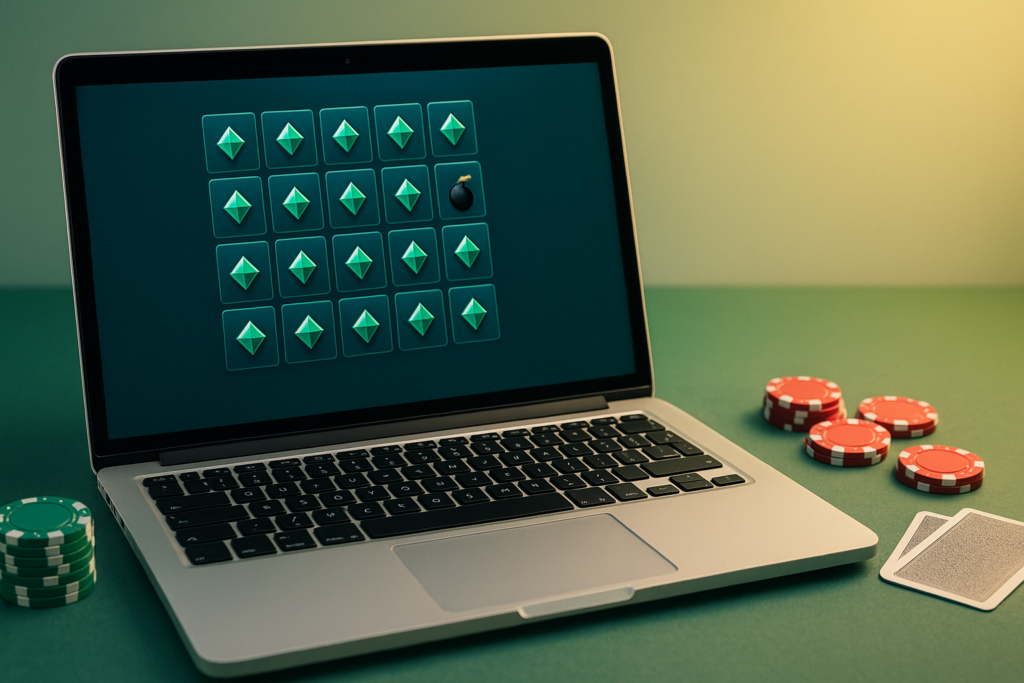
Spribe Mines review (2026) — 97% RTP, 5×5 grid and how mine count changes risk/reward Estimated reading time: 5 minutes Key takeaways Spribe Mines is a compact 5×5 instant-win game where you pick tiles and avoid mines; common commercial builds allow 1–24 mines. Many deployments list a Mines RTP 97% (≈3% house edge), but RTP, max win and bonus eligibility vary by operator. Mine count is the volatility dial: fewer mines = steadier wins; more mines = higher variance and rarer big multipliers. The advertised Mines max win 10000x is a theoretical ceiling that operators may cap or restrict via terms and limits. Spribe Mines review: core mechanics in plain language Mines deals with 25 covered tiles; behind them are safe squares and hidden mines. You click tiles one at a time. Each successful pick increases the displayed multiplier. You can cash out whenever you like. A revealed mine ends the round immediately and wipes the active stake. Cashing out banks the payout. That basic push-your-luck loop is exactly what gives Mines its rush — short rounds, quick decisions, clear outcomes. For a concise description of the instant-win format, check this instant-win overview. Spribe Mines review: Mines RTP 97% and the house edge Most of the Spribe-equipped casinos list Mines at about 97% RTP. That translates to a theoretical house edge near 3% over long samples. You’ll see that exact figure repeated on several operator listings, including the same Spribe Mines listing referenced above. That 97% is not gospel for every Mines-branded game. Other variants reported in the market show RTPs from roughly 95% up to about 99% depending on provider and operator settings. For a catalog of reported values, see the RTP database for Mines. Bottom line: the displayed in-game RTP or the casino’s game info panel is the source of truth — not a headline on a review site. The math behind Mines is transparent enough to be computed, but the operator’s chosen RTP and any promotional rules are the things that actually affect your bankroll. How mine count changes volatility and cashout strategy Here’s the practical bit every bettor cares about: mine count is your volatility dial. Choosing two mines looks very different at the table to choosing twenty mines. Low mine counts (1–5): more frequent safe picks, smaller multipliers, and smoother cashout opportunities. Mid-range counts (6–12): an obvious risk/reward tradeoff — rounds swing more but still produce workable cashout targets. High counts (13–24): rare survivals, heavy variance, but when the multiplier climbs it can be huge — if the operator permits the full ceiling. Crucially, changing the number of mines modifies the win/loss distribution, not the long-term RTP of the configured game. That’s been a consistent point in available game guides and reviews; see this Mines game guide for a take on volatility versus RTP. Cashout strategy depends on your aim. If you’re conserving bankroll, lock in wins early on low-mine games. If you want a shot at the advertised top multipliers, increase mines and accept steeper variance — but remember the odds of busting rise sharply. Payout ceiling: Mines max win 10000x — what that really means The common Spribe version is advertised with a theoretical maximum payout up to Mines max win 10000x the stake. That figure is the headline people chase and it’s achievable under ideal conditions in the published payout curve. However, in practice the operator can limit maximum wins, stake ranges, and even the game build itself. Some casinos cap maximum cashouts, and regulatory or jurisdictional rules may force lower ceilings. The demo and informational pages routinely list the theoretical top-end — for example, try the Mines demo page to see published multipliers. Always check the in-game paytable and the casino’s terms before betting large sums; the 10,000× headline is a ceiling, not a promise that every operator will pay that amount under their bonus or stake rules. Mines provably fair: is verification available? Some operators — particularly crypto casinos — sell Mines as a provably fair product where you can verify outcomes against server/client seeds or hashes. These setups let technically minded players audit individual rounds. That feature is not universal. The label “Mines” does not automatically mean provably fair; you must verify on the operator’s fairness or provably fair page whether the deployed version supports it. One provider with provably fair documentation is shown on this provably fair page. Bonuses, wagering and a pre-wager checklist Mines may or may not be eligible for casino bonuses. Operators set their own contribution rules and maximum cashout limits for promotional play. Before you stake bonus money, use this checklist — literally read the in-game help and the promo T&Cs: Confirm the displayed RTP on the game’s info screen. Check the stated maximum payout for the session and whether the operator caps wins. See whether Mines contributes to wagering and at what percentage. Note the max eligible stake when wagering bonus funds. Look for a stated max cashout from bonuses and expiry dates. Confirm whether your country is excluded from the promotion. Promos are operator-level products; one casino might include Mines in a welcome bonus while another explicitly excludes it. A recent operator offer example is advertised on this casino bonus page, but the fine print determines whether Mines plays under those bonus rules. Betting-first verdict: where Mines fits in your toolbox Strengths are obvious and practical: simple rules, push-your-luck tension, adjustable risk settings, and fast rounds that let you test strategies quickly. The commonly listed Mines RTP 97% is competitive for instant-win formats and gives a clear expectation of long-run loss rate when the game is configured that way; see the base listing at Spribe’s listing. Weaknesses matter too. A 97% RTP still favours the house over time. The game’s interactive feel tempts players into thinking they can beat the layout with timing or pattern-play — but there’s no evidence those methods overcome the mathematical edge. Operator variation is a practical headache: RTP, max win, and bonus eligibility differ by casino,
Slots Temple review 2026 UKGC licence and 96.14% RTP

Slots Temple review 2026: Do its high RTP claims and free daily tournaments actually pay out for UK players? Estimated reading time: 8 minutes Key takeaways Slots Temple promotes higher-than-average advertised RTPs and free daily, no-deposit slot tournaments for UK players, but you must verify live-game RTP and tournament terms before staking. Independent comparisons (for example OLBG) show an average tracked RTP around 96.14%, yet the exact version of a game on the site is what actually matters. Prize payouts from no-deposit tournaments appear to be real cash, but withdrawals require KYC and follow normal banking windows (Talksport reports 0–3 business days after approval). Slots Temple review 2026: is the claimed UKGC licence real? Several 2026 reviews identify Slots Temple as operating under a UK Gambling Commission licence. The operator name Digital Division Limited appears across affiliate coverage, for example in the Betting.co.uk review. One review gives a licence number often cited in content about the brand: 58086, with a longer internal reference shown in some write-ups. That reference appears in hands-on recaps such as the WagerPals review. That’s a useful starting point, but it’s not enough. The only definitive way to confirm is to search the UKGC public register yourself and match the exact licence holder details to the operator name before depositing. Slots Temple review 2026: How advertised RTPs translate to actual play The loudest metric in Slots Temple’s marketing is RTP. An independent analysis by OLBG that compared 50 games across 27 UK casinos put Slots Temple top of that list with an average tracked RTP of 96.14% across 49 games. The OLBG report also highlights specific high-RTP examples. Dazzle Me listed at 99.06% RTP in that comparison. Twin Spin shown at up to 99.06% RTP. Starburst noted around 98.05% RTP. Gold Blitz Express reported at 96.50% RTP. Those numbers are attention-grabbing, but two important realities matter to every player: RTP is a long-run theoretical average. A 96% number says nothing about your next 100 spins. Many providers release multiple RTP configurations of the same title. The specific version live on the site is what counts — and that is shown in the game’s info panel, not in a headline chart. Hands-on reviews illustrate that variance. For example, Gamblizard’s testing cites Slingo Starburst at 96.66% RTP and classifies it as medium volatility. This is a concrete reminder that the exact configuration on Slots Temple matters, and it may differ from other operators. How to verify a game’s RTP on Slots Temple Open the slot and click the information or settings icon. Look for the RTP or return-to-player percentage printed in the game rules screen. If the slot offers multiple RTPs, the game panel will usually state which version you have — take a screenshot if you want to keep a record. If you care about getting the “best” RTP version of a title, do this check before you commit bankroll. How Slots Temple tournaments work — are the free daily events actually free cash? Slots Temple’s other signature claim is free daily slot tournaments that award real cash. Multiple reviews describe the tournaments as no-deposit entry for registered users and say prizes are paid in real money without wagering requirements. The WagerPals review specifically notes that tournament entry can be automatic after signing up, while the operator’s own promotions pages describe the setup of partner offers and prize mechanics on their promotions page. Two practical points about those tournaments that matter to UK players: Prize size and structure are not universally published in the reviews. Some tournaments run leaderboards, others hand out random cash drops; you need to read the live tournament rules to know real cash value. Even if a tournament is “no deposit,” the site may require a verified account and KYC before you can withdraw prize money — a standard regulatory check on UK-focused sites. So yes, the product exists in the form reviewers describe — but the exact cash value you’ll get depends on the day, the tournament format, and the fine print in the event rules. Always check the live tournament terms before registering to play for those prizes. Banking, withdrawals and real-world payout performance Deposit and withdrawal mechanics are where marketing meets reality. Talksport’s 2026 write-up lists a minimum deposit of £10 for Slots Temple, and reports withdrawals taking 0–3 business days once a cashout is approved. That aligns with what many UK licences aim for, but the time to land money in your bank depends on the payment method and the speed of identity checks. If a “no-deposit” tournament wins you £50, expect the normal KYC and payment checks to apply before the money leaves the account. User feedback is broadly positive but not definitive: Trustpilot showed a rating of 4.4 in a September 2026 search — useful but not a substitute for regulator records or documented withdrawal evidence. You can view current user reviews on the site’s Trustpilot profile. Independent review scores vary. Gamblizard gives a 3.5/5, WagerPals 4.0/5, and FruitySlots an 8.7/10, reflecting different weighting of RTP, promotions and UX across reviewers. Quick checklist — what to verify before you play at Slots Temple UKGC licence: confirm the licence holder name and number on the UKGC register (affiliate reviews list licence 58086, but don’t stop there). Game RTP: open the slot’s rules screen and confirm the RTP percentage before you bet. Tournament terms: read the rules for entry, prize distribution, eligibility and any KYC or wagering requirements. Banking: note the minimum deposit (Talksport lists £10) and expected withdrawal windows of 0–3 business days. Customer feedback: check recent Trustpilot comments and independent reviews for payment experience and support speed. Those steps take a few minutes and prevent awkward surprises when you try to withdraw tournament winnings or back out after a marketing-heavy signup. Strengths and weaknesses — a straightforward verdict Strengths: Reported UKGC positioning; distinctive free daily tournaments; independent OLBG data placing tracked RTP averages at 96.14% across monitored titles (OLBG analysis). Weaknesses: No standard matched-deposit welcome bonus;