
Basic Strategy Chart for 6-deck S17, 6-deck H17 and European
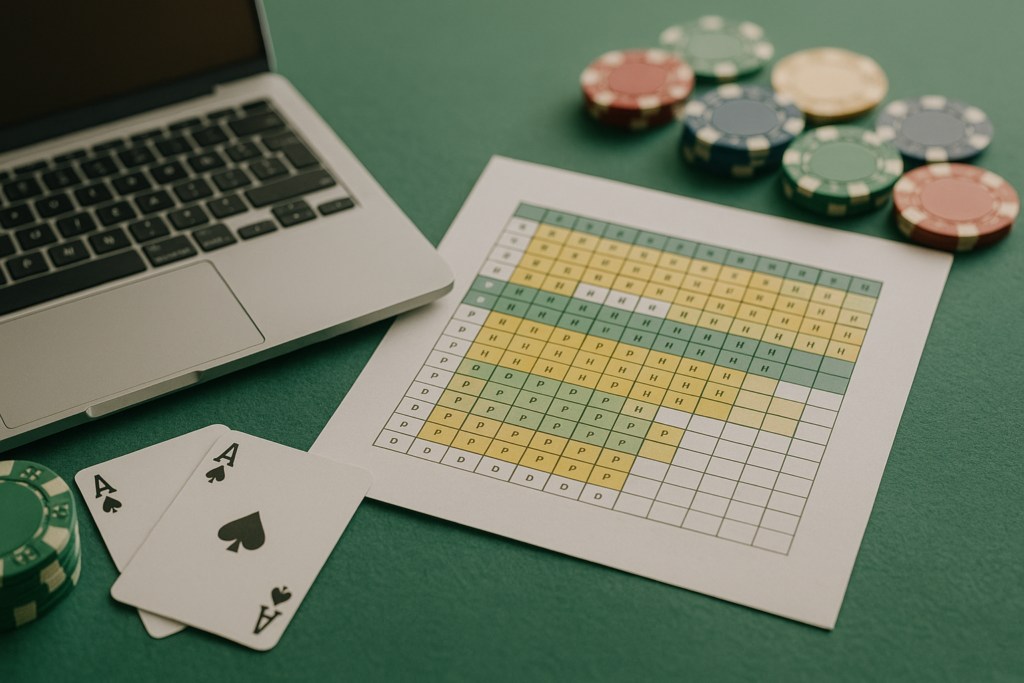
Basic Strategy Chart: 3 Blackjack Charts for Common Rule Sets (6‑deck S17, 6‑deck H17, European) plus a Table‑Rules Checklist Estimated reading time: 6 minutes Key takeaways Match your basic strategy chart to the table rules (deck count, S17/H17, hole card/no hole card) before betting. S17 and H17 differ mainly on soft‑hand doubles; European (no‑hole‑card) requires extra caution on doubles and splits. Prefer 3:2 payout tables, DAS, late surrender, and resplit aces — these rule perks reduce the house edge. Use the Wizard of Odds strategy calculator and rule‑effects pages to generate exact charts for specific rule combinations. How to read a basic strategy chart — a few quick rules Start by naming your hand type: hard total, soft total (an ace counting as 11), or a pair. Then find the dealer upcard across the top and read the instruction at the intersection. H = Hit S = Stand D = Double if allowed; otherwise hit Ds = Double if allowed; otherwise stand P = Split Rh / Rs = Surrender if allowed; otherwise hit/stand Basic pattern reminders that save time at the table: hard 17+ stands; hard 12 stands only vs dealer 4–6; always split aces and eights; never split tens; never take insurance. For a deeper read on the fundamentals, the blackjack basics page is a good refresher. Six‑deck basic strategy chart — Dealer stands on soft 17 (S17) Use this chart when the table is six decks and the dealer stands on soft 17. Under many casinos’ common six‑deck S17 rules the house edge with correct basic strategy is about 0.41%. Hard totals (6‑deck S17) Hard 5–8: Hit Hard 9: Double vs dealer 3–6, otherwise Hit Hard 10: Double vs dealer 2–9, otherwise Hit Hard 11: Double vs dealer 2–10, otherwise Hit vs Ace Hard 12: Stand vs dealer 4–6, otherwise Hit Hard 13–16: Stand vs dealer 2–6, otherwise Hit Hard 17+: Stand Soft totals (6‑deck S17) A,2–A,3 (soft 13–14): Hit; Double vs dealer 5–6 if permitted A,4–A,5 (soft 15–16): Hit; Double vs dealer 4–6 if permitted A,6 (soft 17): Double vs dealer 3–6; otherwise Hit A,7 (soft 18): Stand vs dealer 2,7,8; Double vs 3–6; Hit vs 9–A A,8 (soft 19): Stand; Double vs dealer 6 in some games A,9 (soft 20): Stand Pairs (6‑deck S17) AA: Split TT: Stand (do not split) 99: Split vs dealer 2–6 and 8–9; Stand vs 7,10,A 88: Split 77: Split vs dealer 2–7; otherwise Hit 66: Split vs dealer 2–6; otherwise Hit 55: Treat as 10 — Double vs dealer 2–9, otherwise Hit 44: Split vs dealer 5–6; otherwise Hit 33,22: Split vs dealer 2–7; otherwise Hit This is the classic, table‑friendly chart most experienced players use for six decks when the dealer stands on soft 17. For the exact EV math behind these moves use the strategy calculator. Six‑deck basic strategy chart — Dealer hits on soft 17 (H17) If the dealer hits soft 17 your chart needs small but important changes. H17 generally adds about +0.22 percentage points to the house edge compared with S17, so play matters more. Hard totals (6‑deck H17) Hard 5–8: Hit Hard 9: Double vs dealer 3–6, otherwise Hit Hard 10: Double vs dealer 2–9, otherwise Hit Hard 11: Double vs dealer 2–10, otherwise Hit vs Ace Hard 12: Stand vs dealer 4–6, otherwise Hit Hard 13–16: Stand vs dealer 2–6, otherwise Hit Hard 17+: Stand Soft totals (6‑deck H17) A,2–A,3: Hit; Double vs dealer 5–6 in some rules — fewer doubles are profitable than in S17 A,4–A,5: Hit; Double vs dealer 4–6 in some rules A,6: Hit more often — doubles vs 3–6 are less favorable than S17 A,7: Stand vs 7–8; Hit vs 9–A; doubles vs 3–6 become rarer A,8–A,9: Stand Pairs (6‑deck H17) Splitting rules are the same; the subtle change comes from soft-hand doubles. Adjust splits involving aces/8s as you would on S17. Bottom line: H17 flips a handful of soft‑hand doubles from “Ds” to “H” (or from “Ds” to “Ds only in very specific spots”) — the chart above reflects the safer, H17‑appropriate approach. Because the difference is modest, many of the hard‑total lines are identical to S17. For a rule‑by‑rule house edge comparison see the Wizard’s discussion of rule impacts in the rule effects section. European no‑hole‑card basic strategy chart (six‑deck, no dealer hole card) European (no‑hole‑card) blackjack is the one that trips most experienced players up. The dealer doesn’t take a hole card until all player hands are finished, which means you can lose doubles and splits if the dealer later reveals blackjack. That extra risk pushes the house edge higher — in a typical six‑deck European example the edge is about 0.62% with correct basic strategy. Hard totals (European, 6‑deck) Hard 5–8: Hit Hard 9: Double vs dealer 3–6, otherwise Hit Hard 10: Double vs dealer 2–9, otherwise Hit Hard 11: Double vs dealer 2–10, otherwise Hit vs Ace Hard 12: Stand vs dealer 4–6, otherwise Hit Hard 13–16: Stand vs dealer 2–6, otherwise Hit Hard 17+: Stand Soft totals (European) A,2–A,3: Hit; more conservative doubling because of no‑hole‑card risk (double vs 5–6 is marginal) A,4–A,5: Hit; double vs 4–6 is conditional A,6: Double vs 3–6 in many tables but sometimes changed to Hit to reduce risk A,7: Stand vs 2,7,8; double vs 3–6 is marginal; otherwise Hit A,8–A,9: Stand Pairs (European) AA and 88: Split TT: Stand 99: Split vs 2–6 and 8–9; Stand vs 7,10,A Other splits follow the S17 pattern but be slightly more conservative on split+double combinations because of the no‑hole‑card exposure. European strategy is mostly the same shape as S17 strategy, but you should be aware doubles after split and losses to a later dealer blackjack are real downsides. For the precise European chart and full explanation, see the European strategy write‑up. Which rule changes flip specific plays — and how much they move the house edge Not all rule changes are equal. Some shift the house edge by tenths of a percent; others are small. Here are the
Can You Win Mini Casino Games? 96% RTP Reality

Can You Win Mini Casino Games? The 96% RTP Reality and How Fast Play Turns Short‑Run Wins Into Long‑Run Losses Estimated reading time: 6 minutes Key takeaways You can win in short sessions, but RTP is a long‑run average that usually favours the house. Mini games accelerate exposure to the house edge via rapid rounds and operator RTP variations. Bonuses often carry wagering requirements that can increase expected losses. Can you win mini casino games? The 96% RTP reality RTP — Return to Player — is the headline number that tells you the long‑term expectation of a game. It’s a theoretical percentage of stakes returned to players across millions of rounds, not a promise about your next 10 spins. The UK Gambling Commission explains this in plain terms in its Return to Player guidance. Put it into numbers: a game with 96% RTP has a 4% house edge. That means, on average, the operator retains £4 for every £100 staked. Stake £10,000 in total across many players or many rounds → the expected return to players is about £9,600; the operator keeps about £400. That £400 figure is purely the long‑run expectation. Any single player session could end in a win or a wipeout. So when someone tells you “this game pays 96% so you’ll get most of your money back,” remember they’re talking averages over huge sample sizes, not your five‑minute session. The payout analyses on consumer sites repeatedly show wildly different short‑term outcomes even on high‑RTP titles. Can you win mini casino games over the long run? Why the math beats you Winning in a single session is common enough. Players hit bonuses, catch a hot series, or land a jackpot. Those short runs feed the headlines: “Won £10k on a 50p spin!” But the long run is where RTP rules. Two core truths: RTP is cumulative. The more rounds you play, the closer the aggregate results will drift toward that RTP. If RTP < 100%, the expected value of continuous play is negative. Keep playing and the house edge compounds. That’s why a 96% RTP implies an expected loss rate of about 4% of your total stakes. If you’re a casual player making a few bets for fun, that’s “paid entertainment.” If you treat it like income and keep feeding the machine, the math isn’t on your side. Why mini games are especially risky: fast play, volatility and RTP versions “Mini” games — short, instant‑result formats: crash-style rounds, tiny slots, instant‑win scratch replicas, quick roulette — are popular because they’re fast and satisfying. But those very features accelerate the house edge. Fast play: More rounds per hour = more times the house edge is applied. A game you can click through dozens of times in 10 minutes will chew through your stake quicker than a slow table game. Volatility: High volatility means rare big wins and long dry spells. Low volatility means frequent small wins. Neither changes the RTP; both change how likely you are to be on a winning run at any given moment. Operator RTP versions: The same title can be offered with different RTP settings at different casinos. A game that lists 97% RTP on one site might run at 95% elsewhere, so always check the operator‑specific info. Consumer research has flagged materially different RTPs for identical titles across sites, as shown on Gambling.com. Those three factors combine: a high‑volatility mini game with fast rounds on a site running a lower RTP version is a recipe for rapid bankroll swings and an increased chance of negative sessions. How casinos and bonuses change the math Bonuses can sweeten the expected value if terms are reasonable, but they often look better in headlines than in practice. The bonus may sound like “100% up to £200,” but what matters is the fine print: Wagering requirement (20x, 35x, etc.) — higher numbers mean you must risk much more at the house edge. Game weightings — slots might count 100% but many mini games will be excluded or contribute less. Max bet caps and withdrawal limits — these can blunt your ability to convert a bonus into cash. Expiry windows — short windows force faster play and therefore more exposure to the house edge. A large wagering requirement can turn an attractive bonus into a trap that forces you to play more rounds and therefore increase expected losses. The right approach is to read the full terms and calculate whether the extra play needed is worth the potential gain. For an operator comparison and the mechanics behind house edge figures, guides like those on Virgin Games and OLBG are useful starting points. They’ll help you see which types of games historically have better theoretical odds and why that might not translate to your individual session. Checklist: Spot the least harmful mini casino games If you’re going to play mini games, make those minutes count. Use this quick checklist before you stake a penny. Check the game’s RTP on the game info or paytable screen — and confirm the operator version applies to your site. Look for a volatility/variance rating so you know whether to expect frequent small wins or rare big hits. Find the maximum win and jackpot conditions: if the jackpot is the main attraction, check how tiny the hit probability likely is. Scan bonus terms to see whether the game is restricted or has a reduced contribution to wagering requirements. Prefer slower formats if your aim is to protect bankroll — fewer rounds per hour reduce the speed at which the house edge applies. Stick to regulated operators that publish game info clearly — UK players can rely on the Gambling Commission guidance for what should be displayed. That last point matters. A transparent operator that publishes an operator‑specific RTP, volatility and clear rules is less likely to have hidden nasties. If you can’t find basic game info, don’t play it. Practical bankroll tactics for mini games There’s no trick to beat a sub‑100% RTP permanently.
Replay Poker review 2,500 chips and Texas Royal practice

Replay Poker review: Is the free 2,500‑chip play‑money site any good for practicing Hold’em and Omaha? Estimated reading time: 8 minutes Key takeaways Replay Poker is a browser-based, play‑money platform that gives new accounts 2,500 chips and supports Hold’em, Omaha and a short‑deck variant. It’s useful for practicing preflop ranges, postflop lines and tournament structure, but player behavior differs from real‑money tables. There’s no cash, withdrawable winnings, RTP or cash‑gaming license — treat it as a training and social tool, not a cash room. Replay Poker review: what the site actually is (and isn’t) Start with the plain facts. Replay Poker is a free‑to‑play, play‑money poker platform: players can’t deposit money, cash out winnings, or win real‑money prizes. The company states this clearly on its help pages and marketing material, so treat it as a social poker product rather than an online poker room taking stakes or offering licensed cash play. See the official help for the confirmation of the play‑money model and terms on the site’s onboarding chips. Replay Poker review — games, formats and the 2,500‑chip start Replay Poker covers the basics and a few interesting variants. You’ll find: Texas Hold’em in no‑limit, fixed‑limit, pot‑limit and mixed‑limit tables; Omaha in no‑limit and pot‑limit, plus pot‑limit Omaha Hi/Lo; Texas Royal, a short‑deck style variant using tens, face cards and aces. Those offerings come directly from the site help documentation, so you’re not guessing about format support. New accounts receive 2,500 play‑money chips on signup — your practice bankroll to start practicing preflop ranges, bet sizing and tournament survival. Because everything is denominated in chips, the platform’s “economy” is virtual. That 2,500 stack is an onboarding gift, and tournament promos give more virtual chips, but none are convertible to cash. Tournament structure and multiplayer action Replay Poker isn’t just ring games. It supports a wide range of tournament formats: single‑table sit‑and‑gos; multi‑table tournaments (MTTs); freerolls and leaderboard events; regular ring games for cash‑style play (using chips). If you want to practice structure — blind levels, payout curves, ICM decisions — the MTT and sit‑and‑go options are useful practice ground. Traffic matters for practice: you want live opponents. User reviews and public pages describe active ring games and regular tournaments, which means you’ll often face real players rather than bots. That social and competitive element is where the site has value for someone learning timing, player types and opponent tendencies in a live table setting. Money, licensing and the missing rake/RTP numbers Let’s be blunt: Replay Poker deliberately avoids real‑money play. The platform’s own documentation confirms it does not offer opportunities to win real money or provide cash withdrawals. Treat any chip deductions or tournament fees as mechanics for the play environment, not as financial rake tied to currency. Because it isn’t running cash games, you won’t find a published RTP, volatility index or a regulated rake schedule that matters in dollars. A third‑party review also notes the apparent absence of a gaming license tied to cash gambling — an important point if you were looking for regulated, withdrawable stakes. Again: Replay Poker is a social play‑money service, not a licensed cash poker operator. How useful is Replay Poker free play for learning real poker? Short answer: it’s useful — for specific things. It’s not a full substitute for real‑money tables. Where it helps: Preflop fundamentals: you can practice ranges, positional awareness and blind defense without risking bankroll. Postflop patterns: reading boards, sizing plans and converting hands to value or bluffs are skills you can drill repeatedly. Tournament mechanics: blind ladders, ICM basics and short‑stack shove/fold scenarios are available in sit‑and‑gos and MTTs. Social play and tells: you’ll get familiar with timing patterns and chat dynamics, which are part of live online poker. Where it falls short compared with real money: Psychology of risk: players act differently with play chips. Expect looser play and riskier calls than at low‑money real tables. Bankroll management practice: there’s no real financial downside, so habits like moving up stakes without discipline aren’t punished the same way. Regulation and fairness signals: no cash flow means different incentives for the operator, and external licensing for cash play doesn’t apply the same way. Use Replay Poker to build pattern recognition, experiment with lines, and practice tournament timing. But once you’re trying to convert that skill to cash tables, remember the behavioral gap: real money forces tighter, more exploitative play by opponents. Practical tips: getting the most from Replay Poker tournaments and ring games If you’re using Replay Poker to sharpen skills, treat your session like a training block, not a free ride. A few practical, concrete ways to level up: Set a pretend bankroll: allocate a notional stack of 25,000 or 100,000 chips and track tilt and leaks as if it were real money. Drill one concept per session: play 200 hands concentrating on 3‑bet frequencies, or grind sit‑and‑gos to practice endgame shoves. Use mixed limits: switch from no‑limit to pot‑limit or fixed‑limit tables to sharpen sizing and pot‑control instincts. Play leaderboard events and freerolls: they create structure and real competitive pressure inside the play‑money economy. All of this is feasible because Replay Poker runs in your browser and doesn’t require deposits. The site’s browser access makes it easy to jump into tables from any laptop without installs. Social and community factors: is this a “real” online scene? The platform is built around multiplayer games and community features. Players report seeing active tables and regular tournaments, and the social chat and leaderboard mechanics encourage long‑term participation. Independent player reviews mention both strong competition and casual players — a mixed pool that’s common on play‑money sites. If you value meeting other players, friendly banter, or queuing for a specific tournament time, Replay Poker’s social focus is a plus. If you want a field of sharp, tight, exploitative regs that mimic a regulated low‑stake cash environment, you’ll find fewer of them here than in cash rooms on licensed poker networks. Where Replay Poker fits in your practice plan —
Spribe Mines review 97% RTP on a 5×5 grid and 10000x cap
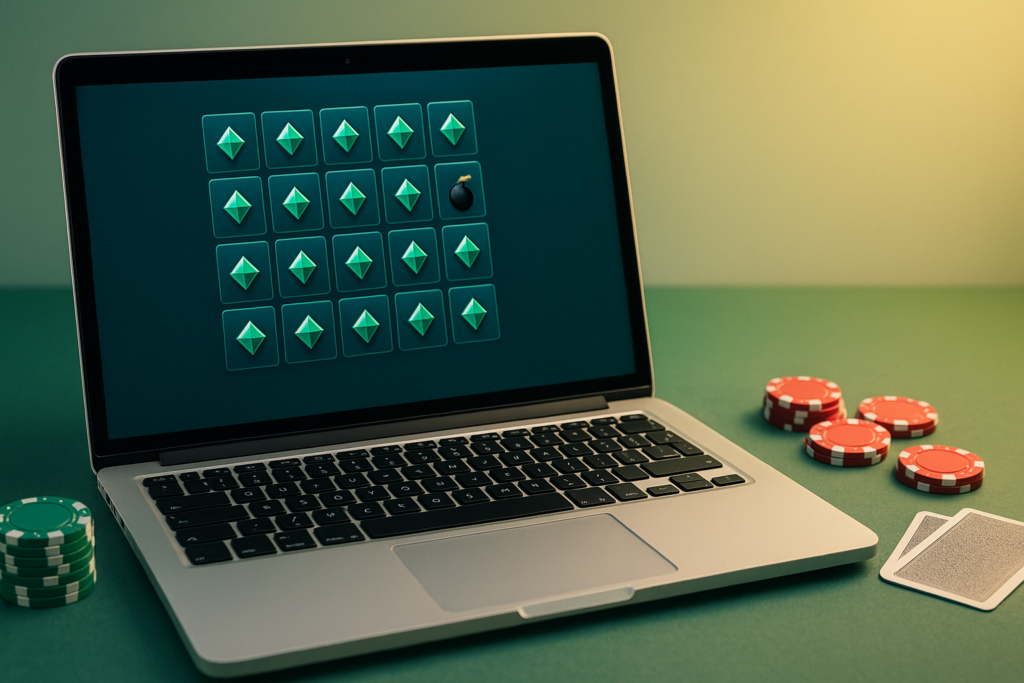
Spribe Mines review (2026) — 97% RTP, 5×5 grid and how mine count changes risk/reward Estimated reading time: 5 minutes Key takeaways Spribe Mines is a compact 5×5 instant-win game where you pick tiles and avoid mines; common commercial builds allow 1–24 mines. Many deployments list a Mines RTP 97% (≈3% house edge), but RTP, max win and bonus eligibility vary by operator. Mine count is the volatility dial: fewer mines = steadier wins; more mines = higher variance and rarer big multipliers. The advertised Mines max win 10000x is a theoretical ceiling that operators may cap or restrict via terms and limits. Spribe Mines review: core mechanics in plain language Mines deals with 25 covered tiles; behind them are safe squares and hidden mines. You click tiles one at a time. Each successful pick increases the displayed multiplier. You can cash out whenever you like. A revealed mine ends the round immediately and wipes the active stake. Cashing out banks the payout. That basic push-your-luck loop is exactly what gives Mines its rush — short rounds, quick decisions, clear outcomes. For a concise description of the instant-win format, check this instant-win overview. Spribe Mines review: Mines RTP 97% and the house edge Most of the Spribe-equipped casinos list Mines at about 97% RTP. That translates to a theoretical house edge near 3% over long samples. You’ll see that exact figure repeated on several operator listings, including the same Spribe Mines listing referenced above. That 97% is not gospel for every Mines-branded game. Other variants reported in the market show RTPs from roughly 95% up to about 99% depending on provider and operator settings. For a catalog of reported values, see the RTP database for Mines. Bottom line: the displayed in-game RTP or the casino’s game info panel is the source of truth — not a headline on a review site. The math behind Mines is transparent enough to be computed, but the operator’s chosen RTP and any promotional rules are the things that actually affect your bankroll. How mine count changes volatility and cashout strategy Here’s the practical bit every bettor cares about: mine count is your volatility dial. Choosing two mines looks very different at the table to choosing twenty mines. Low mine counts (1–5): more frequent safe picks, smaller multipliers, and smoother cashout opportunities. Mid-range counts (6–12): an obvious risk/reward tradeoff — rounds swing more but still produce workable cashout targets. High counts (13–24): rare survivals, heavy variance, but when the multiplier climbs it can be huge — if the operator permits the full ceiling. Crucially, changing the number of mines modifies the win/loss distribution, not the long-term RTP of the configured game. That’s been a consistent point in available game guides and reviews; see this Mines game guide for a take on volatility versus RTP. Cashout strategy depends on your aim. If you’re conserving bankroll, lock in wins early on low-mine games. If you want a shot at the advertised top multipliers, increase mines and accept steeper variance — but remember the odds of busting rise sharply. Payout ceiling: Mines max win 10000x — what that really means The common Spribe version is advertised with a theoretical maximum payout up to Mines max win 10000x the stake. That figure is the headline people chase and it’s achievable under ideal conditions in the published payout curve. However, in practice the operator can limit maximum wins, stake ranges, and even the game build itself. Some casinos cap maximum cashouts, and regulatory or jurisdictional rules may force lower ceilings. The demo and informational pages routinely list the theoretical top-end — for example, try the Mines demo page to see published multipliers. Always check the in-game paytable and the casino’s terms before betting large sums; the 10,000× headline is a ceiling, not a promise that every operator will pay that amount under their bonus or stake rules. Mines provably fair: is verification available? Some operators — particularly crypto casinos — sell Mines as a provably fair product where you can verify outcomes against server/client seeds or hashes. These setups let technically minded players audit individual rounds. That feature is not universal. The label “Mines” does not automatically mean provably fair; you must verify on the operator’s fairness or provably fair page whether the deployed version supports it. One provider with provably fair documentation is shown on this provably fair page. Bonuses, wagering and a pre-wager checklist Mines may or may not be eligible for casino bonuses. Operators set their own contribution rules and maximum cashout limits for promotional play. Before you stake bonus money, use this checklist — literally read the in-game help and the promo T&Cs: Confirm the displayed RTP on the game’s info screen. Check the stated maximum payout for the session and whether the operator caps wins. See whether Mines contributes to wagering and at what percentage. Note the max eligible stake when wagering bonus funds. Look for a stated max cashout from bonuses and expiry dates. Confirm whether your country is excluded from the promotion. Promos are operator-level products; one casino might include Mines in a welcome bonus while another explicitly excludes it. A recent operator offer example is advertised on this casino bonus page, but the fine print determines whether Mines plays under those bonus rules. Betting-first verdict: where Mines fits in your toolbox Strengths are obvious and practical: simple rules, push-your-luck tension, adjustable risk settings, and fast rounds that let you test strategies quickly. The commonly listed Mines RTP 97% is competitive for instant-win formats and gives a clear expectation of long-run loss rate when the game is configured that way; see the base listing at Spribe’s listing. Weaknesses matter too. A 97% RTP still favours the house over time. The game’s interactive feel tempts players into thinking they can beat the layout with timing or pattern-play — but there’s no evidence those methods overcome the mathematical edge. Operator variation is a practical headache: RTP, max win, and bonus eligibility differ by casino,
Slots Temple review 2026 UKGC licence and 96.14% RTP

Slots Temple review 2026: Do its high RTP claims and free daily tournaments actually pay out for UK players? Estimated reading time: 8 minutes Key takeaways Slots Temple promotes higher-than-average advertised RTPs and free daily, no-deposit slot tournaments for UK players, but you must verify live-game RTP and tournament terms before staking. Independent comparisons (for example OLBG) show an average tracked RTP around 96.14%, yet the exact version of a game on the site is what actually matters. Prize payouts from no-deposit tournaments appear to be real cash, but withdrawals require KYC and follow normal banking windows (Talksport reports 0–3 business days after approval). Slots Temple review 2026: is the claimed UKGC licence real? Several 2026 reviews identify Slots Temple as operating under a UK Gambling Commission licence. The operator name Digital Division Limited appears across affiliate coverage, for example in the Betting.co.uk review. One review gives a licence number often cited in content about the brand: 58086, with a longer internal reference shown in some write-ups. That reference appears in hands-on recaps such as the WagerPals review. That’s a useful starting point, but it’s not enough. The only definitive way to confirm is to search the UKGC public register yourself and match the exact licence holder details to the operator name before depositing. Slots Temple review 2026: How advertised RTPs translate to actual play The loudest metric in Slots Temple’s marketing is RTP. An independent analysis by OLBG that compared 50 games across 27 UK casinos put Slots Temple top of that list with an average tracked RTP of 96.14% across 49 games. The OLBG report also highlights specific high-RTP examples. Dazzle Me listed at 99.06% RTP in that comparison. Twin Spin shown at up to 99.06% RTP. Starburst noted around 98.05% RTP. Gold Blitz Express reported at 96.50% RTP. Those numbers are attention-grabbing, but two important realities matter to every player: RTP is a long-run theoretical average. A 96% number says nothing about your next 100 spins. Many providers release multiple RTP configurations of the same title. The specific version live on the site is what counts — and that is shown in the game’s info panel, not in a headline chart. Hands-on reviews illustrate that variance. For example, Gamblizard’s testing cites Slingo Starburst at 96.66% RTP and classifies it as medium volatility. This is a concrete reminder that the exact configuration on Slots Temple matters, and it may differ from other operators. How to verify a game’s RTP on Slots Temple Open the slot and click the information or settings icon. Look for the RTP or return-to-player percentage printed in the game rules screen. If the slot offers multiple RTPs, the game panel will usually state which version you have — take a screenshot if you want to keep a record. If you care about getting the “best” RTP version of a title, do this check before you commit bankroll. How Slots Temple tournaments work — are the free daily events actually free cash? Slots Temple’s other signature claim is free daily slot tournaments that award real cash. Multiple reviews describe the tournaments as no-deposit entry for registered users and say prizes are paid in real money without wagering requirements. The WagerPals review specifically notes that tournament entry can be automatic after signing up, while the operator’s own promotions pages describe the setup of partner offers and prize mechanics on their promotions page. Two practical points about those tournaments that matter to UK players: Prize size and structure are not universally published in the reviews. Some tournaments run leaderboards, others hand out random cash drops; you need to read the live tournament rules to know real cash value. Even if a tournament is “no deposit,” the site may require a verified account and KYC before you can withdraw prize money — a standard regulatory check on UK-focused sites. So yes, the product exists in the form reviewers describe — but the exact cash value you’ll get depends on the day, the tournament format, and the fine print in the event rules. Always check the live tournament terms before registering to play for those prizes. Banking, withdrawals and real-world payout performance Deposit and withdrawal mechanics are where marketing meets reality. Talksport’s 2026 write-up lists a minimum deposit of £10 for Slots Temple, and reports withdrawals taking 0–3 business days once a cashout is approved. That aligns with what many UK licences aim for, but the time to land money in your bank depends on the payment method and the speed of identity checks. If a “no-deposit” tournament wins you £50, expect the normal KYC and payment checks to apply before the money leaves the account. User feedback is broadly positive but not definitive: Trustpilot showed a rating of 4.4 in a September 2026 search — useful but not a substitute for regulator records or documented withdrawal evidence. You can view current user reviews on the site’s Trustpilot profile. Independent review scores vary. Gamblizard gives a 3.5/5, WagerPals 4.0/5, and FruitySlots an 8.7/10, reflecting different weighting of RTP, promotions and UX across reviewers. Quick checklist — what to verify before you play at Slots Temple UKGC licence: confirm the licence holder name and number on the UKGC register (affiliate reviews list licence 58086, but don’t stop there). Game RTP: open the slot’s rules screen and confirm the RTP percentage before you bet. Tournament terms: read the rules for entry, prize distribution, eligibility and any KYC or wagering requirements. Banking: note the minimum deposit (Talksport lists £10) and expected withdrawal windows of 0–3 business days. Customer feedback: check recent Trustpilot comments and independent reviews for payment experience and support speed. Those steps take a few minutes and prevent awkward surprises when you try to withdraw tournament winnings or back out after a marketing-heavy signup. Strengths and weaknesses — a straightforward verdict Strengths: Reported UKGC positioning; distinctive free daily tournaments; independent OLBG data placing tracked RTP averages at 96.14% across monitored titles (OLBG analysis). Weaknesses: No standard matched-deposit welcome bonus;
Win Poker Every Time? What 1,471 Hands Reveal About Skill

Win Poker Every Time? Why That’s Impossible — and What 1,471 Hands Tell Us About Long-Term Skill Estimated reading time: 5 minutes Key takeaways You cannot win every poker hand; short-term variance and rake make perfection impossible. Samples in the low thousands (around ~1,471 hands in some studies) start to reveal skill over noise. Long-term success depends on game selection, beating rake, bankroll discipline, and consistent study. Why you can’t win poker every time Poker mixes skill with randomness. Even when you make the best decision mathematically, the deck can still hand you a loss. That’s not a bug; it’s the game. Random deal: Your hole cards, the community cards, and what your opponents hold are all outside your control. Variance: Short-term results swing. Good players run bad; poor players run hot. This is simply how probability behaves. See this primer on variance in poker for a readable breakdown. Decisions are probabilistic: Even a 70% favorite still loses roughly 3 out of 10 times. Favorites aren’t certainties. The rake (and fees): Operators extract value from pots or buy-ins, so you must not only beat opponents but beat the rake to be profitable. Read more on poker strategy and rake. Any one of those elements can turn a “correct” play into a losing one. So if your goal is to win poker every time, reality will disappoint. What 1,471 hands tells us about when skill wins — and why you still can’t win poker every time Some analyses point to roughly 1,471 hands as a useful sample size where skill starts to show up statistically in ring-game data. That figure isn’t magic; it’s an estimate about when the noise from randomness starts to shrink relative to a player’s edge. That matters because it explains the difference between two statements players often mix up: “I can win more than my opponents over a large sample” — plausible for a skilled player. “I will win every hand, session, or tournament” — impossible. The ~1,471-hands number comes from comparing observed results against expected randomness. After that many hands, patterns attributed to skill become statistically detectable in certain formats—but they don’t eliminate variance. You still get losing sessions, bad beats, and brutal downswings. Put differently: the longer you play (and the more consistent your edge), the more likely your true skill shows through. But nothing in that math promises a flawless run. The research: skill, variance, and the long view Peer-reviewed work on online ring games finds a measurable skill component: better players tend to perform better over time. That’s not surprising, but it’s the key distinction between poker and pure house games. See the online ring-game poker study for the academic take. Other practical write-ups emphasize the same reality: variance is inherent, and the smart player adopts a long-term mindset. PokerStars explains why good players “take the long view” and don’t overreact to short-term outcomes in their strategy guides. Even specialists who work with tilt, psychology, and bankrolls stress that swings are normal. For a readable session-level perspective, this variance expert feature covers how variance plays out in daily play. How to tilt the long-term odds in your favor If the goal is realistic—make money over the long term rather than win every hand—here are practical, evidence-aligned steps that actually move the needle. Table and game selection: Your biggest immediate edge comes from playing weaker opponents. Choose tables where you have a read or see more obvious mistakes. Beat the rake math: Factor in rake and tournament fees when choosing stakes. If your skill edge is smaller than the house take, you won’t profit despite playing better. Bankroll discipline: Manage stakes so variance doesn’t blow your bankroll. The math for how much to bring depends on format and your edge—see practical guidance on variance and bankroll. Study ranges and position: Learning hand ranges, pot odds, and positional advantage is how you convert good decisions into a repeatable edge. Track results across samples: Don’t judge your win-rate by one session. Track thousands of hands and analyze spots where you bleed money. Avoid tilt: Emotional decisions cost more than any single bad beat. Have a stop-loss or a cooling-off rule. Game format matters: Cash games usually stabilize faster than tournaments because you can play many hands and the payouts are less lumpy. Exploitative adjustments: Identify opponent tendencies and adapt. Playing the GTO baseline is fine, but making exploitative deviations against clear leaks is where profit lives. These points echo major strategy writeups: picking weaker fields and controlling costs (rake/fees) are consistently listed among the top practical advantages for long-term winners (poker strategy and rake). Responsible play note: There’s no guaranteed way to make money in gambling—set limits and keep poker within entertainment budgets. For general guidance see this responsible-gambling guidance. Poker vs casino games: why poker gives skilled players a shot Unlike slots or roulette, poker pits you against people, not a fixed house edge. That means a skill differential can yield a sustainable positive expected value—if it exceeds the rake. Academic and practitioner sources underline this: skill shows up statistically in online ring games, and a better player will, over thousands of hands, tend to make money where a recreational player won’t. The caveat is the same everywhere: you need volume, discipline, and a real edge. See the academic study for the evidence that skill matters (online ring-game poker study). When the math still bites: realistic expectations about streaks Knowing that skill tends to win over large samples doesn’t soften the sting of a 500-hand bad run. Even world-class players have losing months. What separates pros from hobbyists is how they treat that variance: Pros budget for downswings and reduce stakes when the math says they should. They track, analyze, and fix leaks rather than blame the deck. They use a long sample—thousands, not dozens—before changing core strategy. In short: expect losing streaks. They are part of the ecosystem that lets winners extract value later on. Practical drills: three focused exercises to speed skill
Start Playing Online Casinos Safely with a 6-step Playbook

Start Playing Online Casinos Safely: A 6-Step Beginner Checklist (Licence checks, verify account, small deposits) Estimated reading time: 6 minutes Key takeaways Always choose licensed operators and confirm the licence on the regulator’s public register. Verify your account early, make a small test deposit, set strict limits and use safer-play tools. Begin with low-volatility, simple games and read bonus terms before accepting offers. If you want to start playing online casinos without turning it into a headache, follow a simple, regulator-backed six-step plan that actually works. The clearest single piece of advice regulators give is this: use licensed operators, verify your account early, and treat gambling as entertainment — not income. Why you should start playing online casinos with a licence check The first safety rule is obvious once someone points it out: confirm the operator holds a valid licence. The UK Gambling Commission says licensed businesses are covered by consumer and gambling protection rules in Great Britain, and it runs a public register you can search yourself. That register isn’t just window dressing — it’s where you can confirm the company name, licence status and any conditions attached to the operator before you hand over money. If you can’t find the operator on the UK Gambling Commission public register, walk away. How to start playing online casinos: the 6-step checklist Here’s the full, practical checklist. Think of it as the routine a sharp regular runs through before a session: licence, verification, test deposit, limits, tools, easy games. Six steps that protect your time, money and nerves. Step 1 — Confirm you’re on licensed online casinos Licensed online casinos are the cornerstones of online casino safety. A licence means the operator must meet oversight standards for money handling, fair-play testing and complaint procedures. Look for the regulator listed on the site and cross-check it on the regulator’s site. For UK players, the UKGC register is the authoritative source; other respected regulators run public lists too. Step 2 — Complete casino account verification up front Do your ID checks early. The common advice from operators like PokerStars is to verify your account up front so withdrawals aren’t delayed when you actually need your money. Account verification typically means sending a proof of ID and an address document, and it can take from a few hours to a few days. Getting this out of the way prevents stress if you hit a winning streak. Step 3 — Deposit a small test amount and use safer payment habits Start with a small test deposit rather than the full amount you intend to use. PokerStars specifically suggests treating the first deposit as a low-risk trial so you can confirm identity, payment processing and withdrawal paths work as expected. Use funds you already have — avoid credit-style borrowing. Responsible-gambling guidance from sites like GambleOnline recommends players stick to money they can afford to lose and avoid using borrowing to chase play. Step 4 — Set a strict budget and session length before you play Decide your absolute budget and session time before logging on. PokerStars and other operator safety pages advise fixed budgets and scheduled breaks to prevent impulsive decisions during a session. Write down a numeric loss limit and a session length — for example, “today: £30 max, 60 minutes” — and stick to it. Having that rule in plain sight makes it easier to stop when the session ends. Step 5 — Use built-in safer-play tools and take time-outs if needed Most regulated casinos offer deposit limits, daily/weekly loss limits, session time-outs and full self-exclusion. PokerStars lists these tools and encourages players to use them before they feel they need them. Set these tools in your account dashboard immediately after verification so the limits are in place from your first real-money spin or hand. Step 6 — Begin with low-risk, beginner-friendly games and learn house edge Start with simpler games that have clear rules and a known house edge: basic blackjack variants, European roulette, or low-volatility online slots with displayed RTPs. PokerStars’ casino safety guidance recommends learning rules and bonus terms before staking bigger money. Read payout tables and RTP figures (where provided) and play practice rounds where available. Knowing the mechanics keeps the first sessions educational instead of expensive. Practical checks: how to verify a licence and avoid dodgy operators Licences are not all the same. The UK Gambling Commission, Malta Gaming Authority and other reputable regulators have different standards — the UKGC emphasizes consumer protections for Great Britain in particular. To verify a licence: find the licence number on the casino site, then search it on the regulator’s public register. If the number doesn’t match, contact the regulator or skip the site. Another quick red flag: if customer support can’t point you to their licence number or gives vague answers, that’s a reason to pause. Legit operators publish clear, verifiable licence and company details for transparency. Why completing casino account verification early saves you headaches Casino account verification — often called KYC (Know Your Customer) — is standard for licensed operators. PokerStars recommends completing verification early so withdrawals aren’t blocked later by identity checks. Verification protects both you and the operator: it prevents fraud, reduces money-laundering risk and speeds up payouts. If an operator refuses to verify within a reasonable timeframe, that’s a problem you want to know about before you deposit a larger amount. Smart deposit strategy: small test amount, then scale safely Making a small initial deposit tests the payment chain and confirms the site’s withdrawal process. Think of it as a smoke test for cash flow: deposit, wager a little, and request a small withdrawal to confirm identity, processing, and timing. If withdrawals are slow, or you face surprise fees, you can stop before committing the rest of your bankroll. That test saves time and avoids painful surprises when you want to cash out. What “safer play tools” actually do and how to set them Built-in safer-play tools are practical features you should enable before you get
Aviator review 97% RTP and cash-out volatility explained

Aviator Review — Is Spribe’s 97% RTP and “Provably Fair” Crash Game Honest (What Aviator Mini Players Need to Know) Estimated reading time: 7 minutes Key takeaways Aviator is widely advertised as 97% RTP and provably fair, but operator implementation can vary — always verify the casino’s info panel. Your cash-out strategy controls realized RTP and volatility; the same underlying distribution yields different returns depending on when players cash out. Aviator Mini offers lower bet limits for lower per-round variance and is useful for testing strategies and provably-fair verification. Provably fair proves round integrity but does not guarantee a profitable strategy — collect survival-probability data to make informed decisions. Aviator review — the basics: how the game actually works At its core Aviator is a multiplayer crash game from Spribe where a round starts at 1.00x and the multiplier climbs until the plane “crashes.” If you cash out before the crash you get your stake times the current multiplier. If you don’t cash out, your stake is lost. That simple rule is exactly why the payout behavior is different from a slot — your timing is the risk/volatility control. The provider behind the game is Spribe; you can see the official product details on Spribe’s Aviator page. The game is often offered as a standard table and as a smaller-stakes “Aviator Mini.” The latter is the same mechanic with lower bet limits, designed for players who want lower variance or to test strategies without burning cash fast. Aviator review — RTP, house edge and what “97%” actually means The headline number you’ll see everywhere is 97% RTP, implying a 3% house edge. That figure is the most commonly quoted official value for Aviator (see the Aviator RTP listing), but we need to unpack what that means in a crash game. RTP normally measures the long‑run percentage of stakes returned to players. For slots that’s built into spin outcome probabilities. For Aviator, RTP is still an expectation but it depends on the distribution of round lengths and how players cash out. Two important caveats jump out: Some sources say the published 97% is the default for the standard Aviator implementation; others warn that casinos can configure operator-specific settings. In short, check the casino’s own game info or terms because implementation can vary (see this crash games guide note). Because players choose a cash-out point, volatility is effectively player-controlled. Calling Aviator “medium volatility” is less useful than saying: your cash-out strategy determines how bumpy your ride will be. Provably fair — what Spribe’s claim gets you and what it doesn’t Aviator is widely described as “provably fair,” meaning rounds are generated using seeds/hashes that can be verified after the result is revealed. That transparency is a real plus: you can confirm a result wasn’t swapped after the fact. That said, the exact hashing method and how operators expose verification tools vary. Some writeups describe a particular method inconsistently, so don’t take a provider or affiliate blurb at face value — verify the hash method on the casino’s game page before you play. The general principle is sound, but the implementation detail matters for technical proof. In short: provably fair helps you confirm a round’s integrity, but it doesn’t replace knowing the RTP reported by the operator or understanding how the cash-out mechanic shapes outcomes. Aviator Mini and small-stakes play — what changes (and what stays the same) Aviator Mini is simply the low-limit cousin of the standard table — same multiplier curve mechanics, same crash rule, but with smaller bet sizes. That makes it useful for players who want to: test cash-out strategies without large bankroll swings, practice verification steps on provably fair rounds, or enjoy longer sessions with less total exposure per round. Mechanically nothing about RTP or provably fair claims should change just because the table is branded “Mini.” However, because operator settings can vary, you should confirm the RTP on the casino’s Aviator Mini page before assuming it’s identical to the standard version. Aviator review — why the cash-out mechanic is the real volatility lever Here’s the heart of the game: unlike a slot where volatility is fixed by symbol probabilities, Aviator hands volatility to you via cash-outs. Think of cash-out multiplier c as your chosen risk level. If you always cash at c, your expected return per unit stake is: Expected return = P(multiplier ≥ c) × c That formula is straightforward but powerful. Your success depends entirely on the probability P(multiplier ≥ c) — the chance the round survives at least to your cash-out point. The game’s overall RTP can be expressed as the expected value across the distribution of cash-out behaviors. Example (hypothetical): suppose the chance of surviving to 2.00x in the long run is 49%. If you always cash at 2.00x, your expected return becomes 0.49 × 2.00 = 0.98, i.e., 98% RTP for that specific strategy. If the survival chance were 48%, the expected return would be 96% — lower than the commonly cited 97%. Useful takeaway: the same underlying round distribution can yield different realized RTPs depending on how you and the field cash out. That’s why calling Aviator “medium volatility” misses the point — you decide the risk by choosing when to lock in. Aviator review — operator settings, transparency and what to verify before betting Because online casinos may implement the game with differing back-end settings, a few checks save headaches: Look at the game info panel on the casino’s Aviator or Aviator Mini page. Operators that change default RTP often list the figure there. Confirm whether the casin o exposes provably-fair verification tools and how to use them for a round — the method should be documented on the casino’s rules section or in the game window itself (Spribe’s official page shows the concept on Spribe’s Aviator page). If you’re testing a strategy, use the Mini table to minimize bankroll noise while you learn the survival probabilities for your chosen cash-out points. For a deeper read on the question
Unibet sign up 4 steps to register with a £40 casino bonus

Unibet sign up: Step-by-step registration, KYC tips and how to claim the right casino bonus Estimated reading time: 6 minutes Key takeaways Have ID, proof of address, active email and phone ready before you register. Pick the correct local Unibet site and the welcome offer that matches your activity. Enter names and addresses exactly as they appear on official documents to avoid freezes. Upload clear, recent KYC documents and read wagering rules before using bonus funds. Quick checklist before you start your Unibet sign up Before you click Register, get these on hand: Government ID (passport, driver’s licence or national ID). Proof of address (recent bank statement or utility bill). Active email and mobile number for verification. Card or e‑wallet details for your first deposit (minimums are usually around £/€/$10). Why it matters: accurate documents cut verification time and keep withdrawals smooth. Account freezes usually follow mismatched names, P.O. boxes instead of residential addresses, or missing proof of address. Unibet sign up — navigate to the correct local site Start on the right version of Unibet for your jurisdiction. The country portal determines available products, legal age and bonus choices. For example, use the Unibet UK registration page if you’re in Great Britain. Canadian players should be on the Canadian site such as the Unibet Canada login/registration. Click the yellow “Register” / “Join Now” button in the top‑right corner to open the sign‑up flow. Tip from the sharp regular: double‑check the URL. Localized pages (UK / CA / NJ etc.) will display the legal age and available products up front. Choose country, language and the right welcome bonus Early in the flow Unibet asks for country and language, then often prompts you to select a welcome offer — and this choice can be binding for bonus funds. Some markets split offers between sportsbook and casino. In the UK you’ll typically see multiple sign‑up promos: a couple aimed at casino players and a couple for sports bettors. If you want the casino deal, pick it here so the platform applies the correct terms to your account. If you’re unsure, choose the product you’ll use most. Sports‑first punters should grab the sportsbook welcome; if you’re spinning slots, take the casino offer. You can usually opt out entirely if you prefer no bonus. Example promo: in the UK the site advertises a “Deposit £10 and Get a £40 Casino Bonus” as a common deposit‑style offer — that shows the typical minimum deposit level and structure to expect on sign‑up. Step 1 — fill the personal details correctly The first form page asks for straightforward stuff, but accuracy is everything. Full name: enter exactly as it appears on your ID. Don’t use middle initials if they’re not on your document. Email address: active and checked — you’ll need to click the verification link. Mobile phone: often required for two‑factor checks and safer‑gambling messages. Date of birth: confirms you’re the legal age (18+ in UK/EU; 21+ in many US states). Sources lining up on this flow include standard registration walkthroughs such as the one at BettingExpert, which highlight the same mandatory fields. Practical note: if your official name changed (marriage, legal change), upload the supporting document with your KYC and explain it in the verification upload text box. That prevents holds. Step 2 — address, postcode and KYC red flags The second page asks for your residential address, postcode/ZIP, and contact details. This is where many accounts get tripped up. Common mistakes that delay withdrawals: Using a P.O. box instead of your residential address. Unibet compares your address to ID and proof of address records. Mismatched postcodes or city spellings between ID and the profile. Entering nicknames instead of full legal names. Unibet’s sign‑up process expects address details that can be verified later against documents such as utility bills or bank statements. Guides that detail the flow, like the CasinoExpressComparatif walkthrough, note proof‑of‑address upload as a typical KYC step. Tip: use your current residential address exactly as it appears on your most recent bank statement or utility bill. Small differences (abbreviations, missing apartment numbers) are easy to fix now and expensive to resolve later. Step 3 — passwords, security and legal ticks Set a strong password — Unibet typically requires at least 8 characters with mixed cases, numbers and symbols. Record the credential in a password manager. You’ll answer security questions and must accept terms & conditions, privacy policy and bonus rules if you opted in. In some markets you also declare your promotional preferences. Why security questions matter: they’re often used for account recovery and can be required in manual verification calls. Make sure the answers are memorable but not guessable by people who might find your social media. Unibet sign up KYC tips that prevent frozen accounts After registration, Unibet typically asks you to verify your email and upload KYC documentation. Follow these tips to sail through verification: Email verification: click the link straight away and check spam folders if nothing appears within minutes. ID upload: passport, driver’s licence or national ID are accepted. Upload clear, colour photos; no photocopies if the system requests originals. Proof of address: recent (usually within 3 months) bank statement or utility bill showing your name and address. Postal activation: in some EU markets Unibet may send an activation code by post — expect delays of a few days to two weeks in that case. These KYC steps and document types are reflected in sign‑up deep dives such as the one at Parika, which outlines ID and proof‑of‑address uploads as mandatory parts of the process. Pro tip: take photos in good light, flat and without glare. If a document looks cropped or too dark, the uploads get rejected and verification clocks restart. Responsible gambling, deposit limits and account controls Regulated markets often force or encourage deposit/loss limits during sign‑up. In certain markets — notably French‑language jurisdictions — Unibet requires you to set financial limits at registration. Other EU setups also present deposit limit options up front. The
Mini Casino Games Online for Beginners Mines 99% RTP

Mini Casino Games Online: Best Beginner Titles Ranked by RTP, Volatility and Typical Stakes Estimated reading time: 6 minutes Key takeaways Mines, Plinko and mini‑baccarat offer some of the best long‑run value for beginners when RTP and low volatility matter. RTP vs volatility: aim for higher RTP and lower volatility to protect a small bankroll. Use demo modes and a separate micro‑bankroll ($10–$20) to practice without affecting sportsbook stakes. Operators list minis as quick side content to boost retention—pick titles with published paytables and audited RTPs. What counts as beginner mini casino games online Call them snackable casino content: single‑decision rounds, tiny minimums, and interfaces built for thumb play. That includes Plinko, Mines, Hi‑Lo, crash titles like Aviator, keno, mini‑baccarat, quick scratch cards, and simplified dice or roulette formats. Operator and industry roundups list these as the primary mini categories, noting the emphasis on low stakes and rapid rounds. See a practical mini-games list that frames why these titles are used as side content alongside sportsbooks. Best mini casino games online — ranked for beginners (RTP, volatility, stakes) Below I rank seven common mini titles by how friendly they are to new players who care about long‑run value and low variance. Each entry gives RTP, how swingy the game tends to be, typical minimums, and a quick play tip for sportsbook cross‑sells. 1) Mines — RTP: ~99% • Volatility: low-to-moderate (depends on mine count) • Stakes: cents to a few dollars Mines is the quiet winner for players who value long‑term expectancy. Popular BGaming-style implementations report an RTP around 99% when played with typical settings. Your volatility only rises if you choose to hunt more mines. The principle is simple: click safe tiles and avoid bombs. For a sports punter, Mines is perfect for a ten‑minute “I’ve got spare change” session between halves or innings. Industry lists of mini options include Mines among the highest‑RTP bite‑sized games in circulation — see a current mini-games directory for examples and operator listings. 2) Plinko — RTP: ~97% • Volatility: adjustable • Stakes: cents to low dollars Plinko puts the odds in your control with risk sliders and row settings. Spribe-style Plinko records sit around 97% RTP in regulated skins, and volatility is tunable. Play conservative for frequent small wins or crank the risk for rare big multipliers. Its one‑click simplicity makes Plinko an easy cross‑sell to bettors who like clear outcomes and no rule lookup. For background on crash and instant games in operator lineups, check a must-have fast games post that explains why titles like Plinko are mobile staples. 3) Crash / Aviator — RTP: ~96–98% • Volatility: moderate-to-high • Stakes: pennies upward Crash games ask a single timing question: when do you cash out? RTPs for regulated crash implementations typically cluster between 96% and 98%. This keeps long‑term loss under control compared with lotteries, but the style is volatile—big swings are part of the appeal. Use crash as a cheeky in-play filler: a five‑second round between bets, provided you set strict per‑round limits. 4) Mini‑Baccarat (Banker focus) — RTP/House edge: Banker ≈1.06% house edge (~98.94% RTP) • Volatility: low • Stakes: commonly $5–$10 minimums online Mini‑baccarat borrows baccarat’s tidy math and pares it down for low limits. The Banker bet’s house edge is about 1.06%, which translates to near‑99% RTP—excellent value. Game flow is predictable and the decision set is tiny (Player, Banker, Tie), so it’s a calm choice for bettors who prefer structure over chance. A beginner games roundup highlights mini‑baccarat as a solid low‑complexity entry point; see a concise beginner casino games guide that points this out. 5) European Roulette (low‑limit) — RTP/House edge: 97.3% RTP (2.7% house edge) • Volatility: moderate • Stakes: spins from ~$0.10 online Roulette’s math is public and reliable. European wheels return about 97.3% in the long run; low‑limit tables let you stretch a small bankroll over many rounds. For bettors who like probabilistic thinking—dozens, columns, red/black—roulette sits between structured table games and pure instant wins. 6) Keno (online) — RTP: ~91–97% • Volatility: variable (depends on how many spots you pick) • Stakes: a few cents upward Online keno can be surprisingly forgiving if you keep the card small. The online range runs roughly 91–97% RTP depending on paytables and how many numbers you mark. The more spots you chase, the higher the variance. Importantly, online keno typically pays far better than land‑based keno — the latter can return as little as 65–80% in some venues. For a number‑draw explainer, see a specialist mini-games resource that contrasts online and physical keno. 7) Scratch cards & instant wins — RTP: varies widely • Volatility: mostly high • Stakes: pennies to a few dollars Scratch tiles are pure instant gratification: reveal symbols, win or lose. RTPs vary by title, so pick options with published paytables if long‑term value matters. These are handy for five‑minute dabbling between bets but treat them like side entertainment rather than grindable value bets. How to use mini casino games online as a sportsbook cross‑sell (practical tactics) If you’re trying to keep sports punters engaged, mini games work because they require almost no learning and they’re cheap. Here’s how you slot them into a betting session without wrecking your bankroll. Keep a separate micro‑bankroll for minis—$10–$20 is enough for a few dozen rounds. Use low‑variance options (Mines, mini‑baccarat, low‑limit roulette) when you want preservation over thrills. Use one‑decision crash or Plinko rounds only if you set strict per‑round loss caps—say 1–2% of your session bank. Swap in free demos to learn mechanics before betting real money (see below). Operators and providers explicitly position mini games as mobile side content for sportsbook players. The industry piece on essential fast games explains why operators lean into bite‑sized rounds: they keep retention high without fatiguing users between market gaps. See a blog on must-have fast games for the operator view. Responsible play note: set a firm session limit and treat mini games as entertainment—RTPs are statistical expectations, not guarantees. RTP versus volatility: