
Gambling-Linked Abuse Targets Female Tennis Players in 2025

When Betting Turns Toxic: Why 12,000 Abusive Posts Targeting Female Tennis Players in 2025 Matters to Gamblers and the Sport Here’s a blunt reality: online abuse aimed at athletes isn’t a fringe problem anymore — and the latest figures focused on tennis make that painfully clear. A new analysis found that female tennis players were the subjects of more than 12,000 abusive posts and messages in 2025. Of those, 3,726 were classified as serious abuse — violent, sexual, racist, or explicitly threatening — and a large share of that serious abuse was traced back to people placing bets. If you care about the integrity of sport, the safety of players, or the reputation of the gambling community, these numbers matter. The work behind those figures came from a Threat Matrix-style analysis of over 1.2 million posts and comments during 2025, and it raises hard questions for players, tournaments, social platforms, betting operators and regulators about how to prevent and respond to targeted online harm. You can read the reporting and summary data from the investigations at the BBC and Reuters: BBC Sport on online abuse of tennis players and Reuters on gambler-linked abuse in tennis. Where the numbers come from — and what they actually show The headline figure — “12,000+ abusive posts” — is the output of a large-scale monitoring effort that scanned public social media and comment threads over 2025. The analysis flagged more than a dozen thousand posts that met the report’s definition of abuse. Importantly, the dataset that was screened included more than 1.2 million posts and comments, so the 12,000 figure represents the abusive tail of a much larger conversation. Out of those 12,000-plus items, analysts classified 3,726 as “serious abuse” — content containing violent threats, sexualized attacks, racist language, or direct targeted threats. Platforms removed about 66% of serious abuse, while enforcement teams escalated 35 accounts linked to 12 individuals to law enforcement. Those enforcement escalations show that a subset of offenders crossed the line into behavior warranting criminal investigation. One of the most striking findings: gamblers accounted for a substantial share of the abuse that could be traced to identifiable motives. The report attributes 42% of verified abuse and a disproportionate 59% of serious abuse to people who had placed bets — the kinds of reactions you see when someone perceives they’ve lost money and directs anger at a player, or when allegations of match-fixing or betting influence circulate. Why the gambling angle matters — and what it doesn’t mean As someone who spends time covering casinos and sportsbook dynamics, I get why the gambler link causes alarm. Sports betting changes the stakes for spectators: outcomes have financial consequences, and that can amplify emotions. However, a few clarifications are important. Not all bettors are abusers. The data shows a correlation between gambling accounts and abusive messaging in many cases, but it does not — and cannot — paint every bettor with the same brush. Millions of people bet responsibly. Gambling is a motive, not an explanation for abuse. The presence of bets increases the chance of financially motivated hostile behavior, but abuse also stems from misogyny, racism, political outrage, and other social dynamics that predate modern betting markets. Verification and attribution are limited. Public monitoring can attribute abusive posts to accounts, and sometimes those accounts correlate with betting activity, but proving a direct link (for example, that a bettor placed a wager and then sent threats because of it) requires deeper account-level data from operators and platforms — which is why cooperation between bookmakers, social media platforms, and investigators matters. For more on how sports organizations frame responsibility for integrity and player safety, the WTA and the International Tennis Federation provide useful perspectives: the Women’s Tennis Association sets behavioral expectations for tournaments and members at WTA Official Site, and the International Tennis Federation covers integrity and safeguarding work at ITF Official Site. How platforms, tournaments and bookmakers responded — and where gaps remained The report’s removal rate — about 66% of serious abuse taken down — shows platforms are acting, but it also leaves a third of severe threats visible. That’s a sizable gap when the content involves targeted threats or sexualized attacks. Here are the practical frictions that create those gaps: Scale vs. nuance. Automated moderation tools can flag obvious violations quickly, but context matters. A sarcastic line in a heated discussion can be misclassified, while a subtle threat can slip through because it avoids explicit keywords. Jurisdictional complexities. Platforms operate globally, and what counts as illegal or prosecutable differs across countries. That complicates how and when content is removed or handed to police. Data-sharing limits between bookmakers and platforms. Betting operators hold transactional data that could help prove motive, but privacy rules and commercial boundaries can limit sharing without legal compulsion or explicit agreements with investigators. Enforcement resource constraints. Law enforcement and tournament security teams have to prioritize threats, and with thousands of incidents, some will be handled administratively rather than criminally. Regulators like the UK Gambling Commission are increasingly focused on the intersection between gambling harms and wider societal impacts; their work is a useful reference point for how regulators can press operators to do more: UK Gambling Commission. What this means for players, tournaments and fans If you’re a player, the takeaway is simple but urgent: online threats are not just unpleasant — they can have real safety and mental-health consequences. Tournament organizers must prioritize protective measures, and there’s growing recognition that social media monitoring and swift takedowns are part of player welfare. For tournaments and the sport’s governing bodies, the findings suggest several priority actions: Stronger victim support. Clear reporting channels, rapid legal escalation when threats cross criminal thresholds, and mental-health resources for targeted athletes. Better data-sharing protocols. Formal pathways for platforms and bookmakers to share relevant data with investigators, while respecting privacy and legal limits. Public education. Campaigns to explain the harms of targeted abuse and the consequences for offenders — including bans from venues, tickets,
LMU Names Becca Weissmann Interim Coach for Women’s Tennis
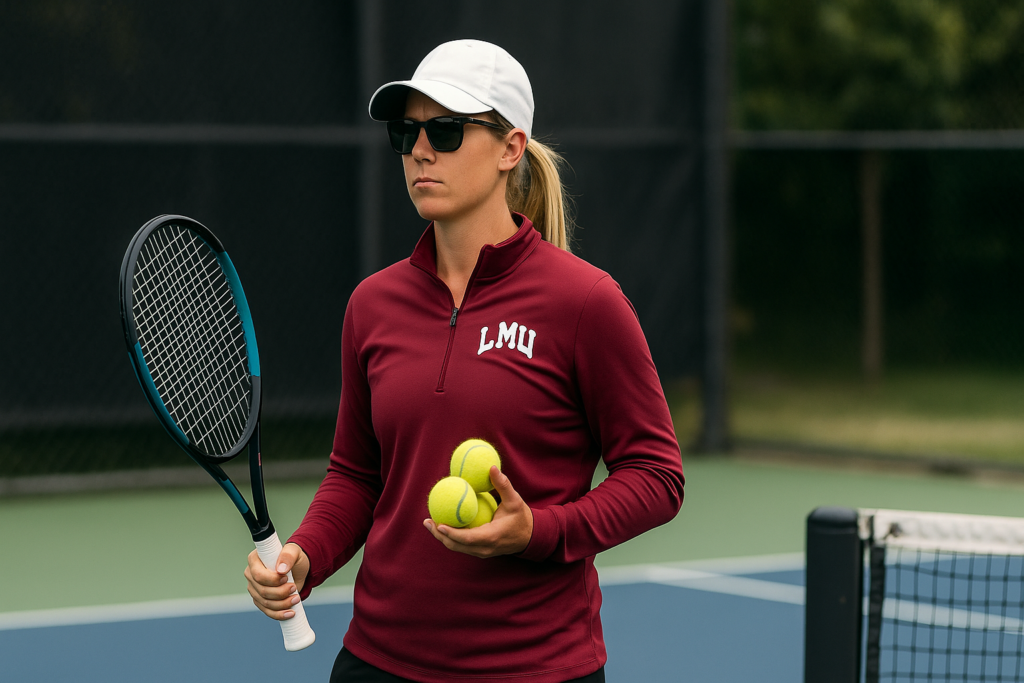
Becca Weissmann Appointed as Interim Head Coach of LMU Women’s Tennis LMU Athletics made a swift and decisive move on August 11, 2026: Becca Weissmann has been named the interim head coach of the Loyola Marymount University women’s tennis program, effective immediately. For players, fans, and anyone who likes to keep an eye on college tennis storylines, this is a meaningful development — the kind of leadership shift that can reset a team’s identity, recruiting momentum, and daily routine. If you follow the program you probably already saw the official release; if you didn’t, LMU put the announcement out on its site detailing Weissmann’s elevation and the reasons behind it. From assistant to associate to interim: Weissmann’s LMU trajectory Weissmann’s rise through the LMU coaching ranks reads like a steady, no-surprises climb. She arrived on the Bluff as an assistant coach in 2021 and earned a promotion to associate head coach ahead of the 2025–26 season. LMU’s staff pages and program materials reflect that timeline, and the official news release confirms it. That internal promotion pattern is worth noting. Programs often prefer continuity: promoting from within keeps institutional knowledge intact, preserves relationships with current student‑athletes, and signals to recruits that there is stability despite administrative turnover. You can see LMU’s current staff listing on the program directory for context about the coaching corps and support staff. Official announcement: LMU Athletics announcement: Becca Weissmann appointed as interim head coach Results on the court — the stats that matter Numbers don’t tell the whole story, but they’re a reliable shorthand for program trajectory. Under Weissmann’s guidance, LMU posted 64 victories and a 59% win rate. Those figures are highlighted in the university’s release and reflect multi-season performance rather than one standout year. The 2022 season is a clear milestone: LMU went 18–4, punched its ticket to the NCAA Tournament, and notched a top‑5 win over UCLA — a scalp that still turns heads in college tennis circles. That season in particular helps illustrate Weissmann’s ability to prepare players for high-stakes matches and to foster an environment where upsets happen. It also provides a foundation when evaluating whether an interim coach might be the right choice to steady the ship or to pursue long-term leadership. For a snapshot of team personnel and context around the roster that contributed to these results, consult LMU’s roster page: LMU women’s tennis roster Why LMU chose Weissmann — leadership, relationships, and continuity In the official release, LMU’s Athletic Director emphasized Weissmann’s leadership and her rapport with student‑athletes as major factors in naming her interim head coach. Those aren’t generic platitudes — they’re practical considerations. When a program is in transition, the people who hold the locker room together and keep recruiting conversations honest are often the ones who get tapped to steer the team short term. Weissmann herself expressed gratitude and excitement for the opportunity, signaling she’s prepared to shoulder the administrative duties that accompany the top job in addition to the coaching responsibilities. There’s a different workload involved in running a program — liaising with the athletic department, finalizing travel and recruiting logistics, and managing scholarship distribution — and the university’s decision suggests confidence that Weissmann can handle that mix right away. Context on her elevation to associate head coach before the 2025–26 season (a step that likely paved the way for this interim role) is available in LMU’s program notes: Cal LMU announcement: Weissmann elevated to associate head coach What “interim” actually means — timelines, evaluations, and the path to permanence “Interim” is a practical label used by athletic departments to buy time and ensure continuity while they sort out next steps. It doesn’t automatically mean a nationwide coaching search is off the table, nor does it condemn the interim coach to a short stay. Often, the interim season is a live audition: performance, recruiting retention, player buy‑in, and the intangibles (team culture, academic progress, community engagement) all factor into whether that interim tag becomes permanent. That said, the administrative materials available at the time of the announcement present a small discrepancy: program directory pages available in public materials still list Agustín Moreno as head coach while Weissmann is shown as associate head coach, even as the August 11 news release announces Weissmann’s interim role. That kind of lag is common in collegiate athletics; official web pages sometimes take longer to catch up with press releases. Still, it’s a reminder that internal transitions often unfold over several days or weeks as HR, compliance, and communications tasks get aligned. LMU program directory: LMU women’s tennis coaches directory Practical impacts: players, recruiting, and the match-day environment For current players, a coaching change is a practical stressor and, paradoxically, a potential energizer. Players may worry about lineups, practice structure, and whether the incoming leader will alter their roles. But because Weissmann is already embedded in the program, the short‑term changes are likely to be less dramatic than if an outsider had been parachuted in. Recruiting is the arena where transitions cause the most ripple effects. Prospective student‑athletes value relationship continuity; coaches who recruited a player are often the primary reason the recruit committed. Weissmann’s promotion could be stabilizing in that sense — she’s part of those conversations. Still, recruits and their families will watch closely for signals about the program’s long‑term vision and resources. On match day, the biggest variables are often subtle: lineup decisions, doubles pairings, and the psychological atmosphere. Those are areas where a coach—interim or permanent—can quickly influence outcomes. That influence is especially true in collegiate tennis, where team chemistry and clutch doubles play can decide dual matches more often than you might expect. From a betting and performance perspective: what to watch (and why to be cautious) Okay, now for the gambling‑savvy part of the conversation — framed responsibly. Coaching changes create storylines that can attract bettors’ attention, but they’re also noisy signals. A new interim coach can spark short-term performance boosts (the so-called “new manager bounce”) or lead to disruption. The difference
Alexandra Eala Wins in Washington and Betting Angles
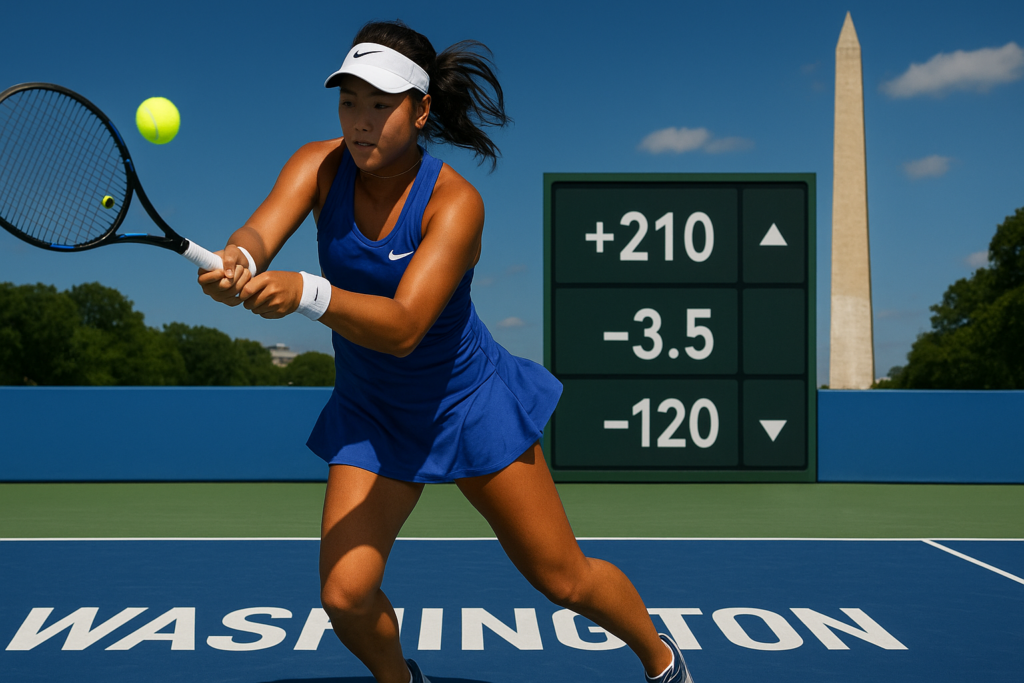
Philippines’ Alexandra Eala Makes History in Washington — and What It Means for Players and Punters Alexandra Eala did something rare on a humid, rain-hit Sunday in Washington: she rewrote the record books and handed bettors, bookies and tennis-watchers a moment to dissect for months. The 20–21‑year‑old Filipino captured her first WTA Tour‑level singles crown at the Mubadala DC Open — a WTA 500 event — beating world No. 3 Jessica Pegula 4–6, 6–4, 6–0 in a final that was rain‑delayed and finished across two days. It’s historic for Philippine sport (she’s the first Filipina — indeed the first Filipino — to win a WTA Tour singles title), and it’s an interesting case study for anyone who bets on tennis: momentum, mental toughness and volatility all collided in D.C. Why this Washington win matters — beyond national pride Let’s start with the headline: Eala didn’t just add a trophy. She made the leap from WTA 125 success to main‑tour validation. Her Guadalajara 125 triumph in 2025 (a 1–6, 7–5, 6–3 victory over Panna Udvardy) was a ground‑floor breakthrough — and it mattered — but a WTA 125 title isn’t the same as lifting hardware at a WTA 500. Winning in Washington means beating higher‑ranked, deeper fields, and Eala did that by defeating the tournament’s top seed, Jessica Pegula (the world No. 3 at the time). If you follow the WTA ladder, the difference is clear: WTA 125 events are developmental stepping stones; WTA 250/500/1000 events are where ranking points, media attention and substantial prize money really accelerate a player’s career. The official WTA player profile is the place to watch how the ranking and tournament entries change as a result of this win: see Eala’s profile on the WTA website for the official record and upcoming events. Alexandra Eala — WTA player profile. How the final unfolded — the scoreline tells a story Matches like Eala‑Pegula are where form lines and live markets get interesting. Pegula took the first set 6–4, and at that point many observers — and many pre‑match bettors — would have tipped the top seed to close it out. But Eala kept her composure, nudged the second set 6–4, and then produced a shutout 6–0 final set. That third set bagel after a momentum swing is the kind of outcome that sharp bettors live for — and that recreational punters fear (because it’s dramatic and sudden). For the record, contemporary reports and match summaries are available in mainstream outlets. See Al Jazeera’s match report for a succinct recap, and ESPN’s coverage for additional match context and the weather interruptions that affected the schedule. Al Jazeera: Philippines’ Eala wins first WTA title, ESPN: Match coverage and analysis. Rain delay and the two‑day final — why that matters to bettors Weather interruptions aren’t just annoying; they change betting dynamics. A rain delay — this final was played across two days — allows both players more recovery time, gives coaches a chance to make tactical adjustments, and often favours the mentally tougher player. From a betting perspective, delays can produce line drift. If you saw Eala getting better by the time play resumed, you could’ve found value in live markets. Conversely, bettors who loaded up on Pegula after the first set may have been caught out when momentum swung the other way. What this win says about Eala’s game and trajectory Eala’s Washington performance was a showcase in temperament as much as technique. Beating a top‑3 player in three sets — and closing with a dominant final set — suggests several things any bookmaker or handicapping bettor should note: Stamina and physical readiness: She sustained her level through a two‑day finish, indicating conditioning that suits the rigours of the tour. Mental resilience: Recovering from a lost first set and delivering an increasingly aggressive third set implies strong in‑match adaptability. Upside potential: Wins like this often catalyse confidence, which can translate into better results at bigger events. For deeper context on Eala’s earlier milestone, review coverage of her Guadalajara 125 win in 2025 to see how she built momentum. Gulf News: Guadalajara 125 victory. Taylor Fritz takes the men’s crown — the other half of the story The Mubadala DC Open had a double headline: while Eala made history on the WTA side, Taylor Fritz captured the men’s title. For tournament narratives, that’s neat symmetry — a U.S. star on the men’s side and a historic first for the Philippines on the women’s side. For bettors, it’s a reminder: individual tournaments can produce multiple storylines that affect markets across singles and doubles, futures and in‑play books. Al Jazeera’s roundup covers both champions in one place. Al Jazeera: Full Mubadala DC Open recap. Implications for betting markets — how to approach a breakout like Eala From a gambling‑expert perspective, Eala’s WTA 500 title creates several betting angles — and several traps. Here’s how to think about them without getting carried away. Short‑term market effects Futures volatility: Expect Eala to be a more prominent name in future markets for WTA tournaments and season‑end races. However, initial futures prices often overreact to headline wins; exercise caution and watch implied probability movements. Line adjustments: Bookmakers will move lines faster for a player fresh off a big win. That means better value may be found in immediate post‑final futures before books fully adjust, but those windows can be tiny and crowded. Live betting opportunities: Her tendency to swing matches after losing a set (as she did in the final) means live markets might offer favorable odds when she trails early. Long‑term wagering strategy Don’t confuse a single breakthrough with consistent elite performance. As a rule of thumb for bankroll allocation: Use smaller stake sizes on futures early after a breakthrough — treat it as a hypothesis that needs more data. Shop lines across bookmakers. Market inefficiency is your friend; small differences in futures prices compound over time. Consider hedging if you’ve taken a sizable position on Eala and volatility increases — a strategy that
Ashe Ray Joins LSU Women’s Tennis as Assistant Coach
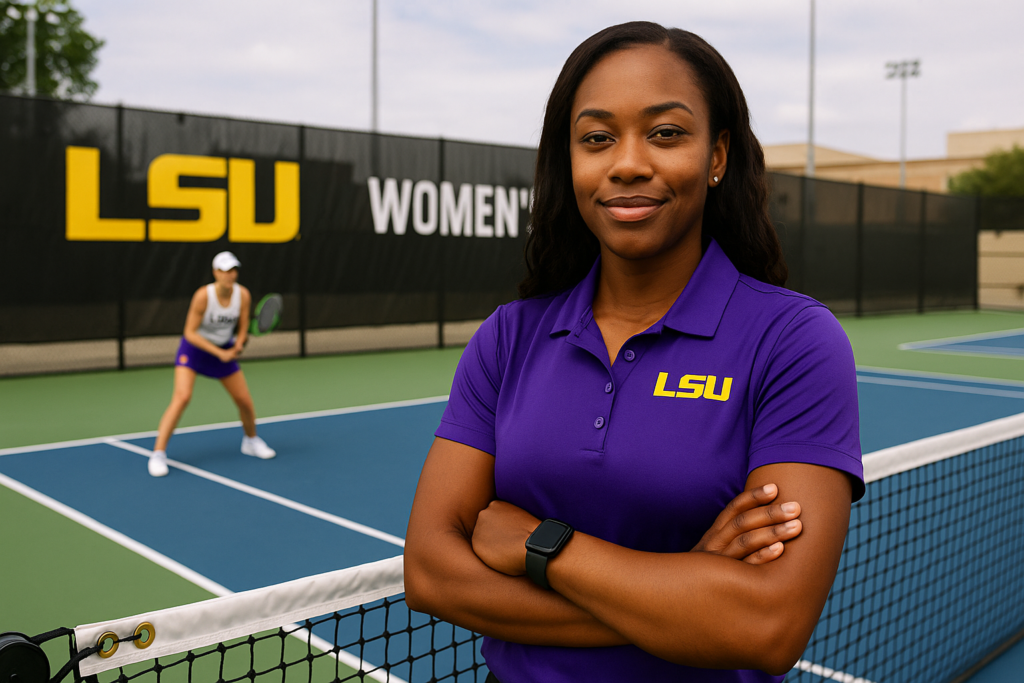
Ashe Ray Joins LSU Women’s Tennis as Assistant Coach: What the Hire Means for the Tigers LSU’s women’s tennis program quietly made a smart, targeted addition to its coaching staff when head coach Taylor Fogleman announced the hiring of Ashe Ray as an assistant coach. Short and sweet in the press release, the facts are simple: Ray is a former Wofford men’s tennis standout and now joins the LSU women’s coaching staff. But beneath that tidy headline there’s plenty to unpack — from what Ray’s playing pedigree can bring into the locker room to how assistant coaches shape recruiting, tactics and day-to-day development in Division I tennis. The hire at a glance Here’s the essentials: LSU announced that Ashe Ray has been added to the women’s tennis coaching staff, with the hiring publicized by head coach Taylor Fogleman. LSU’s athletic department made the formal announcement, naming Ray as an assistant coach for the program. The school’s release highlights Ray’s background as a standout player at Wofford College, signaling that the Tigers are investing in young coaches with recent on-court experience. Why does this matter? Because college tennis coaching staffs are compact. Bringing in someone who recently competed at the collegiate level shortens the learning curve for working with today’s student-athletes — from match prep to modern training methods and even the realities of recruiting and the transfer portal. For context on the program and staff, you can find LSU’s official women’s tennis information on the LSU Athletics site: LSU Women’s Tennis at LSU Athletics. Who is Ashe Ray — and what does “former Wofford standout” really mean? The news release describes Ray as a “former Wofford men’s tennis standout.” That phrasing tells you two useful things: first, he has recent playing experience at the collegiate level; second, he stood out enough at Wofford to be highlighted in LSU’s announcement. Wofford’s tennis program competes in NCAA Division I, producing athletes who are used to a high level of weekly competition and who understand the college-athlete lifestyle — travel, classes, training and matches. Players-turned-coaches can bring several immediate advantages: Credibility with players: Athletes often respond well to coaches who have “been there” — especially those who have navigated the grind of dual matches, travels and the balancing act between academics and athletics. Technical currency: Recent players are likely to be familiar with modern stroke mechanics, court strategies and contemporary training tools such as analytics and video breakdowns. Recruiting relatability: A coach who recently recruited or was recruited at the collegiate level understands what prospects are evaluating and how to communicate with high-schoolers and club players. Wofford’s athletics program is a known contributor to Division I competition; for a look at Wofford athletics broadly, see the school’s athletics site: Wofford Terriers Athletics. How Ashe Ray fits into Taylor Fogleman’s vision Taylor Fogleman is the architect of LSU’s current women’s tennis staff, and the public announcement makes clear that this hire is part of a staff-building strategy under his direction. Head coaches typically shape the program’s identity — recruiting philosophy, training emphasis, match-day strategy and culture — while assistant coaches handle much of the implementation. That means Ray won’t be working in a vacuum; he’ll be a piece of Fogleman’s larger puzzle. Assistant coaches can wear a lot of hats: on-court coaching, opponent scouting, recruiting territory management, academic oversight and daily athlete mentorship. The successful integration of a young coach like Ray will depend on role clarity and on how complementary his skills are to Fogleman’s strengths. If Fogleman is focusing the staff on a certain style of play or a recruitment pipeline, Ray’s background as a recent player could be exactly what the staff needs to execute that plan. To see the current head-coach-led structure and get a feel for Fogleman’s program, check LSU’s staff pages and related resources on the LSU Athletics site: LSU Athletics. Immediate and practical impacts: recruiting, practice and match day When a program brings in a new assistant coach, the effects show up in three concrete places: recruiting, day-to-day practices, and match-day execution. Here’s how Ashe Ray’s hire could influence each area. Recruiting Assistant coaches are often the frontline recruiters. They identify prospects, build relationships with families and high-school coaches, and manage campus visits. A coach with recent playing experience knows the recruiting conversation from both sides — what entices recruits today, what questions they’ll ask about playing time and development, and how to sell a program effectively. Because the assistant often serves as the day-to-day contact, Ray’s relatability to younger recruits can help LSU compete for players who might prioritize coaching that speaks their language. Practice and development Modern collegiate practice is a blend of stroke work, point-play drills, physical conditioning and tactical study. A former standout player can bring new drills, a fresh eye for technical fixes, and contemporary conditioning methods. He can also act as a near-peer mentor — sometimes it’s easier for a player to absorb corrections from someone who has recently been in the same position. That’s particularly useful for developing younger players or transfers adapting to the rigors of Southeastern Conference (SEC) competition. Match day and opponent scouting Assistant coaches are critical during dual matches: they handle on-court coaching between sets, manage lineup decisions with the head coach, perform scouting reports, and make tactical adjustments. Ray’s playing instinct — honed at Wofford — should help in identifying tactical edges, reading opponents, and advising players in pressure situations. Where this hire sits within the wider college tennis landscape College tennis has evolved rapidly over the last decade. The transfer portal, Name, Image and Likeness (NIL) rules, and the increasingly global recruiting footprint mean programs must be nimble. Assistant coaches are often the staff members who keep up with these shifts because they’re the ones executing the daily strategy. Whether it’s managing flexible scholarship usage, building relationships with international coaches, or coordinating NIL conversations, the assistant coach plays a central operational role. If you want to understand the broader framework that governs these